
San Marino 🇸🇲
Country in Europe
Introduction
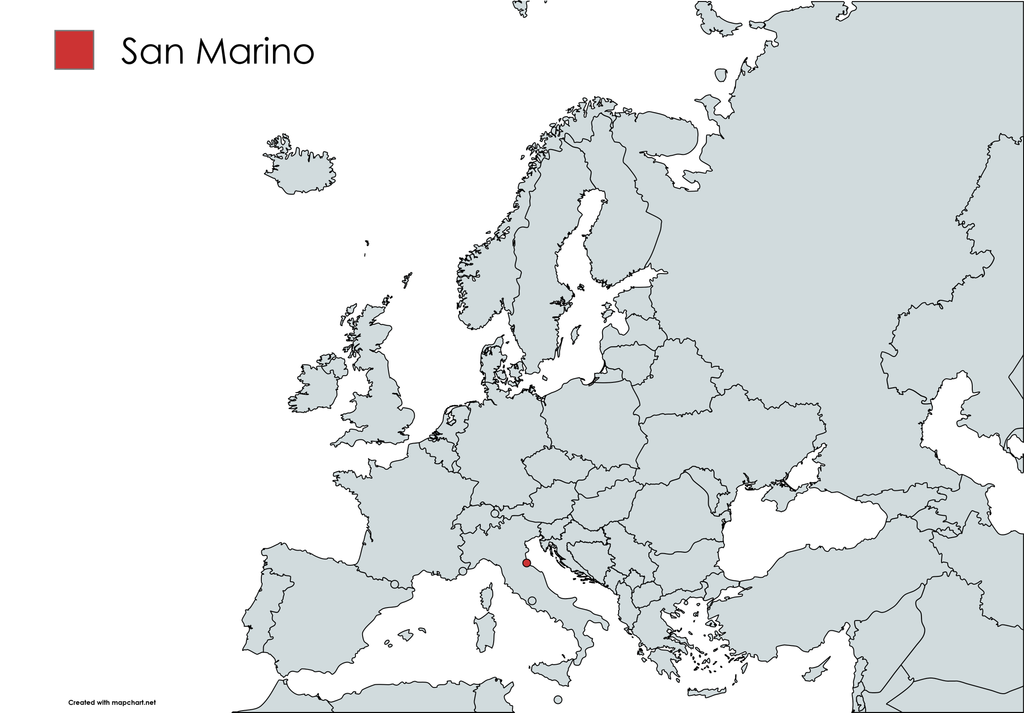
San Marino is a landlocked microstate in Southern Europe, entirely surrounded by Italy. It occupies the northeastern slopes of the Apennine Mountains and is the larger of the two microstates located within the Italian Peninsula, the other being Vatican City. With a territory of just over 61 km² (24 sq mi), it is the fifth-smallest country in the world. San Marino traditionally dates its foundation to 301 AD and consequently presents itself as the world’s oldest surviving sovereign state and the oldest constitutional republic.
| Official name | Repubblica di San Marino (Republic of San Marino) |
| Capital | Città di San Marino (City of San Marino) |
| Government | Parliamentary diarchic directorial republic |
| Area (km² / sq mi) | 61.19 / 23.63 |
| Population | 34.172 (2026) |
| Official language(s) | Italian |
| Demonym(s) | Sammarinese |
| Currency | Euro (€) |
| Anthem | “Terra di Libertà” |
| Flag | 🇸🇲 |
| Flag meaning | White and light blue symbolize peace and freedom; the coat of arms features the three towers of San Marino on Mount Titano, representing the country’s independence and historic identity. |
History of San Marino
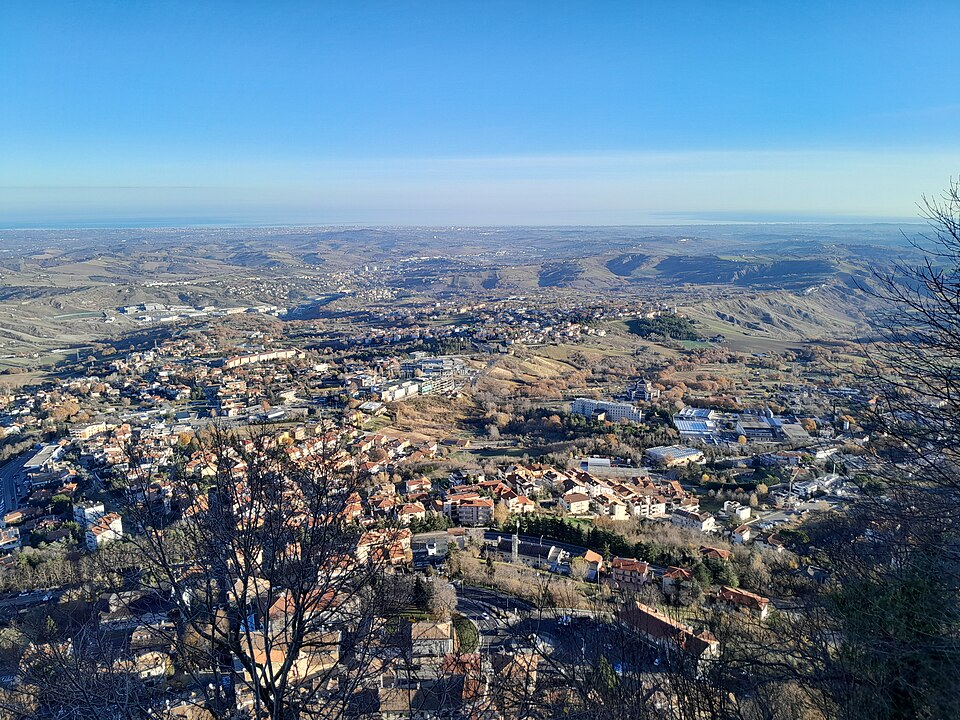
According to traditional accounts, Saint Marinus left Rab, in present-day Croatia, with his friend Leo and travelled to Rimini, where he worked as a stonemason. After escaping the Diocletianic Persecution, he settled on Mount Titano, founding a small religious community that later developed into San Marino. Although these stories mix legend and historical elements, evidence of a monastic settlement in the area dates to the 5th or 6th century AD.
During the Middle Ages, San Marino gradually consolidated its independence. It successfully defended its tax exemptions from the rulers of Montefeltro, while its territory expanded through the incorporation of Chiesanuova in 1320 and Faetano, Fiorentino, Montegiardino, and Serravalle in 1463. These additions established the country’s present-day borders. The republic faced several attempts at occupation. Cesare Borgia briefly conquered San Marino in 1503, but its independence was restored after papal intervention, while another invasion in 1543 failed. In 1739, Cardinal Giulio Alberoni occupied the country, but Pope Clement XII restored its independence the following year.
San Marino also preserved its sovereignty during the Napoleonic Wars. In 1797, Antonio Onofri gained Napoleon’s respect and secured guarantees for the republic’s independence. During the Italian unification, San Marino offered refuge to supporters of the movement, including Giuseppe and Anita Garibaldi. Friendly relations with the new Kingdom of Italy were formalised in 1862, while the republic later became known internationally through its own postage stamps, first issued in 1877.
During World War I, San Marino remained neutral but sent volunteers to serve with Italian forces, including medical personnel. Economic problems after the war contributed to the rise of the Sammarinese Fascist Party, which ruled from 1923 to 1943 and maintained close relations with Mussolini’s Italy. San Marino again remained neutral during World War II. In 1944, it was mistakenly bombed by Allied aircraft and later briefly occupied by German forces. The country sheltered around 100,000 refugees, despite having only about 15,000 inhabitants, before Allied forces defeated the Germans in the Battle of San Marino.
After the war, a communist-socialist coalition governed from 1945 to 1957. San Marino subsequently strengthened its international ties, joining the Council of Europe in 1988 and the United Nations in 1992. It is not part of the European Union, but uses the euro, which replaced the former Sammarinese lira.
Geography of San Marino
San Marino is a small landlocked enclave within Italy, in Southern Europe, surrounded almost completely by the Province of Rimini in Emilia-Romagna, with a short border with the Province of Pesaro and Urbino in Marche. It lies about 10 km (6 mi) from the Adriatic Sea, near Rimini.
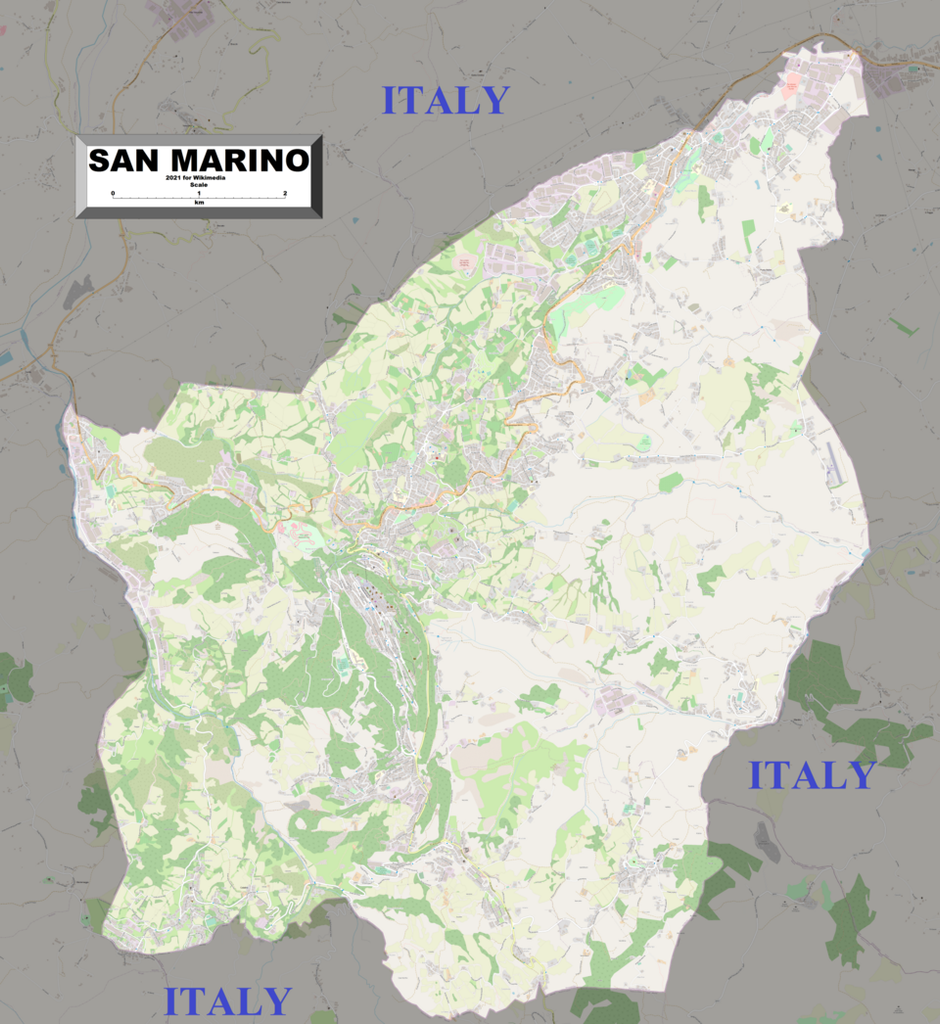
The country occupies a largely hilly and mountainous landscape belonging to the Apennines, with very little flat terrain. Its highest elevation is Monte Titano, reaching 749 m (2,457 ft) above sea level, while the lowest point is the Ausa River, at around 55 m (180 ft). San Marino has no major lakes or other significant enclosed bodies of water. San Marino is one of only three countries completely surrounded by another country. It is the third-smallest country in Europe, after Vatican City and Monaco, and the fifth-smallest worldwide. Its natural vegetation belongs mainly to the Italian sclerophyllous and semi-deciduous forest ecoregion, although its forest landscape has been heavily modified.
Climate
San Marino has a humid subtropical climate (Cfa), influenced to some extent by continental conditions. Summers are generally warm to hot, while winters are cool, reflecting the climate of inland areas of the central Italian Peninsula. Rainfall occurs throughout the year, without a distinct dry season. Snow is frequent and can be substantial during winter, particularly in areas above 400–500 m (1,300–1,600 ft) in elevation.
Society of San Marino
Demography
As of September 2023, San Marino had an estimated population of 33,896 people. Around 28,226 were Sammarinese citizens, while 4,881 held Italian citizenship and another 789 were citizens of other countries. A significant Sammarinese diaspora also lives abroad, numbering approximately 13,000 people. Most reside in Italy, with sizeable communities in the United States, France, and Argentina. The country’s first census since 1976 was carried out in 2010, although its results were affected by incomplete participation, as about 13% of households failed to return their forms.
Languages
Italian is the main language of San Marino, being used for official documents, education, and the country’s principal media. Alongside standard Italian, the Sammarinese dialect, a variety of Romagnol, remains present mainly in households and informal social interactions, particularly among older generations. It has been estimated that around 83% of Sammarinese people are bilingual in Italian and the local dialect.
Religions
Catholicism is the predominant religion in San Marino, although it is not an official state religion. In 2011, about 97.2% of the population identified as Catholic, with roughly half regularly attending church. The country’s Catholic tradition is historically linked to Saint Marinus, who is traditionally believed to have established the community while protecting Christians from Roman persecution.
All Sammarinese parishes belong to the Diocese of San Marino-Montefeltro, whose bishop resides in Pennabilli, Italy. The diocese became entirely responsible for San Marino in 1977, following an adjustment of the boundaries between the dioceses of Montefeltro and Rimini. Since 1988, the republic has also had a formal apostolic nunciature, represented by the nuncio to Italy.
Other religious communities include Waldensians and Jehovah’s Witnesses. San Marino also has a long-standing Jewish presence, documented since at least the late 14th century. During World War II, the republic offered refuge to more than 100,000 Jews and other Italians fleeing Nazi persecution, a number many times larger than the country’s resident population at the time. Despite its strong Catholic tradition, San Marino has promoted interfaith dialogue. In 2019, a monument dedicated to religious dialogue was unveiled at Saint Anne Chapel. The country is also home to San Marino Jinja, recognized as the first Shinto shrine in Europe approved by the Association of Shinto Shrines.
Economy of San Marino
San Marino is a developed economy with a standard of living and GDP per capita broadly comparable to those of Italy. Although it is not a member of the European Union, it uses the euro under an agreement with the EU and can issue a limited number of coins bearing its own national designs. Before adopting the euro, the country used the Sammarinese lira, which was linked to the Italian lira.
The economy is based mainly on banking, electronics, ceramics, tourism, and other services, while wine and cheese are among its principal agricultural products. Most basic goods are imported, particularly through Italy. Postage stamps are also an important source of revenue, especially because of interest from collectors. San Marino has traditionally had an exceptionally high level of car ownership, with more vehicles than inhabitants.
Economic relations with Italy are governed by agreements dating back to 1862. These arrangements place certain restrictions on domestic production and trade, while goods from outside the customs area must pass through Italy. In return, Italy provides San Marino with supplies of products such as salt, tobacco, cigarettes, and matches. Gambling is legal under regulation, and the country has one licensed casino.
San Marino has a relatively low-tax system. The standard corporate income tax is 17%, while qualifying new businesses and innovative start-ups can benefit from substantially reduced rates during their initial years. Personal income tax is progressive, ranging from 9% to 35%. Instead of a conventional VAT, the country applies a 17% single-stage import tax on goods entering the country.
The government also provides various tax incentives for investment, including substantial exemptions on certain dividends and deductions connected with investments in capital goods or real estate. San Marino‘s comparatively low taxation has historically encouraged some companies and wealthy individuals to establish themselves there, although its financial system has undergone reforms aimed at greater transparency and regulation.
Tourism is another major pillar of the economy, contributing more than 22% of GDP according to the figures cited. The republic attracts large numbers of visitors despite its small size, with around 2 million tourists recorded in 2014. Visitors generally stay for short periods, making tourism particularly important to the country’s service sector.
Culture of San Marino
The Three Towers of San Marino stand on the three summits of Monte Titano, overlooking the capital, and are among the country’s main national symbols. They also appear on the coat of arms, which is represented on the national flag. Guaita, the oldest tower, dates from the 11th century; Cesta, built in the 13th century, occupies the highest summit; while Montale, constructed in the 14th century, stands on the smallest peak and remains privately owned.
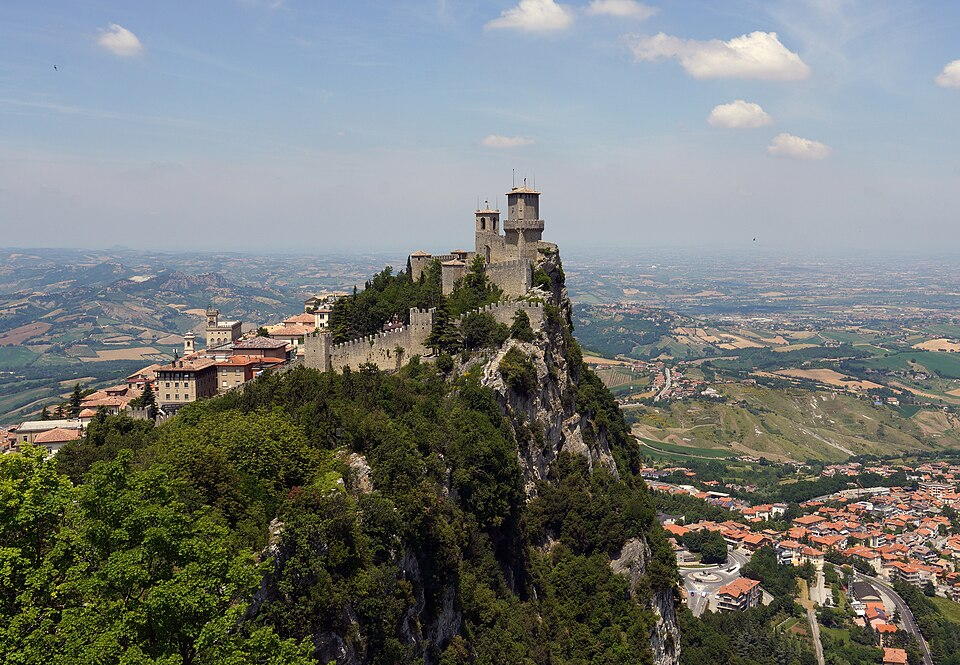
The historic centre of San Marino and Mount Titano were inscribed on the UNESCO World Heritage List in 2008, following a decision made by the World Heritage Committee during its 32nd session in Québec, Canada. The designation recognises the historical and cultural importance of the country’s capital and its surrounding mountain landscape.
San Marino has several national museums and galleries. The Museum of Ancient Arms contains historical weapons, armour, uniforms and experimental military equipment. The State Museum preserves an extensive collection connected with the republic’s history and traditions, including paintings, sculptures and objects originating from religious and public buildings. Its collections include works by artists such as Guercino, Cesare Gennari, Benedetto Gennari, Matteo Loves and Elisabetta Sirani, as well as artefacts associated with Saints Marino and Agata.
The Pinacoteca di San Francesco brings together archaeological, artistic and numismatic collections, while the National Gallery focuses on the protection and promotion of San Marino’s UNESCO heritage. The Museum of Stamps and Coins documents the country’s philatelic and monetary history, whereas the Modern and Contemporary Art Gallery contains more than 1,000 works produced from the early 20th century onwards. The Museum of the Emigrant, established in 1997 in the former Monastery of Santa Chiara, examines the history of emigration. The Museum of Natural History, meanwhile, is located at the Natural History Centre in Borgo Maggiore.
San Marino also possesses a long musical tradition strongly influenced by Italy while retaining its own identity. Among its historical figures are the 17th-century composer Francesco Maria Marini and the violin maker Marino Capicchioni, who was born and raised in the country. In popular music, Little Tony became particularly successful in Italy and the United Kingdom during the 1950s and 1960s. San Marino has participated in the Eurovision Song Contest several times, with performers including Valentina Monetta, Serhat, Senhit, Flo Rida, and Gabry Ponte reaching the final in different years.
Cuisine of San Marino
Because San Marino is a small, landlocked microstate entirely surrounded by Italy, its cuisine has developed strong connections with Italian gastronomy, particularly the traditions of the neighbouring Emilia-Romagna and Marche regions. The country’s main agricultural products include cheese, wine and livestock, with cheese production historically representing one of the most important agricultural and economic activities in San Marino.
Common dishes
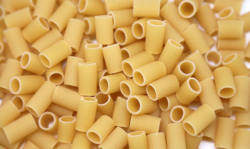
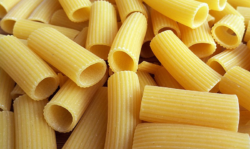
One of the best-known local specialities is piadina sammarinese, a flatbread similar to the Romagna version but generally thicker and filled with cured meats, cheeses and seasonal vegetables. Traditional cuisine also features several types of fresh pasta, including strozzapreti and tagliatelle al ragù. During the colder months, cappelletti in meat broth are particularly popular.
Among the country’s traditional sweets, torta Titano consists of five layers of square wafers filled with cocoa, coffee and hazelnut cream and covered with dark chocolate. Another famous dessert is torta Tre Monti, or San Marino cake, a circular wafer about 20 cm (7.9 in) wide, made from five layers of wafers with cocoa and hazelnut cream and finished with dark chocolate. Produced since 1942, its name refers to San Marino’s Three Towers, and it has received the republic’s official recognition for traditional artisanal products.
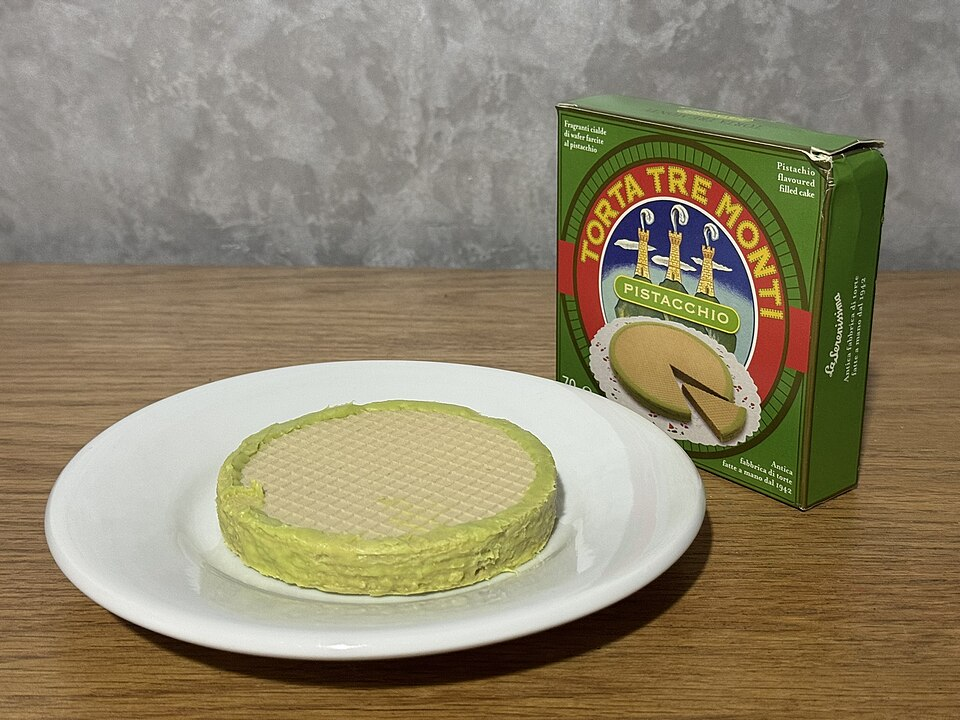
Other local desserts include verretta, made from hazelnuts, praline and wafer pieces coated in chocolate and named after the arrow traditionally used by San Marino’s crossbowmen; cacciatello, a simple pudding based on milk, sugar and eggs; and bustrengo, a Christmas sweet containing honey and walnuts. Zuppa di ciliegie is a distinctive preparation in which a sweet cherry-and-red-wine sauce is served over white bread.
Common beverages
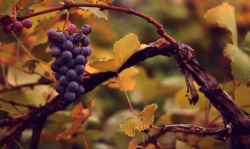
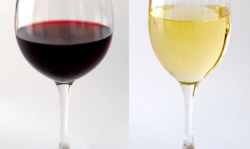
San Marino has a wine-making tradition dating back to the Middle Ages, while its wines have reportedly appeared at major international exhibitions since the 19th century. Local production benefits from the environmental conditions of the foothill areas, while some wines are traditionally stored in cellars carved into the rock. The country’s wines are produced by the Consorzio Vini Tipici di San Marino, using varieties such as Sangiovese, Ribolla, Moscato bianco, Biancale, Canino and Cargarello.
Among the sweet wines are Moscato di San Marino and Moscato spumante di San Marino, both containing at least 85% Moscato grapes, while Oro dei Goti is a passito made from Moscato bianco grapes dried either on the vine or in a drying room. The range of red wines includes Sangiovese di San Marino, Tessano di San Marino, made with at least 50% Sangiovese, Brugneto di San Marino, containing at least 85% Sangiovese, and Rosso dei Castelli Sammarinesi, produced exclusively from Sangiovese grapes.
Local white wines include Roncale di San Marino, made from 50% Ribolla and 50% other authorised white varieties; Caldese, based on Chardonnay and Ribolla; Biancale di San Marino, containing at least 85% Biancale; Bianco dei Castelli Sammarinesi, produced from Biancale, Canino and other local white grapes; and Grilèt, made from Biancale, Chardonnay and Sangiovese vinified as a white wine. San Marino also produces Riserva Titano, a brut sparkling wine made from Biancale, Chardonnay and Sangiovese processed as white wine.
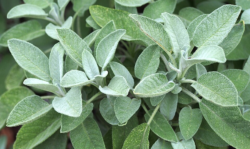
San Marino’s traditional liqueurs include Mistrà, an anise-flavoured spirit also associated with the nearby Marche region; Duca di Gualdo, a herbal liqueur resembling Fernet and traditionally served as a digestif; and Tilus, an amaro made with truffle and aromatic herbs from the republic. Tilus has a particularly intense aroma and can be enjoyed as a digestif or diluted with water as a refreshing drink.
Administrative and geo-cultural divisions of San Marino
Due to its extremely small territory, San Marino is not divided into distinct geocultural regions, as geographical and cultural differences within the country are too limited to justify such subdivisions.
Administratively, however, San Marino is divided into 9 castelli (municipalities):
- Acquaviva
- Borgo Maggiore
- Chiesanuova
- City of San Marino (Città di San Marino)
- Domagnano
- Faetano
- Fiorentino
- Montegiardino
- Serravalle
Traditional recipes of San Marino
(Only recipes unique to the area or strongly associated with it and rarely found elsewhere are included)
Traditional products of San Marino
(Only products unique to the area or strongly associated with it and rarely found elsewhere are included)
Recipes commonly prepared in San Marino
(Only products specific to this territorial level, and not already covered at a broader administrative or geocultural level, are included)


Products commonly consumed in San Marino
(Only recipes specific to this territorial level, and not already covered at a broader administrative or geocultural level, are included)



Source(s):
https://en.wikipedia.org/wiki/San_Marino
https://en.wikipedia.org/wiki/Sammarinese_cuisine
https://it.wikipedia.org/wiki/Cucina_sammarinese
Photo(s):
1. Map created with https://www.mapchart.net
2. August Dominus, CC0, via Wikimedia Commons
3. Kelisi, CC BY-SA 4.0 https://creativecommons.org/licenses/by-sa/4.0, via Wikimedia Commons
4. Commonists, CC BY-SA 4.0 https://creativecommons.org/licenses/by-sa/4.0, via Wikimedia Commons
5. Mooonswimmer, CC BY 4.0 https://creativecommons.org/licenses/by/4.0, via Wikimedia Commons