
European eel
Specis of freshwater eels (Anguilla)
Species name: Anguilla anguilla
Food, Animal source foods, Animals (Animalia), Chordates (Chordata), Vertebrates (Vertebrata), Bony fish (Osteichthyes), Ray-finned fish (or Actinopterygians, Actinopterygii), Neotperygii, Teleosts (Teleostei), Eels (Anguilliformes), Freshwater eels (Anguilla)
Consumption area(s): Albania 🇦🇱, Algeria 🇩🇿, Andorra 🇦🇩, Belgium 🇧🇪, Bosnia and Herzegovina 🇧🇦, Belarus 🇧🇾, Bulgaria 🇧🇬, Croatia 🇭🇷, Cyprus 🇨🇾, Czech Republic 🇨🇿, Denmark 🇩🇰, Estonia 🇪🇪, Finland 🇫🇮, France 🇫🇷, Germany 🇩🇪, Greece 🇬🇷, Iceland 🇮🇸, Ireland 🇮🇪, Italy 🇮🇹, Latvia 🇱🇻, Libya 🇱🇾, Liechtenstein 🇱🇮, Lithuania 🇱🇹, Luxembourg 🇱🇺, Malta 🇲🇹, Monaco 🇲🇨, Montenegro 🇲🇪, Morocco 🇲🇦, Netherlands 🇳🇱, North Macedonia 🇲🇰, Norway 🇳🇴, Poland 🇵🇱, Portugal 🇵🇹, Russia 🇷🇺, San Marino 🇸🇲, Slovenia 🇸🇮, Spain 🇪🇸, Sweden 🇸🇪, Switzerland 🇨🇭, Tunisia 🇹🇳, Turkey 🇹🇷, Ukraine 🇺🇦, United Kingdom 🇬🇧, Vatican City 🇻🇦
Introduction
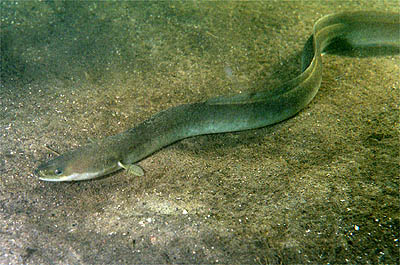
The European eel (Anguilla anguilla) is a species of eel whose life cycle remained largely unexplained for millennia, with reproduction in natural habitats still never directly documented. Historically, its developmental phases were misinterpreted as belonging to multiple distinct species. Today, the species is classified as critically endangered, primarily as a result of hydroelectric dam construction, intense coastal fishing pressure for human consumption.
Description of European eel
The European eel possesses a markedly elongated, snake-like body, with an anterior portion that is roughly cylindrical and a posterior region that becomes laterally compressed. Its fin system is highly specialized: the dorsal fin merges seamlessly with both the caudal and anal fins, creating a single continuous fin that increases in height toward the rear. The dorsal fin originates behind the pectoral fins, while on the ventral side the anal fin begins just posterior to the anus, which itself is positioned in the anterior half of the body.
The pectoral fins are short, rounded, and supported by approximately 8–14 fin rays, whereas the pelvic fins are entirely absent, a distinctive trait within its morphology. The head is elongated and dorso–ventrally flattened, ending in a wide mouth that extends to the vertical line of the eye. Inside the mouth are small conical teeth, while the lower jaw is notably more prominent and longer than the upper jaw. The lips are thick and fleshy.
The eyes are relatively small, circular, and widely spaced, but they enlarge significantly in individuals approaching the reproductive migration phase. The anterior nostril opens near the tip of the snout through a short tubular structure, while the posterior nostril is located in front of the eye. The gill opening is reduced in size and positioned just anterior to the pectoral fin base. A well-developed lateral line system is present along the body.
Contrary to common belief, the European eel does possess scales, although they are extremely small, oval-shaped, and deeply embedded within the skin, which is additionally covered by a thick layer of mucus. The vertebral count typically ranges between 110 and 120. During its life cycle, coloration changes dramatically: transparent larval stages (leptocephalus and glass eel) gradually transition into yellowish-brown dorsal and pale ventral tones in the freshwater growth phase, known as the “yellow eel stage“. As sexual maturation and migration approach, pigmentation shifts to a dark dorsal and silvery ventral tones, defining the “silver eel stage“. The adult eye exhibits a brown iris with golden reflections.
A clear sexual dimorphism in size is observed: males generally do not exceed 50 cm (19.7 in) and 350 g (12.3 oz), while females commonly reach about 1 m (3.28 ft) in length and around 1 kg (2.2 lb) in weight, with exceptional individuals exceeding 1.5 m (4.92 ft) and several kilograms.
Habitat
Ecologically, the European eel is highly eurytopic, capable of occupying virtually any freshwater or brackish habitat that maintains at least intermittent connectivity with the sea. It is found in estuaries, lagoons, marshes, ponds, lakes, rivers, streams, and coastal marine waters, and even migrates through open ocean environments during reproduction. Across all habitats, it maintains a predominantly benthic lifestyle. Males tend to remain more in estuarine or brackish zones, showing less tendency to migrate upstream than females, although some studies suggest both sexes may share similar habitat selection patterns.
The species is both euryhaline and eurythermal, tolerating low oxygen levels, polluted environments, subterranean waters, and even thermal waters around 25 °C. Individuals have been documented moving overland under humid conditions to reach isolated water bodies or return toward the sea. In marine environments, specimens have been recorded at depths of up to 1000 meters (3280 feet).
Despite its extreme flexibility, habitat preferences do exist. Smaller individuals favor shallow, vegetated waters, while larger ones are more common in deeper environments with reduced plant cover. During daytime, shelter is typically sought among rocks, dense macrophytes, or muddy substrates, whereas sandy and gravel bottoms are less suitable. In lakes, deeper zones are preferred for resting, with nocturnal movements toward shallower waters for feeding.
Although historically considered an obligatory catadromous species, more recent evidence indicates that only part of the population migrates into freshwater systems, while others complete their entire growth cycle in marine or coastal environments before reproducing. This aspect appears to characterize the entire genus. Environmental productivity, rather than salinity alone, seems to influence habitat choice and migratory behavior, with individuals in more productive marine or lagoonal systems often remaining there due to faster growth opportunities.
Biology
The maximum documented longevity in this species is estimated at around 88 years, indicating an exceptionally long life span for a teleosts. A well-known verified case concerns an individual named “Putte”, which survived for approximately 85 years under aquarium conditions, making it one of the longest-lived recorded specimens in captivity.
There is also some evidence suggesting a possible, though not yet fully understood, sensitivity to weak magnetic fields, implying the presence of a form of environmental perception that remains biologically unresolved. In addition, the species shows a limited but functional capacity to survive short periods outside water, particularly under humid conditions.
From a behavioral standpoint, the species is strongly nocturnal and markedly lucifugous, meaning it actively avoids light. During daylight hours it typically remains concealed within shelters or burrows excavated in muddy substrates, emerging primarily at night. Activity may also increase during episodes of strong water turbidity or flooding, when reduced visibility provides safer foraging conditions.
Feeding
The species exhibits a strictly carnivorous but highly opportunistic diet, feeding on virtually any available animal matter, both living and dead. Its prey spectrum is extremely broad and includes numerous fish species (occasionally even other eels), as well as adult and larval amphibians. It also consumes a wide range of mollusks, including both gastropods and bivalves, alongside various crustaceans, among which invasive species such as the Louisiana crayfish are included.
Its diet further extends to multiple orders of insects and a large diversity of other invertebrates, occurring in freshwater, marine, and even terrestrial contexts. Feeding activity ceases when environmental temperatures become too low, reflecting a strong dependence on thermal conditions. Prey detection is primarily mediated by a highly developed olfactory system, while vision plays only a secondary role in hunting behavior.
During the reproductive migration phase, individuals completely suspend feeding activity, relying entirely on accumulated lipid reserves built up during the freshwater growth period. In the “silver eel stage“, these energy stores may account for up to 40% of total body mass, providing the metabolic fuel required for long-distance oceanic migration.
The diet of the larval stage, the leptocephalus, has long remained uncertain and continues to be only partially understood. Early hypotheses proposed a diet based on small zooplankton, typical of pelagic fish larvae, but such material has never been consistently identified in gut analyses. Alternative theories once suggested that larvae might absorb dissolved organic carbon directly through the body surface, with a reduced or non-functional digestive tract. However, subsequent research has demonstrated that the digestive system is fully functional, ruling out this hypothesis.
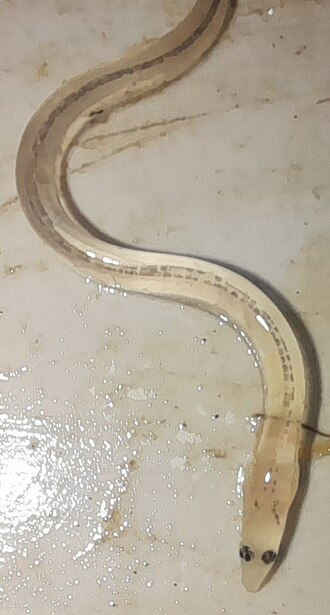
More recent evidence, including gut content analysis, indicates that leptocephali feed on relatively large gelatinous organisms. These include larvacean tunicates and their discarded mucus structures, which may represent an important food source, with the specialized teeth likely used to penetrate their protective envelopes. Other analyses showing that their diet is dominated by hydrozoan cnidarians, followed by radiolarians, thaliacean tunicates, and ctenophores.
Reproduction
Reproduction in the European eel has historically remained one of the most enigmatic topics in natural history, largely because for centuries no direct observations existed of mating or egg deposition. This lack of evidence led ancient cultures to develop speculative explanations, including the belief in spontaneous generation from mud or the idea that European eels originated from other fish species such as gobies or blennies. The definitive proof of sexual reproduction was eventually established in the 19th century through anatomical investigations, including early dissections that identified reproductive system in some specimens.
The species is a catadromous migrator, meaning that it reproduces in the ocean after spending its growth phase in freshwater or coastal environments. Sexual maturation occurs during the long oceanic migration, while European individuals enter this phase with still undifferentiated gonads. The exact triggers for sexual development remain uncertain, although hypotheses include factors such as hydrostatic pressure, low ocean temperatures, and sustained muscular exertion during prolonged swimming. The species is also semelparous, reproducing only once in its lifetime, after which adults are presumed to die shortly following spawning.
Migration
The spawning migration begins during moonless nights, primarily between autumn and early winter, with a smaller secondary peak in spring. Males generally depart earlier than females by one to two months. Individuals preparing for migration—known as silver eels—undergo profound morphological transformations: eyes enlarge, the body coloration shifts to a dark dorsal surface with a silvery ventral side, the lateral line system becomes more pronounced, the skin thickens, and the pectoral fins become larger and more pointed. At the same time, the digestive system degenerates, reflecting the complete cessation of feeding.
Size and age at migration differ between sexes and geographic populations. Males typically migrate at smaller sizes and younger ages, while females tend to be larger and older. Northern populations often migrate later in life compared to southern ones, indicating strong environmental influence on maturation timing. Not all individuals migrate: some are unable to reach marine-connected waterways, while others appear to lack migratory drive. Non-migratory individuals, especially females, may grow exceptionally large. Even after metamorphosis into silver eels, migration may be delayed, and in rare cases individuals may revert partially to the yellow eel stage.
For much of the 20th century, the oceanic phase of migration remained poorly understood. Adaptations—such as enlarged eyes and a counter-shaded coloration—suggested that migration occurs at depths where light is strongly reduced. Supporting this, changes in retinal photopigments indicate enhanced sensitivity to blue light, typical of deeper water environments, while the swim bladder retains functionality under high pressure, implying adaptation to wide vertical movements in the water column.
Although rare observations, including a specimen recorded near the Bahamas at approximately 2000 meters depth (6562 ft), suggest occasional extreme diving, most evidence indicates that migration likely occurs primarily above 500 meters (1640 ft) and often above 200 meters (656 ft). Additional data from stomach contents of deep-sea predators confirm that migrating European eels can reach depths exceeding 700 meters (2297 ft). Other studies further reveal a diel vertical migration pattern, with individuals descending during the day and ascending at night, likely as an anti-predator strategy.
The speed of migration remains variable and debated. Estimates have ranged from a few kilometers per day in early studies to more refined modern measurements which suggest average speeds of roughly 3–12 km (2–7.5 miles) per day, with considerable individual variation. Females generally migrate faster and reach spawning areas sooner than males.
The exact location of the spawning area in the Sargasso Sea was first identified in the early 20th century through zooplankton sampling, which traced progressively younger larvae toward a central region of the North Atlantic. Although this discovery confirmed the general spawning zone, the mechanisms by which adult European eels navigate across the ocean remain unresolved. Hypotheses include reliance on the lateral line system and possible geomagnetic cues, with evidence suggesting a route that may involve intermediate navigation toward the Azores before crossing open ocean waters.
Direct evidence of successful oceanic migration was only obtained recently through satellite tagging experiments, in which several tracked individuals successfully reached the Sargasso region, with at least one entering the core area presumed to be the spawning site. Despite these advances, European eel reproduction at sea remains only partially observed, and many aspects of orientation, spawning behavior, and larval emergence continue to be unresolved.
Courtship, mating, and spawning
Courtship, mating, and spawning in the European eel remain among the most elusive processes, as no direct observations have ever been made in the wild. No naturally deposited eggs or spawning adults have ever been recovered in the Sargasso Sea, and therefore virtually all knowledge derives from experimental conditions. The only available field-level assumptions suggest that reproduction occurs at depths of roughly 160–250 meters (520–820 ft), during new moon phases, between December and May.
Because natural reproductive events have never been documented, most understanding comes from laboratory studies in which sexual maturation and reproductive behavior were artificially induced. Early experiments showed that both sexes can be brought to full sexual maturity using hormonal treatments. In females, this led to complete ovarian development and egg release through manual stripping, while males produced viable sperm. Although artificial fertilization was achieved, embryonic development did not progress beyond early stages such as gastrulation.
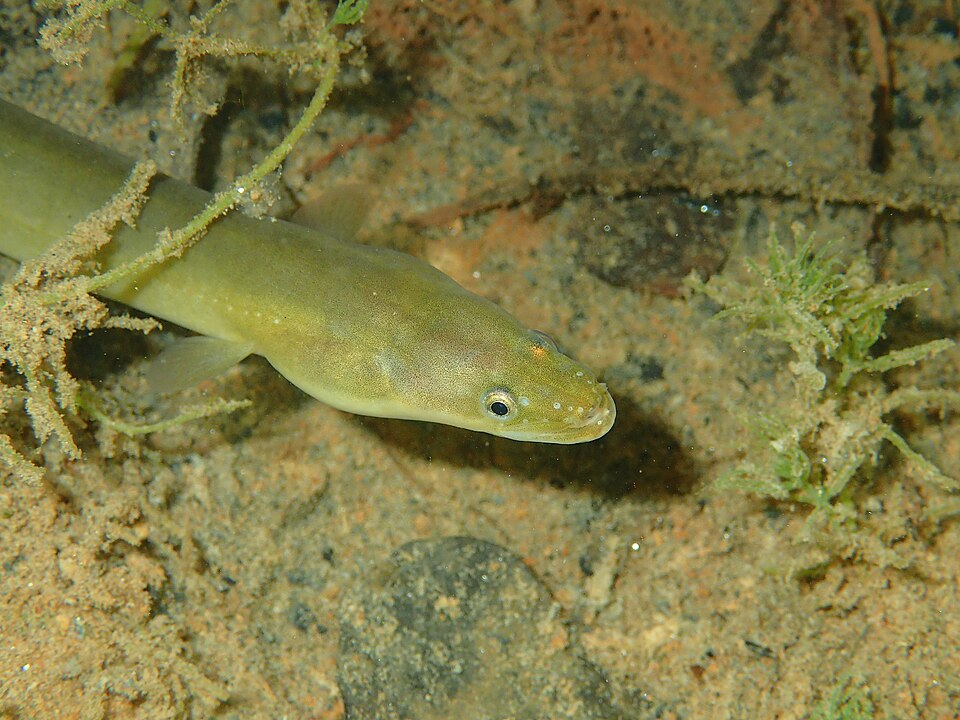
Behavioral observations under these induced conditions revealed a structured courtship sequence, beginning with physical contact in which males rub the female’s ventral region, gradually escalating to full-body contact. This interaction typically culminates in the release of sperm, often repeated multiple times within short intervals. When multiple males are present, all may participate in courtship, although typically only one achieves successful sperm release. Notably, female gamete release was not consistently observed in early experimental setups.
Subsequent studies confirmed more complex reproductive behaviors, including interactions both between sexes and among individuals of the same sex. Courtship often involves males actively pursuing females and stimulating them through gentle contact on the head, gill region, and abdomen. Sperm release is frequently associated with a characteristic “S-shaped” posture in males, while females may release eggs more reliably under refined experimental conditions.
More recent observations suggest a polygynandrous system, in which a single female is surrounded by multiple males. Courtship is typically initiated by a dominant male, followed by other individuals that join later in the sequence. Egg release and fertilization occur within minutes, with all participating males contributing to fertilization success.
Development
Development begins with a larval stage known as the preleptocephalus, a form markedly different from the later leptocephalus. At this stage, larvae lack teeth, have poorly developed eyes, and measure only 3–7 mm(0.12–0.28 in) in length. Once yolk reserves are depleted, the organism transitions into the true leptocephalus stage, historically misclassified as a separate species before being recognized as the eel’s larval form in the late 19th century.
The leptocephalus is leaf-shaped, laterally compressed, and highly transparent, with visible muscle segments. Its head bears elongated forward-facing teeth and a pointed snout. The largest recorded larvae reach approximately 85–88 mm (3.35–3.46 in). These larvae undertake the return migration toward Europe and North Africa, likely assisted by major ocean currents such as the Gulf Stream, although many aspects of this journey remain uncertain.
Upon reaching the continent, leptocephali undergo a dramatic metamorphosis into glass eels. This transformation includes loss of larval teeth, shortening of the body, shift toward a cylindrical form, repositioning of the anus, reduction in eye size, and progressive ossification of the skeleton. By the end of this process, juveniles closely resemble adults aside from their small size and lack of pigmentation.
Glass eels migrate toward coastal zones, estuaries, and lagoons, typically entering these habitats at night in dense groups during seasonal influxes. This phenomenon varies geographically and appears to be influenced more strongly by lunar cycles, particularly the waxing moon phase, than by tides or weather conditions.
Uses of Europeal eels
The flesh of the eel is characteristically white and, despite its high fat content and relatively difficult digestibility, it is considered highly flavorful and is widely valued in gastronomy. In commercial contexts, eels are often sold alive, or alternatively processed in various forms. Culinary traditions involving eel are extensive and deeply regional, with a wide variety of traditional recipes across different cultures.
In several southern regions of Italy, European eel consumption is closely associated with Christmas Eve traditions, where it is commonly served as part of the festive meal. In contrast, in England—particularly in London’s East End—a traditional dish consists of eel prepared in jellied form, reflecting a very different culinary approach. Historically, dishes based on glass eels also existed and were once part of both culinary use and aquaculture practices.
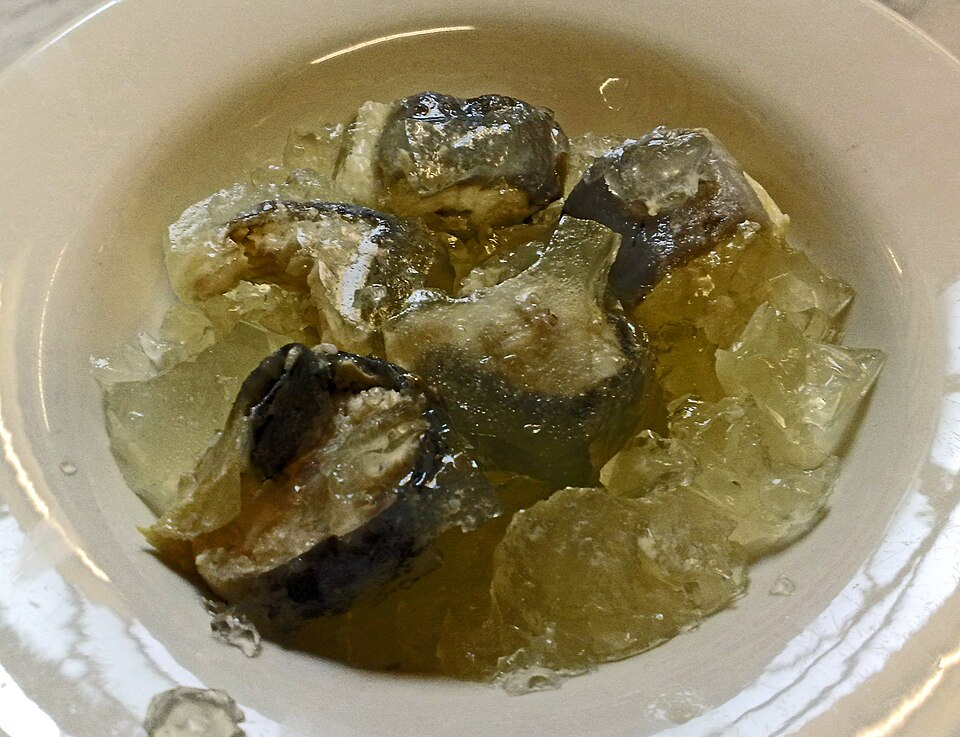
In central Italy, one well-known preparation is eel cooked with wine, a recipe of Viareggio origin already documented by Pellegrino Artusi in his seminal cookbook La scienza in cucina e l’arte di mangiar bene, where it appears as recipe number 494. Other Italian methods include grilling, roasting, braising in stews often combined with other fish species, serving as a sauce for pasta, frying, or marinating.
Nutrictional facs tables
Nutritional values can vary between individual fish.
| Nutrients | Per 100 g |
| Calories (kcal) | 217 |
| Total fat (g) | 17.2 |
| ———Saturated fat (g) | 4.26 |
| Cholesterol (mg) | 120 |
| Sodium (mg) | 66.8 |
| Total carbohydrates (g) | 0 |
| ———Dietary fiber (g) | 0 |
| ———Total sugar (g) | 0 |
| Protein (g) | 15.9 |
Recipes that use this product as an ingredient:

Photo(s):
1. GerardM, CC BY-SA 3.0 http://creativecommons.org/licenses/by-sa/3.0/, via Wikimedia Commons
2. etrusko25, CC BY 4.0 https://creativecommons.org/licenses/by/4.0, via Wikimedia Commons
3. jujurenoult, CC BY 4.0 https://creativecommons.org/licenses/by/4.0, via Wikimedia Commons
4. Secretlondon, CC BY-SA 3.0 https://creativecommons.org/licenses/by-sa/3.0, via Wikimedia Commons