
Southern Europe
Introduction
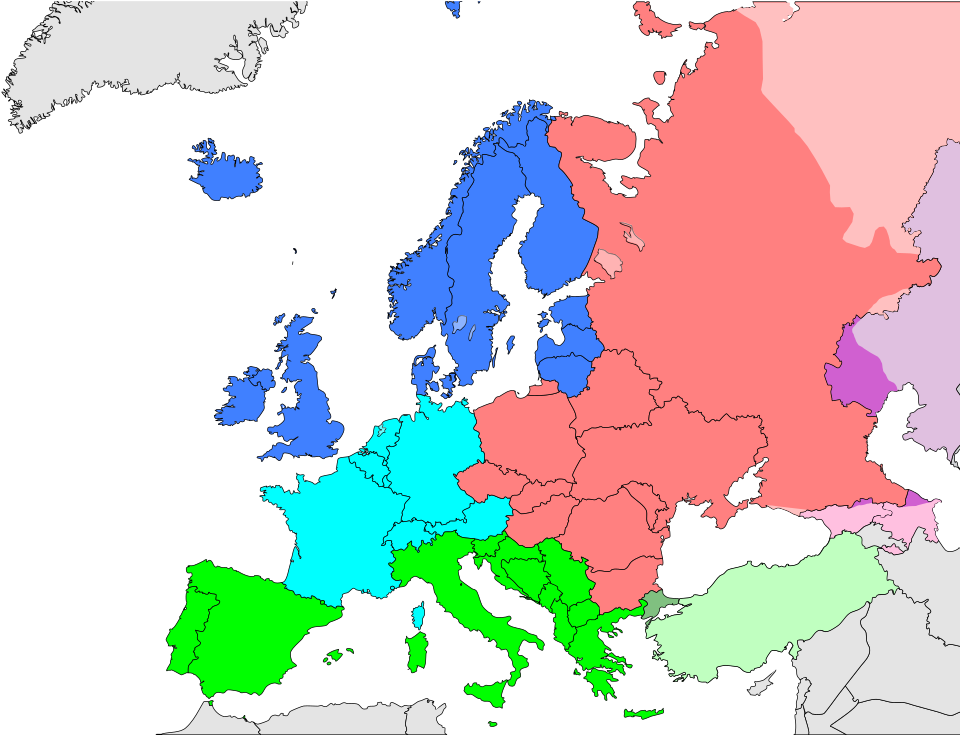
Southern Europe, also called Mediterranean Europe, is a broadly defined part of the continent whose identity is strongly shaped by the Mediterranean Sea. It mainly encompasses the three major European peninsulas: the Iberian Peninsula, Italian Peninsula, and Balkan Peninsula. These peninsulas are naturally separated from much of the rest of Europe by major mountain ranges, including the Pyrenees, Alps, and Balkan Mountains. Their southern position and mountainous terrain contribute to distinctive Mediterranean and subtropical climates, while the mountains have historically limited migration, helping to preserve distinctive cultural characteristics.
History of Southern Europe
The history of Southern Europe is deeply connected to the Mediterranean world. Ancient Phoenicians established important trading settlements across the Mediterranean, while Ancient Greece became a major centre of political, cultural and intellectual development. Greek influence expanded widely under Alexander the Great, followed by the rise of the Roman Empire, which eventually controlled most of the Mediterranean basin. After the division of the Roman Empire, the Western Roman Empire collapsed in 476 AD, while the Eastern Roman Empire survived for centuries as the Byzantine Empire.
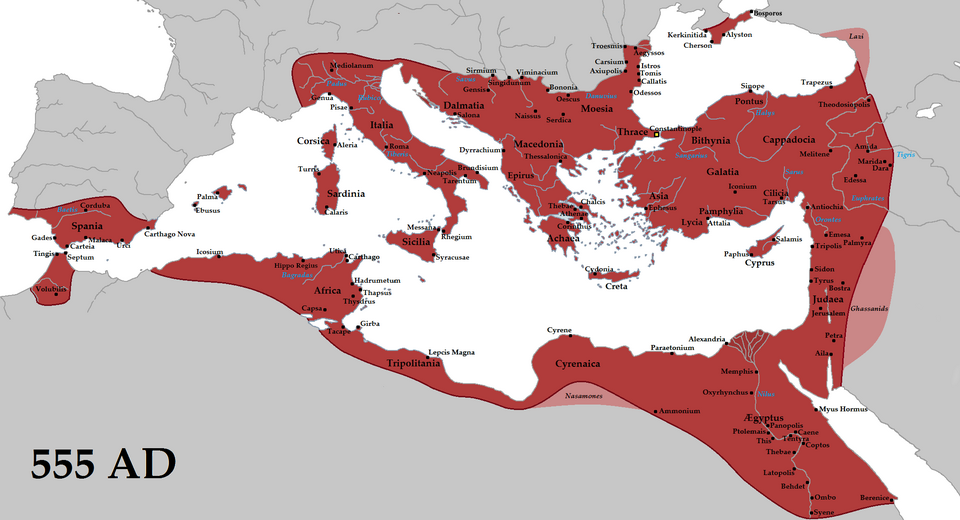
During the Middle Ages, Southern Europe was shaped by the interaction of Christian, Muslim and Byzantine powers. The Crusades intensified connections between Europe and the Middle Est, while the Reconquista gradually restored Christian rule across much of the Iberian Peninsula. At the same time, maritime republics such as Venice and Genoa became important commercial powers. The expansion of the Ottoman Empire into southeastern Europe culminated in the capture of Constantinople in 1453.
From the Renaissance onward, Southern Europe played a major role in the revival of classical learning and the development of European culture. Portuguese and Spanish exploration opened new maritime routes during the Age of Discovery, leading to overseas empires and the Columbian Exchange. During the 19th century, nationalist movements transformed the region: the Balkan states progressively gained independence from the Ottoman Empire, while Italy unified as a modern nation-state, culminating in the capture of Rome in 1870.
During the 20th century, industrialization remained uneven, partly because of the region’s mountainous terrain and fragmented coastlines. The World Wars, authoritarian regimes and political instability profoundly affected Southern Europe. After World War II, the region became divided between communist states in the east and non-communist countries aligned with the West. The collapse of communism around 1989–1991 brought major political and economic changes, followed by the transition toward market economies and the expansion of the European Union into southeastern Europe.
In the contemporary period, Southern Europe has become increasingly integrated through European institutions, trade and transport networks. Major infrastructure projects, such as the Gotthard Base Tunnel, have strengthened connections between the Mediterranean and northern Europe, reinforcing the region’s historical role as a bridge between different parts of the continent.
Geography of Southern Europe
Southern Europe occupies the southern part of the European continent and is a relative geographical concept influenced by climate, culture, history, vegetation, and physical geography. The region is primarily associated with the Mediterranean Sea, but also includes areas along the Atlantic Ocean and Black Sea, as well as extensive mountainous inland territories.
Geographically, it can be divided into three main subregions. The western part is centred on the Iberian region and the Balearic Islands, separated from central Europea by the Pyrenees. The central part is dominated by the Italian region, and is separated from northern Europe by the Alps. The eastern part mainly corresponds to the Balkan region, bordered by the Adriatic, Aegean, and Black Seas, with the Danube forming part of its northern boundary. It also includes numerous Adriatic and Aegean islands, particularly Crete.
Some territories are politically or culturally associated with Southern Europe despite lying outside its core geographical definition. These include Cyprus and, in some classifications, Moldova and parts of Romania. The southernmost point of mainland Europe is Punta de Tarifa in Spain, while Gavdos in Greece is generally considered the continent’s southernmost island.
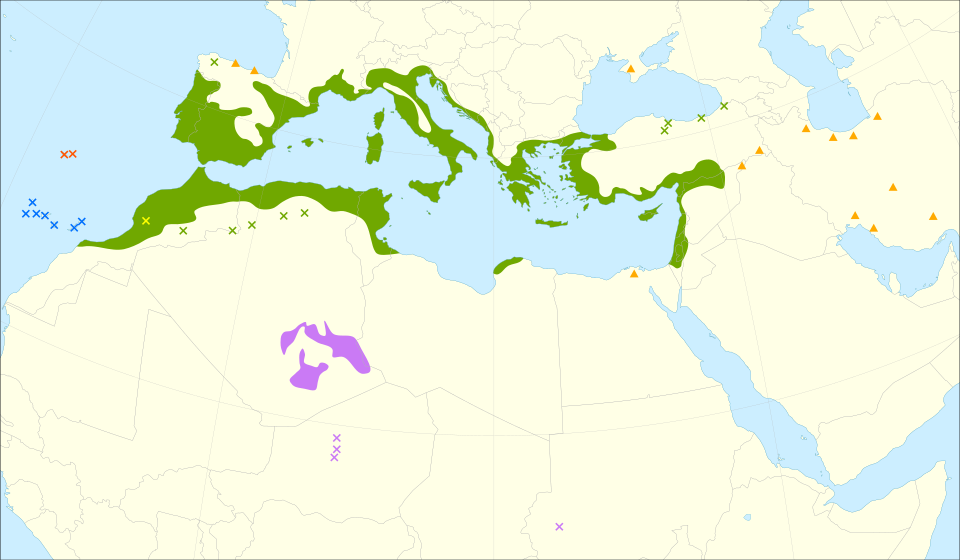
The region’s natural environment is strongly influenced by the Mediterranean climate, especially in Portugal, Spain, Italy, Malta, Albania, Greece, Cyprus, southern France, and the Mediterranean coasts of the Balkans. Typical vegetation includes Mediterranean forests, woodlands and scrub, with olive groves, maquis and steppe-like landscapes common near the coast. In cooler or higher areas, these environments gradually give way to temperate broadleaf, mixed and chestnut forests.
Climate
The most characteristic climate of Southern Europe is the Mediterranean climate, shaped largely by the influence of the Azores High over the Atlantic. It occurs across much of Portugal, Spain, Italy, southern France, the Adriatic coast, Albania, Montenegro, and Greece, as well as many Mediterranean islands. Typical landscapes include dry hills, small plains, pine forests, and olive groves.
However, the region also contains considerable climatic diversity. Cooler conditions occur in the mountain ranges of Spain and Italy, while the highest parts of the Alps can have extremely cold, ice-cap climates. Some areas have a humid subtropical climate, characterized by warmer and wetter summers. Northern Spain is also influenced by a wetter Atlantic climate.
The Alps and Pyrenees form major climatic barriers, limiting the movement of air masses between Southern and Western Europe. They can block hot winds such as the Sirocco from spreading farther north, while also protecting the Italian and Iberian regions from cold winds such as the Mistral and Tramontane. These winds can also produce coastal upwelling, bringing colder deep waters to the surface along parts of the French Mediterranean coast.
Society of Southern Europe
Languages
Romance languages form the most widespread language family in Southern Europe, descending from Latin and particularly associated with the western and central parts of the region. The main languages are Italian and Spanish, alongside Portuguese, French, Catalan, Galician, Mirandese, and Occitan, which are spoken in different parts of the Iberian Peninsula, France, Italy, and nearby territories.
Slavic languages are especially important in the Balkans. They include Bulgarian, Bosnian, Croatian, Serbian, Montenegrin, Slovenian, and Macedonian, with some of these languages also spoken by minority communities in neighbouring countries such as Italy and Croatia. Albanian forms another important linguistic group, mainly concentrated in Albania and Kosovo, but also present in North Macedonia, Montenegro, Greece, Serbia, Croatia, and Italy, particularly among the Arbëreshë communities of southern Italy. Greek, belonging to the Hellenic branch, is primarily spoken in Greece and Cyprus, with smaller communities elsewhere.
Several other languages contribute to the region’s linguistic diversity. Maltese is a Semitic language descended from Siculo-Arabic but written using the Latin alphabet and strongly influenced by Italian and Latin. Basque, a language unrelated to the Indo-European family, is spoken in northern Spain and southwestern France. Turkish, a Turkic language, is also present in parts of southeastern Europe, while German is spoken by significant communities in northern Italy, particularly South Tyrol. English is widely used as a second language and is an official or major language in Malta, Gibraltar, and Cyprus.
Religions
Christianity is the dominant religion in Southern Europe, having spread widely under the Roman Empire and becoming its official religion in 380 AD. The later division between the Western Church, centred on Rome, and the Eastern Church, centred on Constantinople, contributed to the different Christian traditions found across the region.
Roman Catholicism is predominant in the western and southwestern parts of Southern Europe, particularly Portugal, Spain, and Italy, while Eastern Orthodoxy is more widespread in the east, especially in Greece, Serbia, and North Macedonia. Islam is the main religion in Albania, Bosnia and Herzegovina, Kosovo, and Turkey, and is also practised in Northern Cyprus, while Muslim communities form significant minorities in countries such as Greece, Italy, and Spain. Judaism has also had a longstanding presence in Southern Europe, dating back to the Roman period.
Political division of Southern Europe
Politically, the region comprises countries located entirely or predominantly within it, as well as countries located outside the region that possess territories, dependencies, or constituent regions within it. For the first group, such territories are shown in parentheses and divided between those within and outside the region; for the second, only those located within the region are indicated.
Countries located entirely or predominantly in Southern Europe:
- Albania 🇦🇱
- Andorra 🇦🇩
- Bosnia and Herzegovina 🇧🇦
- Croatia 🇭🇷
- Greece 🇬🇷
- Italy 🇮🇹
- Malta 🇲🇹
- Montenegro 🇲🇪
- North Macedonia 🇲🇰
- Portugal 🇵🇹 (Inside Southern Europe: Azores, Madeira)
- San Marino 🇸🇲
- Serbia 🇷🇸
- Slovenia 🇸🇮
- Spain 🇪🇸 (Outside Southern Europe: Canary Islands 🇮🇨, Ceuta, Melilla)
- Vatican City 🇻🇦
Countries with territories in Southern Europe:
- France 🇫🇷 (Inside Southern Europe: Corse)
- United Kingdom 🇬🇧 (Inside Southern Europe: Gibraltar 🇬🇮)
Geo-cultural divisions of Southern Europe
Although not all of these subregions fall entirely within the geographical boundaries of Southern Europe, the region can be geoculturally divided into the following areas:
- Balkan region
- Iberian region
- Italian region
Traditional recipes of Southern Europe
(Only recipes unique to the area or strongly associated with it and rarely found elsewhere are included)
Traditional products of Southern Europe
(Only products unique to the area or strongly associated with it and rarely found elsewhere are included)
Recipes commonly prepared in Southern Europe
(Only products specific to this territorial level, and not already covered at a broader administrative or geocultural level, are included)
Products commonly consumed in Southern Europe
(Only recipes specific to this territorial level, and not already covered at a broader administrative or geocultural level, are included)
Source(s):
https://en.wikipedia.org/wiki/Southern_Europe
Photo(s):
1. Kolja21, CC BY 3.0 https://creativecommons.org/licenses/by/3.0, via Wikimedia Commons
2. Tataryn, CC BY-SA 3.0 https://creativecommons.org/licenses/by-sa/3.0, via Wikimedia Commons
3. Giovanni Caudullo, CC BY 4.0 https://creativecommons.org/licenses/by/4.0, via Wikimedia Commons