
Beers
Food, Plant source foods, Alcoholic beverages, Fermented alcoholic beverages
Consumption area(s) (countries that consumed more than 5 L per persone annually in 2022): Albania 🇦🇱, Andorra 🇦🇩, Angola 🇦🇴, Antigua and Barbuda 🇦🇬, Argentina 🇦🇷, Armenia 🇦🇲, Australia 🇦🇺, Austria 🇦🇹, Azerbaijan 🇦🇿, Bahamas 🇧🇸, Bahrain 🇧🇭, Barbados 🇧🇧, Belarus 🇧🇾, Belgium 🇧🇪, Belize 🇧🇿, Bhutan 🇧🇹, Bolivia 🇧🇴, Bosnia and Herzegovina 🇧🇦, Botswana 🇧🇼, Brazil 🇧🇷, Bulgaria 🇧🇬, Burkina Faso 🇧🇫, Cape Verde 🇨🇻, Cambodia 🇰🇭, Canada 🇨🇦, Chile 🇨🇱, China 🇨🇳, Colombia 🇨🇴, Congo 🇨🇬, Costa Rica 🇨🇷, Croatia 🇭🇷, Cyprus 🇨🇾, Czech Republic 🇨🇿, Denmark 🇩🇰, Dominican Republic 🇩🇴, Ecuador 🇪🇨, El Salvador 🇸🇻, Estonia 🇪🇪, Eswatini 🇸🇿, Ethiopia 🇪🇹, Fiji 🇫🇯, Finland 🇫🇮, France 🇫🇷, Gabon 🇬🇦, Georgia 🇬🇪, Germany 🇩🇪, Ghana 🇬🇭, Greece 🇬🇷, Grenada 🇬🇩, Guatemala 🇬🇹, Guinea-Bissau 🇬🇼, Guyana 🇬🇾, Honduras 🇭🇳, Hungary 🇭🇺, Iceland 🇮🇸, Ireland 🇮🇪, Israel 🇮🇱, Italy 🇮🇹, Ivory Coast 🇨🇮, Jamaica 🇯🇲, Kazakhstan 🇰🇿, Kenya 🇰🇪, Kiribati 🇰🇮, Kyrgyzstan 🇰🇬, Laos 🇱🇦, Latvia 🇱🇻, Lebanon 🇱🇧, Lesotho 🇱🇸, Liechtenstein 🇱🇮, Lithuania 🇱🇹, Luxembourg 🇱🇺, Malawi 🇲🇼, Maldives 🇲🇻, Malta 🇲🇹, Marshall Islands 🇲🇭, Mauritius 🇲🇺, Mexico 🇲🇽, Micronesia 🇫🇲, Moldova 🇲🇩, Monaco 🇲🇨, Mongolia 🇲🇳, Montenegro 🇲🇪, Mozambique 🇲🇿, Namibia 🇳🇦, Nauru 🇳🇷, Nepal 🇳🇵, Netherlands 🇳🇱, New Zealand 🇳🇿, Nicaragua 🇳🇮, Nigeria 🇳🇬, North Korea 🇰🇵, North Macedonia 🇲🇰, Norway 🇳🇴, Panama 🇵🇦, Papua New Guinea 🇵🇬, Paraguay 🇵🇾, Peru 🇵🇪, Philippines 🇵🇭, Poland 🇵🇱, Portugal 🇵🇹, Romania 🇷🇴, Russia 🇷🇺, Rwanda 🇷🇼, Saint Kitts and Nevis 🇰🇳, Saint Lucia 🇱🇨, Saint Vincent and the Grenadines 🇻🇨, Samoa 🇼🇸, San Marino 🇸🇲, Sao Tome and Principe 🇸🇹, Serbia 🇷🇸, Seychelles 🇸🇨, Slovakia 🇸🇰, Slovenia 🇸🇮, Solomon Islands 🇸🇧, South Africa 🇿🇦, South Korea 🇰🇷, Spain 🇪🇸, Sri Lanka 🇱🇰, Suriname 🇸🇷, Sweden 🇸🇪, Switzerland 🇨🇭, Tanzania 🇹🇿, Thailand 🇹🇭, Tonga 🇹🇴, Trinidad and Tobago 🇹🇹, Tunisia 🇹🇳, Turkey 🇹🇷, Tuvalu 🇹🇻, Uganda 🇺🇬, Ukraine 🇺🇦, United Kingdom 🇬🇧, United States of America 🇺🇸, Uruguay 🇺🇾, Uzbekistan 🇺🇿, Vatican City 🇻🇦, Venezuela 🇻🇪, Vietnam 🇻🇳, Zambia 🇿🇲, Zimbabwe 🇿🇼
Introduction
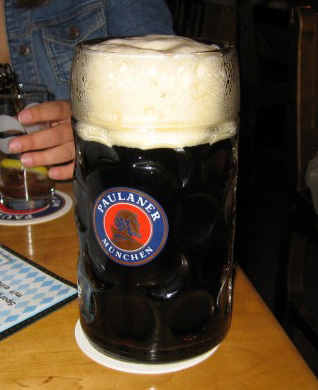
Beers are fermented alcoholic beverages obtained through a controlled process of brewing and fermentation in which carbohydrates from cereal grains are transformed into fermentable sugars and subsequently into ethanol. From a cultural and industrial perspective, beer represents one of the oldest and most extensively consumed fermented beverages worldwide, with a significant role in global drinking habits. It is typically packaged in bottles and cans, and is also widely served on tap as draught beer in pubs, bars, and restaurants.
Description of beers
The primary substrate used in production is malted barley, although a variety of other cereals—such as wheat, maize, rice, and oats—can also be incorporated depending on regional brewing practices and desired product characteristics. During the mashing phase, enzymatic activity converts the starches present in the grains into simpler sugars, which are subsequently extracted into water, forming a sugar-rich liquid referred to as wort.
Once prepared, the wort undergoes fermentation, a biological process in which yeast converts fermentable sugars into ethanol and releases carbon dioxide, the latter being responsible for the beverage’s natural carbonation and characteristic effervescence. In many modern industrial brewing systems, this carbonation is not entirely dependent on fermentation alone but may be standardized or intensified through forced carbonation methods to ensure consistency across batches.
A central element in most contemporary beer formulations is the use of hops, which provide bitterness, contribute to aromatic complexity, and act as natural preservatives and stabilizing agents. Nevertheless, alternative botanical additions—such as herbs, fruits, or historical mixtures like gruit—may be used either in combination with or in place of hops, depending on stylistic or traditional preferences.
The brewing industry itself is highly heterogeneous, encompassing large-scale multinational corporations alongside numerous small and medium-sized enterprises, including craft breweries and local brewpubs. Regarding chemical composition, most commercially available beers typically exhibit an alcohol by volume (ABV) in the range of approximately 4% to 6%, although substantial variation exists across different styles and production technique.
Ingredients of beers
Cereals
Beer production can be achieved using virtually any cereal grains, provided that its starches are rendered fermentable before brewing. This preparation step varies depending on the raw material: some grains, such as maize, require only thermal treatment, while others must undergo a more complex transformation process known as malting in order to activate their enzymatic potential.
At the core of this process is malt, most commonly derived from barley. Malt consists of grains that have been deliberately germinated to trigger the activation of internal enzymes capable of breaking down long starch chains into simpler, fermentable sugars. Once germination reaches the desired stage, the process is halted through controlled drying, producing what is referred to as green malt. This intermediate product is then subjected to kilning, resulting in dry malt. Variations in temperature and duration of heating determine the final characteristics: low-temperature treatment produces light malts, while progressively higher heat leads to darker, more intensely roasted products, up to black or roasted malts, which significantly influence the final colour and sensory profile of the beer.
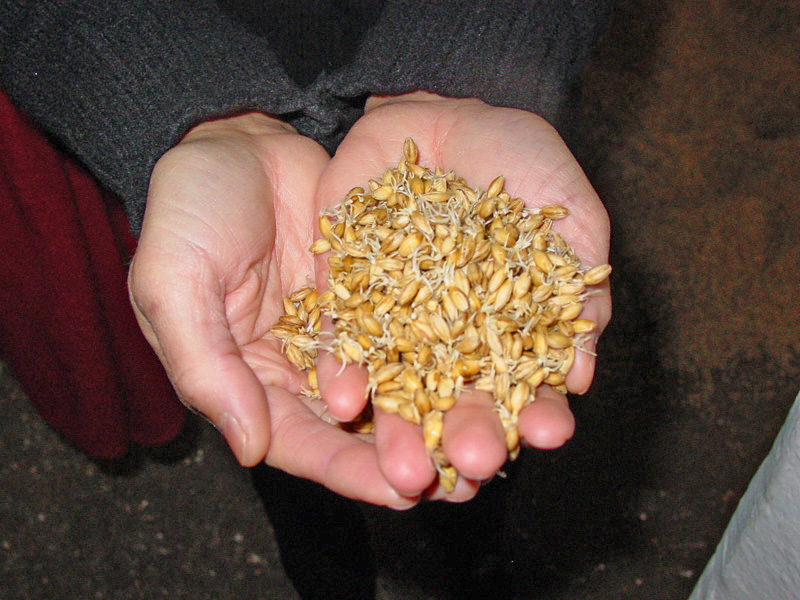
When grains other than barley are used, the malt is explicitly identified according to its origin, such as wheat malt or oat malt, reflecting the diversity of possible raw materials in brewing practice. Another key concept in brewing is the grist, which refers to the selected combination of malts and grains used to produce the wort. This mixture may consist of a single malt type, multiple malt varieties, or blends that also include unmalted cereals. The specific composition and proportions of the grist are crucial, as they directly determine the beer style and its final sensory characteristics.
Cereal ingredients used in brewing can be broadly classified into several functional groups. Base malts are lightly kilned, enzyme-rich malts that typically form the foundation of the grain bill, with common examples including Pale Ale and Pilsner malts. In contrast, specialty or additive malts are more heavily roasted, possess little to no enzymatic activity, and are primarily used in small quantities to modify colour, aroma, or flavour.
A third category, often referred to as intermediate or specialty malts, includes products such as caramel or crystal malts, which retain partial enzymatic activity while also contributing significant sensory complexity. Finally, raw or unmalted cereals, whether plain, toasted, or gelatinised, may be incorporated in limited amounts to adjust flavour and texture, relying on enzymes from malted grains to convert their starches during brewing.
Water
Beer is mainly composed of water, which represents about 85–92% of its final volume. Although it must always satisfy basic potability standards, the chemical composition of water is not universal across beer styles: some require soft, low-mineral water, while others are better suited to hard, mineral-rich water. For this reason, breweries rarely use untreated water directly; instead, it is usually processed and standardised through filtration, demineralisation, and dechlorination to ensure consistency and to avoid sensory defects.
The mineral profile of water is important in shaping beer properties. Elements such as calcium, sulphates, and chlorides are particularly relevant. Calcium supports mash efficiency and clarification, while sulphates enhance bitterness and dryness from hops. Chlorides, on the other hand, contribute to a fuller body and sweeter perception. Some trace metals like copper, manganese, and zinc can negatively interfere with yeast activity by reducing flocculation efficiency.
Yeasts
Most beer styles are produced using yeasts of the genus Saccharomyces, unicellular fungi that metabolise sugars into ethanol and carbon dioxide during fermentation. These microorganisms represent the biological core of brewing and are broadly divided into two main functional groups that define the major beer families.
The first group consists of top-fermenting yeasts, mainly Saccharomyces cerevisiae. These yeasts are naturally found in environments such as grain surfaces and mammalian mouth and operate optimally at relatively warm temperatures, typically between 12–24°C. During fermentation, they tend to rise and accumulate at the surface of the fermenting vessel. Historically significant, this yeast was studied by Louis Pasteur in the 19th century. Beers produced with this fermentation method are generally classified as Ales.
The second group includes bottom-fermenting yeasts, such as Saccharomyces carlsbergensis (also associated with S. uvarum). These organisms were historically associated with brewing traditions in southern Germany, where beer was stored in cool Alpine environments for maturation. They function at lower temperatures, approximately 7–13°C, and settle at the bottom of the fermenter during processing. The resulting beers are known as Lagers, a term derived from the German word for “storage.”
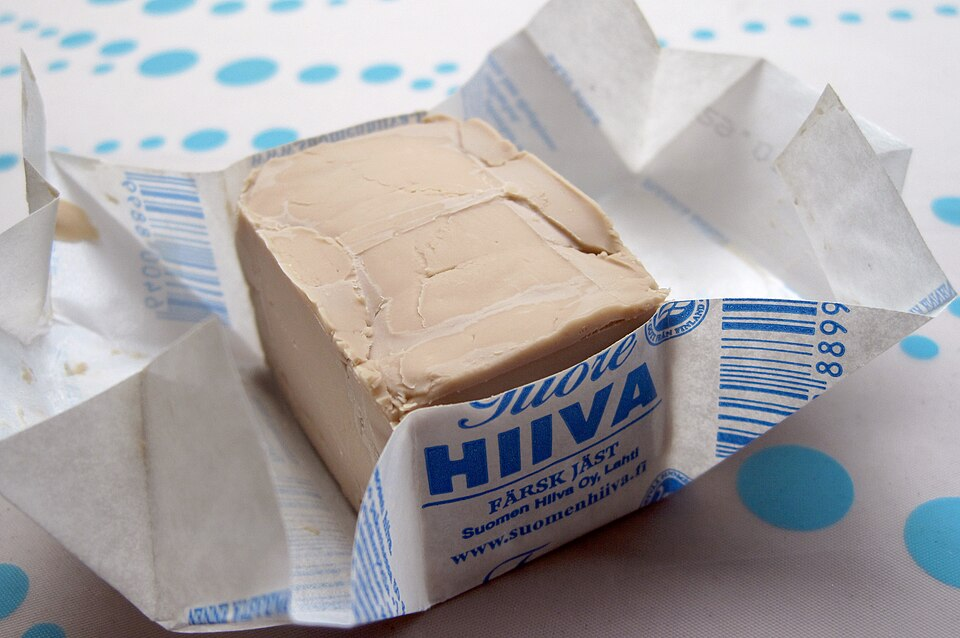
In addition to these controlled fermentations, some beer styles rely on spontaneous fermentation, where no specific yeast strain is added. Instead, the wort is exposed to environmental microorganisms, allowing a complex community of over 50 microbial species to participate in fermentation. Alongside Saccharomyces, organisms such as Lactobacillus (lactic acid bacteria) and Brettanomyces (a wild yeast capable of producing acetic acid) contribute to the process. Beers produced in this way, known as Lambic, are characteristically acidic, and often require additional techniques to moderate their acidity.
Aromatic additives
Beer is often flavoured using a range of aromatic additives, among which hops are the most important and widely used. Introduced into brewing around the end of the first millennium and widely adopted from the 16th century, hops are obtained from the female unfertilised flowers of the plant. Inside the bracts is a gland containing lupulin, which provides bitterness and aromatic complexity. The main bittering agents are alpha acids (with smaller contributions from beta acids), while essential oils are responsible for the characteristic aroma profile of beer.
Hop varieties are generally classified according to their brewing function. Bittering hops are rich in alpha acids and are typically added early during boiling to maximise bitterness extraction. Aroma hops are used mainly for their volatile and delicate aromatic compounds and are added later in the process or during maturation; well-known examples include European varieties such as Saaz, Spalt, Tettnang, English cultivars like Golding and Fuggle, and American varieties such as Cascade, Amarillo, and Centennial, often characterised by citrus-like notes. A specific technique known as dry hopping involves adding hops during or after fermentation to enhance aroma, a practice commonly associated with styles like IPA and APA. There are also dual-purpose hops, which combine both bittering and aromatic properties.
After harvesting—generally between late August and October depending on climate—hops are usually dried quickly due to their high perishability. They are then marketed in several forms, including whole dried flowers, compressed plugs, pellets, or extracts. In some seasonal productions, fresh hops may be used shortly after harvest. The variety, form, and freshness of hops all significantly influence the final sensory profile of the beer.
In addition to hops, beer may include other botanical or flavouring additives. Fruit can be added before fermentation as juice, pulp, or syrup, introducing additional sugars that lead to secondary fermentation and often contributing a fresher, more acidic profile, as seen in some traditional Lambic styles using cherry or raspberry. Other plant such as hemp, rosemary, chestnut, or tobacco have been used either as supplements or substitutes for hops.
Historically, spices played a major role in beer flavouring before hops became dominant, and they are still used in modern craft brewing, including ingredients such as ginger, coriander, orange peel, pepper, and nutmeg. More experimental approaches also include ingredients like honey or grape must, which can produce hybrid beverages such as Italian Grape Ale (IGA), where beer fermentation is combined with grape-derived sugars and aromas.
History of beers
Beer is considered one of the oldest fermented alcoholic beverages produced by humans, with origins dating back to approximately the 7th millennium BCE. Archaeological and chemical evidence from ancient Mesopotamia and Egypt suggests that early beer-like beverages developed independently in different civilizations wherever cereals and fermentable carbohydrates were available. The emergence of both bread and beer production is often associated with the transition from nomadic lifestyles to more stable and technologically advanced agricultural societies.
Early brewing traditions were particularly important among the Sumerians, who are believed to have formalised the role of the brewer. Beer was not only widely consumed, but also used as part of workers’ wages and in religious ceremonies. Ancient Mesopotamian societies produced different cereal-based beers and even regulated brewing through legal systems such as the Code of Hammurabi, which established rules concerning production quality and commercial distribution.
In Ancient Egypt, beer acquired both nutritional and symbolic importance. It was consumed daily by much of the population and was considered a source of nourishment and medicinal value. Unlike the largely domestic production seen in earlier societies, Egyptian brewing evolved into a more organised and large-scale activity, with production facilities linked to the authority of the pharaohs.
Beer also appeared in the traditions of other ancient cultures, including the Hebrews, Greeks, Romans, and Nuragic populations of Sardinia. Although Mediterranean civilizations generally favoured wine, beer remained present in religious rituals, social gatherings, and trade networks. Its wider diffusion throughout Europe is mainly associated with Celtic and Germanic peoples, who contributed significantly to its cultural expansion.
The beers consumed in early Europe differed considerably from modern products, often containing ingredients such as fruit, honey and spices. The widespread use of hops emerged much later, particularly during the Middle Ages, when monasteries played a fundamental role in improving brewing techniques and standardising production. Beer became especially important in regions where drinking water was unsafe, since the brewing process involved boiling and therefore reduced microbiological risks.
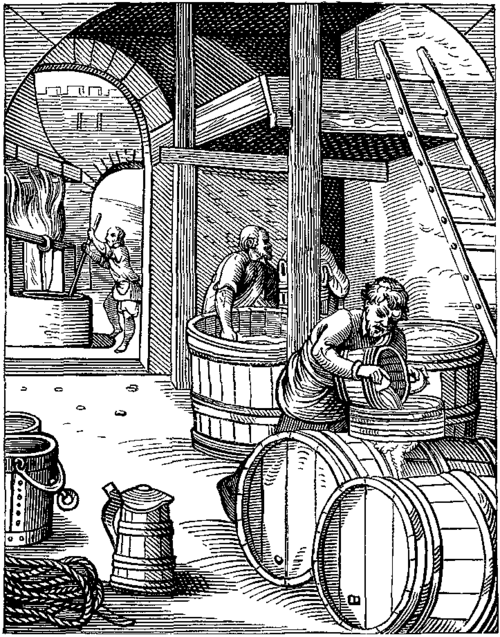
During the Industrial Revolution, brewing progressively shifted from small domestic production to large-scale industrial manufacturing. Technological innovations such as the thermometer and hydrometer allowed brewers to monitor fermentation more accurately and improve process control. At the same time, scientific studies on yeast contributed to the development of modern bottom-fermentation methods, which later became dominant in global beer production.
Production methods for beers
Beer production involves a complex brewing and fermentation process in which different cereals, ingredients, and microbial strains can be employed depending on the desired style. Although barley remains the most widely used grain, alternatives such as wheat, maize, rice, oats, rye, spelt, and even ingredients like cassava, sorghum, potato, or agave may also be incorporated in specific regional traditions. Beer categories are largely defined by the type of yeast and fermentation method, leading to the main classifications of Ale, Lager, and spontaneously fermented beers.
The process begins with malting, during which grains are germinated to activate enzymes capable of converting starch into fermentable sugars. Germination is interrupted through drying or roasting, after which the malt is milled and mixed with hot water in the mashing stage. During this phase, enzymatic reactions transform starches and proteins into soluble compounds, producing a sugar-rich liquid known as wort.
The wort is then separated from the solid grain residues through filtration and transferred to the boiling stage, where it is heated for sterilisation and biochemical stabilisation. During boiling, hops and other flavouring ingredients may be added to contribute bitterness and aroma. Insoluble protein–polyphenol complexes formed during heating are later removed, often using a whirlpool system, which separates solid particles from the clarified liquid.
After cooling, the wort undergoes fermentation at temperatures that vary according to the yeast strain employed. Top-fermentation yeasts (Saccharomyces cerevisiae) operate at warmer temperatures and rise toward the surface of the fermenter, producing beers classified as Ales. In contrast, bottom-fermentation yeasts (Saccharomyces carlsbergensis) function at lower temperatures and settle at the bottom, generating Lager beers. Fermentation converts sugars into alcohol, carbon dioxide, and aromatic compounds, contributing substantially to the sensory profile of the final product.
Following primary fermentation, beer usually undergoes a secondary maturation phase, during which it is stored at low temperatures to improve flavour balance, carbonation, and clarification. Some beers are subsequently pasteurised to increase microbiological stability, while others remain unpasteurised and are marketed as “raw” beers. Additional clarification may be achieved through filtration, although certain styles are intentionally left unfiltered.
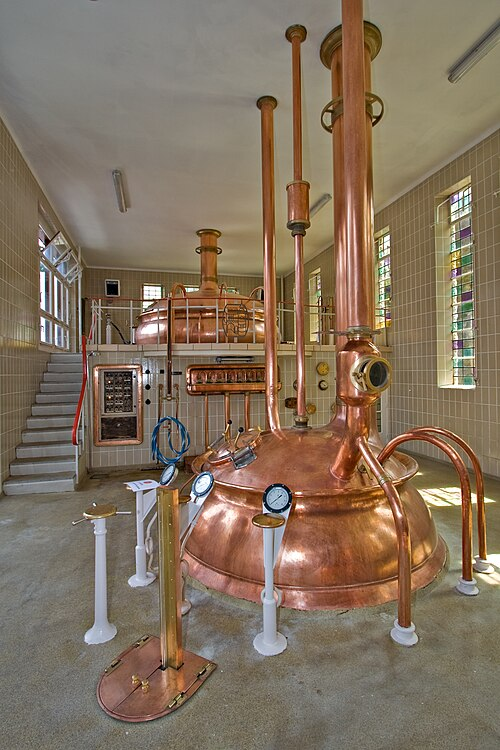
The final carbonation of beer can occur through direct addition of carbon dioxide or through natural methods such as refermentation in bottles, casks, or kegs, where residual yeast and fermentable sugars generate carbonation within sealed containers. Modern industrial brewing combines these traditional biochemical principles with advanced technological control systems, allowing large-scale and highly standardised beer production.
Beer serving
Beer is commonly served as draught (draft) beer, dispensed from pressurised kegs using carbon dioxide, sometimes mixed with nitrogen. Nitrogen is used to create smaller bubbles, producing a creamy texture and a denser foam. A related innovation is the nitrogen widget, introduced in canned beers to simulate the effect of draught service.
A traditional alternative is cask-conditioned ale, also known as real ale, which is unfiltered and unpasteurised. These beers undergo a final natural conditioning in the cask. Before serving, the container is placed horizontally, cooled to cellar temperature, and then carefully tapped and vented. The disturbance of sediment requires a resting period before the beer can be served, either through a hand pump or by gravity.
From an environmental perspective, draught beer generally has a lower impact than bottled beer due to reduced packaging. However, the overall footprint of beer consumption also depends heavily on distribution, packaging, and waste management, which can represent a significant share of total emissions. The use of reusable containers can further reduce environmental impact.
Beer is also widely distributed in bottles and cans. Bottled beers are often filtered, while some retain yeast for secondary fermentation (bottle conditioning). Cans provide strong protection from light and oxygen, helping preserve quality, and are now widely used across different market segments. Serving temperature strongly influences perception: cold temperatures enhance refreshment, while warmer temperatures allow greater expression of aroma and flavour. For this reason, different beer styles are associated with specific serving ranges, from chilled lagers to near-room-temperature strong ales.
Beer is consumed in a variety of vessels, including glasses, mugs, bottles, cans, and plastic cups. The shape of the container can influence aroma release, foam stability, and sensory perception, while the pouring technique affects head formation and overall presentation. Some bars also use beer towers, self-service systems with a cooled reservoir and tap for group consumption.
Uses of beers
Beer, similarly to wine, is also used as an ingredient in cooking, where it contributes aroma, depth, and complexity to a variety of traditional dishes. In many European cuisines, it is commonly incorporated into meat-based preparations and stews, where it is used as a cooking liquid or flavouring component during slow cooking.
Among the most well-known examples is the English “Steak and Ale Pie”, a dish consisting of beef slowly stewed with ale beer and then enclosed in a pastry crust. In German cuisine, dishes such as Bauernschmaus include pork cuts braised in beer, highlighting its role in enriching fatty meats with deeper flavour. Similarly, in the Flemish tradition, Carbonade flamande is a beef stew cooked with beer that develops a characteristic sweet–bitter balance during long simmering.
Beer is also used in more rustic preparations, such as sausage with sauerkraut, where sausages may be cooked or simmered in beer to enhance taste complexity. In some German culinary traditions, dark beers such as bock are used as a base ingredient in versions of goulash, a slow-cooked beef and potato stew originally derived from Hungarian cuisine. Another example is beer soup, which exists in multiple regional variants, particularly in Germany, where it has a long-standing culinary tradition.
Beyond savoury dishes, beer can also appear in more artisanal or domestic preparations, such as beer-and-cherry jam, which combines fruit and beer to create a sweet-and-bitter preserve often served with baked goods.
Classification of beers
Beers are primarily classified according to the type of yeast used in fermentation and, consequently, the fermentation process itself. In this sense, beers are generally divided into:
- Ale beers
- Lager beers
- Lambic beers
Another commonly used but relatively limited classification is based on beer colour, typically expressed through the SRM scale. This system is intuitive, but not sufficient on its own to define beer styles. Here, only the most relevant and easily recognisable colour ranges are considered:
- Pale straw beers
- Pale gold beers
- Amber beers
- Brown beers
- Black beers
Nutritional facts table
Please note that nutritional values may slightly vary depending on the type of beer. The table below shows values for Bayerisches Bier IGP
| Nutrients | Per 100 g |
| Calories (kcal) | 45 |
| Total fat (g) | 0 |
| ———Saturated fat (g) | 0 |
| Cholesterol (mg) | 0 |
| Sodium (mg) | 0 |
| Total carbohydrates (g) | 4 |
| ———Dietary fiber (g) | 0 |
| ———Total sugar (g) | 0.2 |
| Protein (g) | 0.6 |
Recipes that use this product as an ingredient:

Source(s):
https://en.wikipedia.org/wiki/Beer
https://it.wikipedia.org/wiki/Birra
Photo(s):
1. Jmcstrav at English Wikipedia(Original text: John McStravick), Public domain, via Wikimedia Commons
2. Finlay_McWalter’s friend SJB, CC BY-SA 3.0 http://creativecommons.org/licenses/by-sa/3.0/, via Wikimedia Commons
3. Hellahulla, CC BY-SA 4.0 https://creativecommons.org/licenses/by-sa/4.0, via Wikimedia Commons
4. Jost Amman, Public domain, via Wikimedia Commons
5. Luca Galuzzi, CC BY-SA 2.5 https://creativecommons.org/licenses/by-sa/2.5, via Wikimedia Commons