
Extra virgin olive oil
Food, Plant source foods, Vegetable oils and derivatives, Olive oil
Consumption area(s): We have not found reliable data on the spread of this product, but it is likely consumed in the same countries where olive oil in general is commonly used.
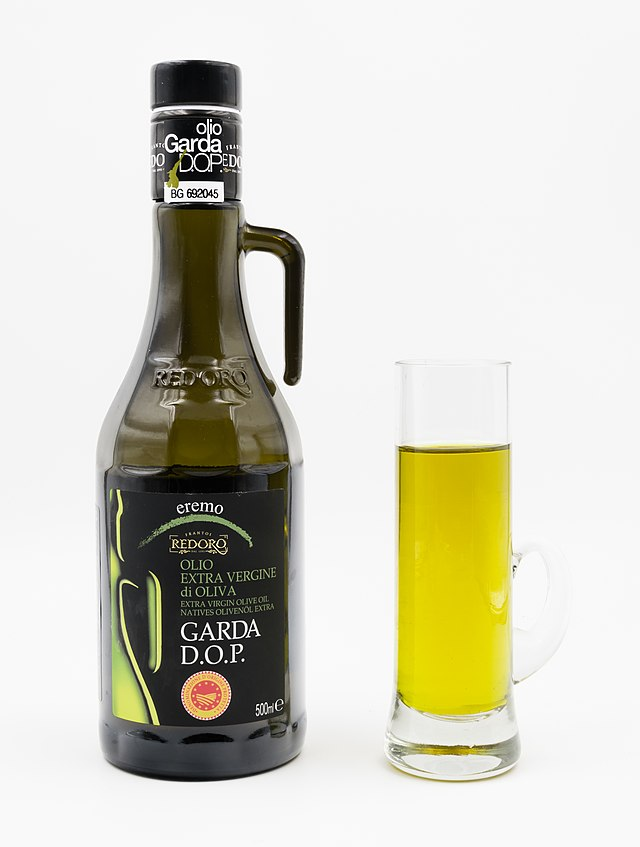
Introduction
Extra virgin olive oil is a high-quality product, obtained exclusively through the mechanical pressing of olives, without the use of chemicals or any form of refining. To be marketed under this designation, it must comply with strict regulatory standards established by European legislation (Council Regulation EEC No. 2568/91 and subsequent amendments).
Key chemical parameters for extra virigin olive oil
Evaluating the quality of extra virgin olive oil extends beyond sensory attributes like aroma and flavor. Beneath its rich organoleptic profile lies a precise chemical blueprint that serves as an objective benchmark for freshness, authenticity, and nutritional excellence. While numerous laboratory analyses exist to verify olive oil purity, a select group of chemical parameters stands out as the most critical indicators of superior craftsmanship and raw material health.
Free Acidity
At the foundation of extra virgin olive oil quality is free acidity, which measures the proportion of free fatty acids released from lipid molecules. Rather than reflecting a sour taste, acidity indicates the physical integrity of the olives prior to milling. Healthy, intact olives harvested at peak ripeness and processed without delay yield remarkably low values. Conversely, fruit damaged by pests, frost, or prolonged storage before pressing results in elevated acidity. To earn the classification of standard extra virgin olive oil, the legally required value must remain at or below 0.8%.
Peroxide Value
Once the oil is extracted, its initial state of freshness is primarily assessed through its peroxide value. This parameter quantifies primary oxidation, offering clear insight into how much the oil has interacted with oxygen, heat, or light during extraction and handling. A lower level indicates gentle processing, careful storage, and an oil that will maintain its quality over time. For standard extra virgin olive oil, the maximum allowed value is set at 20 meq O2/kg, above which the oil is considered excessively oxidized.
UV Absorbance (K232, K270, and Delta K)
Complementing peroxide testing, spectrophotometric analysis in the ultraviolet spectrum measures secondary oxidation products formed as the oil ages or degrades. Parameters such as K232 and K270 detect advanced structural breakdown, while Delta K acts as a critical test for authenticity. Together, these values confirm the structural stability of the product and guarantee that the oil is completely pure and unadulterated by refined or low-quality oils. For standard extra virgin olive oil, official regulations require maximum values of 2.50 for K232, 0.22 for K270, and 0.01 for Delta K.
Total Polyphenols
Beyond parameters that track degradation, the true health value and longevity of extra virgin olive oil are defined by its bio-active compounds, starting with total polyphenols. These potent natural antioxidants are responsible for the signature bitterness and peppery pungency characteristic of fresh oils. Scientifically, they shield the oil from self-oxidation while delivering significant anti-inflammatory and cardiovascular benefits to consumers. Although general European Union regulations do not mandate a minimum threshold value for standard extra virgin olive oil, higher concentrations directly correlate with superior stability and nutritional quality.
Tocopherols (Vitamin E)
Working in harmony with polyphenols, tocopherols represent essential fat-soluble micronutrients naturally present in olives, predominantly as alpha-tocopherol (Vitamin E). They act as additional natural preservatives that reinforce the structural stability of the oil against oxidation. At the same time, high tocopherol levels enhance the overall nutritional profile of the oil, providing vital antioxidant protection for human health. As with polyphenols, standard extra virgin olive oil regulations do not set a legal minimum value, but their presence is a fundamental marker of genuine, high-quality extractions.
Classification of extra virgin olive oil
Extra virgin olive oil can be classified based on its geographic origin or the specific olive varieties used in its production:
Nutritional facts table
Please note that values may vary slightly depending on the type of extra virgin olive oil.
| Nutrients | Per 100 g |
| Calories (kcal) | 899 |
| Total fat (g) | 99.9 |
| ———Saturated fat (g) | 15.32 |
| Cholesterol (mg) | 0 |
| Sodium (mg) | 0 |
| Total carbohydrates (g) | 0 |
| ———Dietary fiber (g) | 0 |
| ———Total sugar (g) | 0 |
| Protein (g) | 0 |
Photo(s):
1. Jacek Halicki, CC BY-SA 4.0 https://creativecommons.org/licenses/by-sa/4.0, via Wikimedia Commons