
Oceania
Continent on Earth
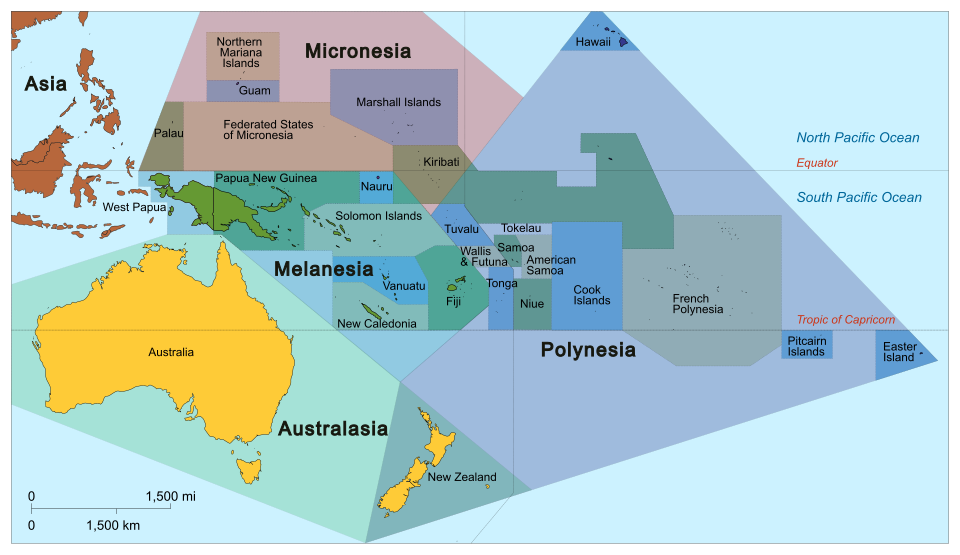
Oceania is the smallest continent by land area, with mainland Australia forming its principal continental landmass. Extending across both the Eastern and Western Hemispheres and largely situated within the water hemisphere, it covers approximately 9 million km² (3.5 million sq mi) and had a population of about 44.5 million in 2021, counting Australia but excluding the Malay Archipelago. It is also the second-least populated continent, after Antarctica. Oceania contains the third-largest remaining tropical rainforest area on Earth, concentrated mainly on the island of New Guinea.
Geographically, Oceania is commonly divided into four major geo- cultural regions: Australasia, Melanesia, Micronesia and Polynesia.
| Area (km² / sq mi) | 9,000,000 / 3,500,000 |
| Population | 44,117,724 (2021) |
History of Oceania
The first inhabitants of Australia and nearby islands were Indigenous Australians, whose ancestors migrated from Africa through Asia around 70,000 years ago and reached Australia approximately 50,000 years ago. During the last Ice Age, lower sea levels connected Australia with New Guinea and Tasmania, facilitating human migration. The Torres Strait Islanders developed as a distinct Indigenous population, while some Melanesian peoples retain traces of ancient Denisovan ancestry.
In Melanesia, the earliest populations were mainly ancestral Papuan-speaking peoples. From around 3,000 years ago, Austronesian peoples arrived from Southeast Asia and interacted with them, influencing the region’s languages, cultures and genetics. Micronesia was settled several millennia ago, while the Chamorro and other island populations developed distinctive societies and advanced maritime traditions.
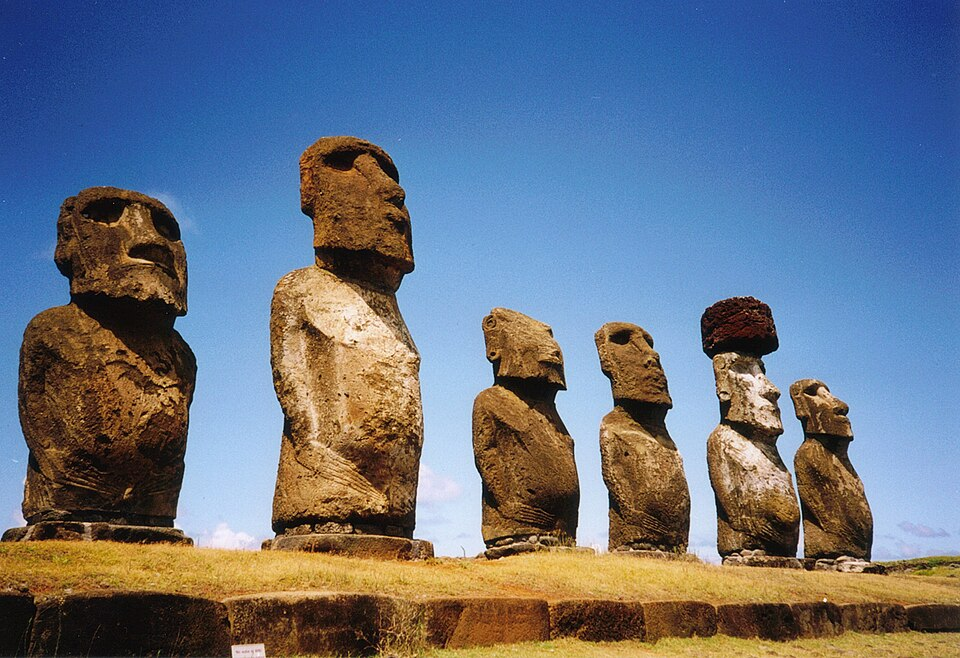
The Polynesians descended from Austronesian-speaking populations that migrated from Taiwan through Island Southeast Asia and eventually across the Pacific. The expansion of the Lapita culture around 1400 BCE marked an important stage in this process, followed by the settlement of numerous remote islands, including Rapa Nui around the 12th century.
European exploration began in the 16th century, initially led by Portuguese and Spanish navigators. Magellan crossed the Pacific in 1520, while later Dutch explorers expanded European knowledge of the region. Willem Janszoon made the first documented European landing in Australia in 1606, followed by Abel Tasman and, in 1770, James Cook, who explored Australia’s eastern coast and encountered Aboriginal Australians.
From the late 18th century, European colonisation expanded rapidly. Britain established colonies in Australia, New Zealand and Fiji, while France, Germany, Spain and the United States acquired territories across the Pacific. During the World Wars, Oceania became an important military theatre, particularly during World War II, when Japan occupied or attacked several Pacific territories before its defeat in 1945.
After World War II, decolonisation and political independence accelerated. Australia and New Zealand gained greater autonomy, Hawaii became a U.S. state in 1959, and Fiji and Tonga became independent in 1970. Other Pacific territories subsequently achieved independence or greater self-government, while regional cooperation developed through the Pacific Islands Forum.
Geography of Oceania
Under the four-subregion model, Oceania covers a vast area, extending from New Guinea in the west to Easter Island and Sala y Gómez in the east, and from the Bonin Islands in the north to Macquarie Island in the south. Most definitions exclude the Pacific territories belonging geographically to Asia, such as Japan, Taiwan, and the Ryukyu Islands. The region stretches roughly from 28°N to 55°S.
Its islands are mainly divided into four geological types: continental islands, volcanic high islands, coral reefs, and uplifted coral platforms. Volcanic islands are widespread and include Hawaii, Fiji, the Solomon Islands, and American Samoa, while coral formations are generally lower and flatter.
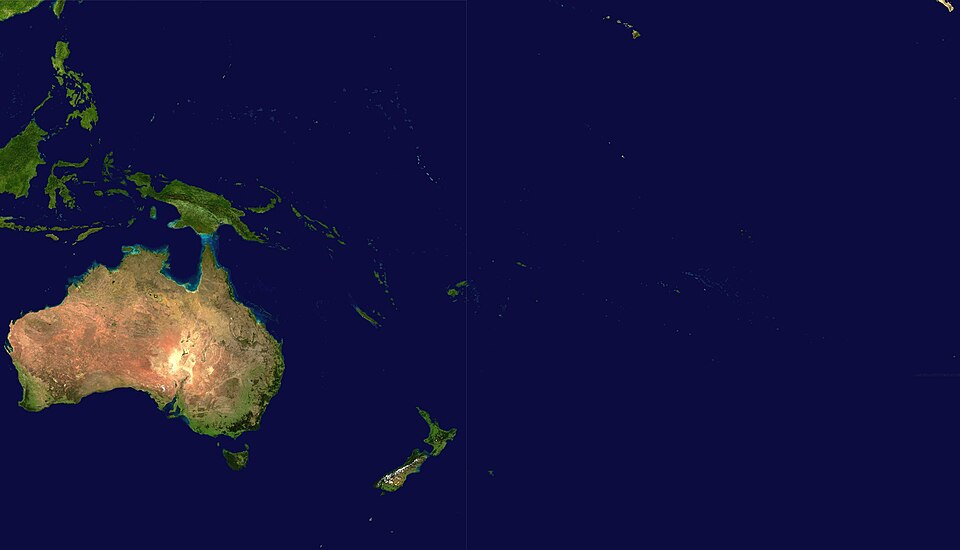
The region is strongly influenced by plate tectonics, particularly the Pacific Plate, the world’s largest tectonic plate. Australia is one of Earth’s oldest and most stable landmasses, whereas New Zealand lies along the boundary between the Australian and Pacific plates and consequently experiences frequent earthquakes, volcanism, and geothermal activity.
Oceania has highly varied vegetation. Australia ranges from tropical rainforests to vast deserts and semi-arid landscapes, with plants such as eucalypts, acacias, and banksias adapted to drought and fire. The Pacific islands generally support tropical forests, while New Zealand has vegetation adapted to environments ranging from subtropical coasts to alpine regions.
The fauna of Oceania is equally distinctive, with many species found nowhere else. Australia is particularly known for its marsupials, including the kangaroo, koala, and Tasmanian devil, as well as unusual animals such as the platypus and emu. New Zealand has developed a remarkable endemic birdlife, including the kiwi, kea, takahē, and kākāpō, together with the distinctive tuatara. Across Australia, New Zealand, New Guinea, Wallacea, and the Pacific islands, the region contains around 42% of the world’s parrot species, highlighting its exceptional biodiversity and endemism.
Climate
The Pacific Islands mainly have tropical rainforest and savanna climates, strongly influenced by the El Niño–Southern Oscillation (ENSO). The western Pacific also experiences summer monsoons and wet seasons, followed by drier winter conditions. Tropical cyclones affect several areas, particularly during the wet season.
Australia has a highly diverse climate, ranging from tropical conditions in the north to desert and semi-arid environments across much of the interior. The southern and eastern coasts include temperate, humid subtropical, and Mediterranean climates, while snow occurs in the southeastern highlands and Tasmania. Most of New Zealand has a temperate maritime climate, although conditions vary from very wet areas in the west to drier and subtropical regions elsewhere. Snow is common at higher elevations and in the South Island.
Hawaii also has considerable climatic diversity due to its topography and elevation, despite being entirely tropical. Rainfall is generally greatest during the October–April period, while some northwestern islands can experience typhoons.
Society of Oceania
Demography
Oceania has a relatively small and unevenly distributed population, concentrated mainly in its larger and more developed countries. Australasia is by far the most populated macro-region, largely because of Australia, which accounts for the overwhelming majority of its inhabitants. New Zealand is the second major population centre, while the smaller Australian territories have only limited populations.
Melanesia has a much smaller population overall, although it includes Papua New Guinea, the largest population centre in the region. Other important populations are found in Fiji, the Solomon Islands and Vanuatu, while the Indonesian territories of western New Guinea also contribute significantly to the region’s population.
Micronesia and Polynesia are characterized by numerous small island populations. Micronesia has a particularly small total population, with some islands and territories showing very high population densities despite their tiny land areas. Polynesia is more populated, mainly because of Hawaii, French Polynesia and Samoa, although most of its other islands have relatively small populations.
Languages
The indigenous languages of Oceania can be divided into three main groups: Austronesian languages, widespread across the Pacific and including Māori, Fijian and Hawaiian; Aboriginal Australian languages, particularly the Pama–Nyungan family; and the Papuan languages of New Guinea and nearby islands, including the Trans–New Guinea family.
Oceania also has many non-indigenous languages introduced through migration and colonial history. English is widespread in Australia, New Zealand and several Pacific territories, while French is prominent in French territories and Spanish is spoken on Easter Island. The region also has numerous Creole and mixed languages, which developed through contact between indigenous languages and Malay or European colonial languages.
Religions
The earliest religions of Oceania were generally polytheistic and focused on three main elements: the worship of nature-related creator and destructive deities, the veneration of ancestors, and belief in a world of spirits. These traditions created complex systems of symbols, exchanges, obligations and taboos that shaped everyday life. Famous examples include the deities of Hawaii and the moai ancestor tradition of Rapa Nui.
During the colonial period, European missionaries introduced Christianity, through both Protestant and Catholic missions. It subsequently became the dominant religion across most of Oceania, often blending with older indigenous traditions. Other religions arrived mainly through Asian migration. Chinese, Indian, Japanese, Vietnamese and Indonesian communities contributed traditions such as Confucianism, Shinto, Hinduism, Buddhism and Islam, although these remain minority religions in the region.
Economy of Oceania
Australia and New Zealand are the only fully developed sovereign countries in Oceania, with Australia by far the region’s largest economy. Both are highly integrated into the global economy, while territories such as New Caledonia, Hawaii and French Polynesia also have highly developed economies. Australia is particularly strong in services, manufacturing and natural resources, while New Zealand relies heavily on international trade, with tourism playing an important role.
The economies of the Pacific Islands are generally smaller and more dependent on services, tourism, agriculture, fishing and natural resources. Major products include coconuts, sugar, timber, cocoa, palm oil and ginger, while fishing is particularly important for many island nations. Fiji is among the region’s more developed island economies, with sugar, tourism and agriculture as major sources of income.
Tourism is a major economic activity throughout Oceania. Australia and New Zealand attract visitors with their cities, landscapes and natural attractions, while Pacific destinations such as Fiji, Vanuatu and Hawaii are especially popular for beaches, coral reefs and tropical environments. Tourism provides significant employment and foreign revenue, particularly for the smaller island economies.
Culture of Oceania
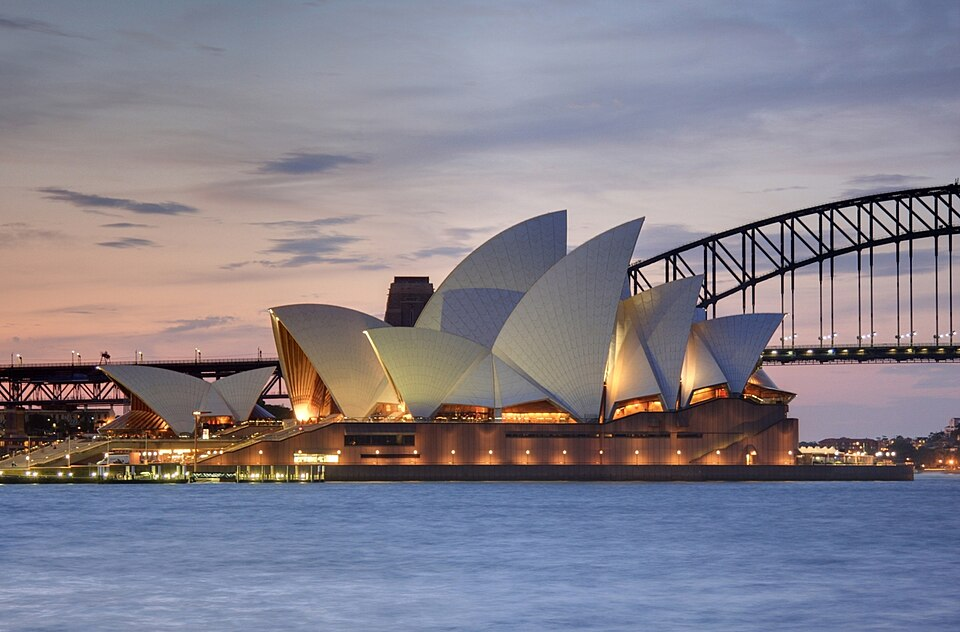
Since the late 18th century, Australian culture has developed mainly from Anglo-Celtic traditions, combined with Indigenous heritage and later influences from the United States, Asia and other immigrant communities. This mixture has created a distinctive multicultural identity. Australia is also known for its coffee culture, while its cuisine combines British traditions with Indigenous bush tucker and foods introduced by European and Asian migrants. Australian cinema, museums and major celebrations such as Sydney’s New Year’s Eve are also important parts of its cultural life.
In Hawaii, traditional Polynesian heritage remains visible in music, religion, dance and cuisine. Hawaiian music ranges from indigenous styles to rock and hip-hop, with instruments and techniques such as the steel guitar and slack-key guitar gaining international recognition. New Zealand has a predominantly Western culture strongly shaped by Māori traditions and later immigration from Europe, Asia and other Pacific regions. Māori music, dance and arts remain important, while the country has also become internationally famous as a filming location for productions such as The Lord of the Rings and The Hobbit.
In Samoa, the traditional fa’a Samoa remains central to social and political life. Important elements include ceremonial practices, finely woven textiles, traditional dances such as siva and sasa, and culturally significant tattoos. These traditions continue to play an important role despite centuries of European influence.
The arts of Oceania are highly diverse and often reflect themes connected with nature, fertility and the supernatural. Indigenous artistic traditions include rock painting, petroglyphs, tattooing, wood and stone carving, and textile production. Indigenous Australian rock art represents one of the world’s oldest continuous artistic traditions, while other Oceanian cultures produced remarkable works such as the moai of Easter Island and the monumental structures of Nan Madol. Hawaiian traditions also include wood carving, feather work, bark cloth and tattooing.
Cuisine of Oceania
The cuisines of Oceania encompass the culinary traditions of Australia, New Zealand, New Guinea, and the many islands and island groups across the region.
Common ingredients
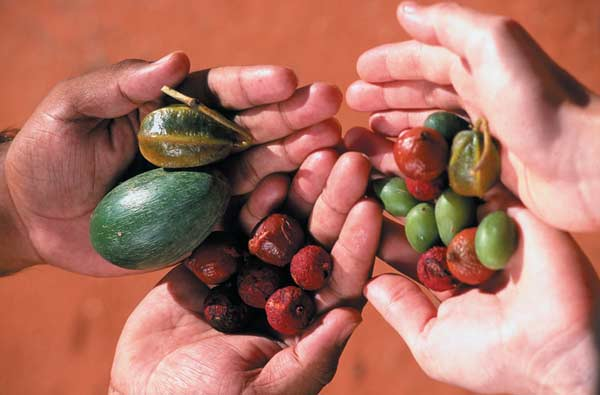
Because Oceania is largely made up of islands, seafood is a major component of the diet. Common staple foods include potatoes, sweet potatoes, taro and yams, while coconut and products such as coconut milk, oil and sugar are especially important in the tropical areas.
Culinary traditions and customs
One of the most characteristic culinary techniques in Oceania is the earth oven, in which food is placed over heated stones and then covered with earth to cook slowly. The method is believed to have originated in Papua New Guinea before spreading across the Pacific through Austronesian seafarers.
The technique became particularly important among Polynesian societies, as it was well suited to cooking vegetables. Because many Pacific communities had limited access to pottery, stone boiling, using fire-heated stones to heat water, was also widely practiced. With the arrival of Europeans, some Indigenous communities gradually adopted metal cooking utensils, including the Māori during their encounters with European explorers in the 18th century.
Political division of Oceania
Politically, Oceania comprises countries located entirely or predominantly within it, transcontinental countries with territory in the region, and countries located outside the region that possess territories, dependencies, or constituent regions within it. For countries in the first group, such territories are shown in parentheses and divided between those within and outside the region; for the other groups, only the territories located within the region are shown.
Countries located entirely or predominantly in Oceania:
- Australia 🇦🇺 (Inside Oceania: Ashmore and Cartier Islands 🇦🇺, Christmas Island 🇨🇽, Cocos (Keeling) Islands 🇨🇨, Coral Sea Islands 🇦🇺, Heard Island and McDonald Islands 🇦🇺, Norfolk Island 🇳🇫)
- Federated States of Micronesia 🇫🇲
- Fiji 🇫🇯
- Kiribati 🇰🇮
- Marshall Islands 🇲🇭
- Nauru 🇳🇷
- New Zealand 🇳🇿 (Inside Oceania: Cook Islands 🇨🇰, Niue 🇳🇺, Tokelau 🇹🇰)
- Palau 🇵🇼
- Papua New Guinea 🇵🇬
- Samoa 🇼🇸
- Solomon Islands 🇸🇧
- Tonga 🇹🇴
- Tuvalu 🇹🇻
- Vanuatu 🇻🇺
Transcontinental countries:
- Indonesia 🇮🇩
Countries with territories in Oceania:
- Chile 🇨🇱 (Inside Oceania: Easter Island, Salas y Gómez Island)
- Ecuador 🇪🇨 (Inside Oceania: Galápagos Islands)
- France 🇫🇷 (Inside Oceania: French Polynesia 🇵🇫, New Caledonia 🇳🇨, Wallis and Futuna 🇼🇫)
- United Kingdom 🇬🇧 (Inside Oceania: Pitcairn Islands 🇵🇳)
- United States 🇺🇸 (Inside Oceania: American Samoa 🇦🇸, Guam 🇬🇺, Hawaii 🇺🇸, Northern Mariana Islands 🇲🇵)
Geo-cultural division of Oceania
Geo-culturally, Oceania is generally divided into four main regions:
- Australasia
- Melanesia
- Micronesia
- Polynesia
Traditional recipes of Oceania
(Only recipes unique to the area or strongly associated with it and rarely found elsewhere are included)
Traditional products of Oceania
(Only products unique to the area or strongly associated with it and rarely found elsewhere are included)
Recipes commonly prepared in Oceania
(Only products specific to this territorial level, and not already covered at a broader administrative or geocultural level, are included)
Products commonly consumed in Oceania
(Only recipes specific to this territorial level, and not already covered at a broader administrative or geocultural level, are included)
Source(s):
https://en.wikipedia.org/wiki/Europe
https://en.wikipedia.org/wiki/European_cuisine
Photo(s):
1. source: Oceania_ISO_3166-1.svg: User:Tintazulderivative work: Cruickshanks, CC BY-SA 3.0 https://creativecommons.org/licenses/by-sa/3.0, via Wikimedia Commons
2. Makemake, CC BY-SA 3.0 http://creativecommons.org/licenses/by-sa/3.0/, via Wikimedia Commons
3. Adam.J.W.C., CC BY-SA 2.5 https://creativecommons.org/licenses/by-sa/2.5, via Wikimedia Commons
4. Tourism NT, Attribution, via Wikimedia Commons