
Monsummano Terme
Municipality in the province of Pistoia
Earth, Europe, Italy, Tuscany, Province of Pistoia
Introduction
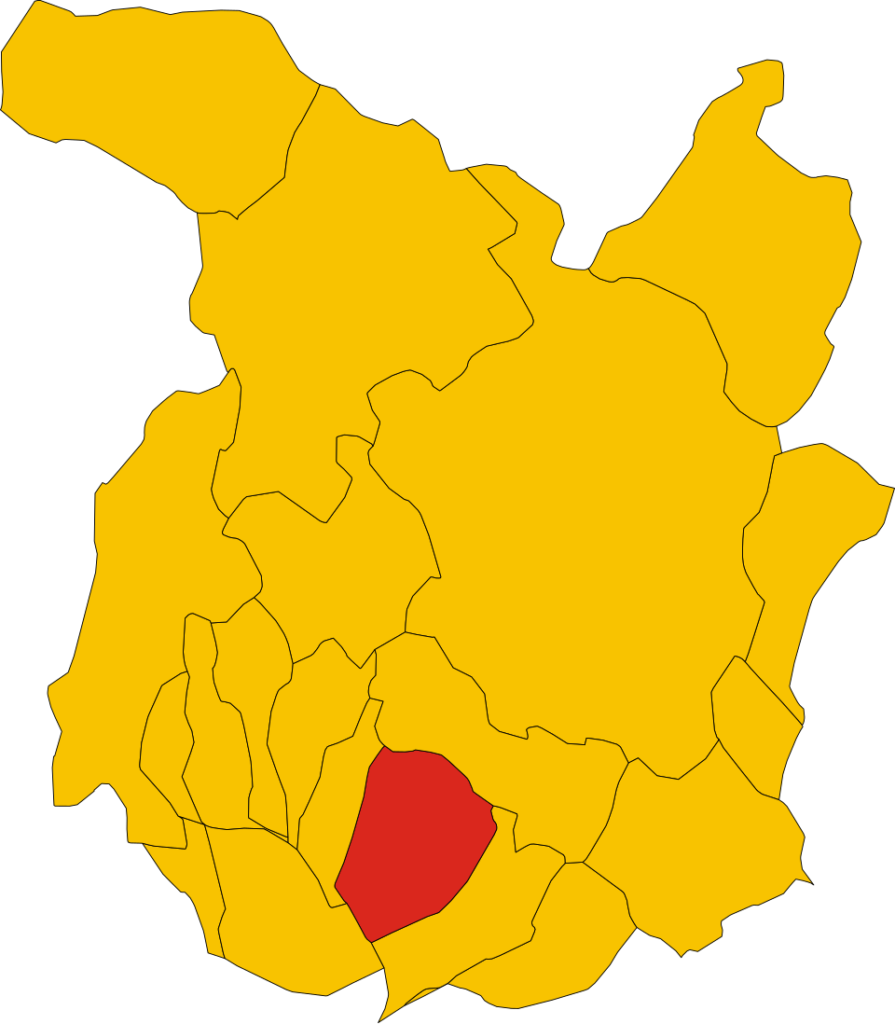
Monsummano Terme is an municipality in the province of Pistoia, in Tuscany. Located in the eastern part of Valdinievole, its territory includes the Montalbano hills, the urbanized plain, and the Padule di Fucecchio, one of the most important wetlands in Tuscany, known for its rich biodiversity and its importance for birdwatching.
The landscape is dominated by Monsummano Alto, a hill reaching around 340 metres above sea level, characterized by a steep profile partly caused by former quarry activities. The town’s name has uncertain origins: it may come from the Latin mons (“hill”) combined with Summanus, an ancient Roman deity linked to night storms, or it could simply derive from mons summus, meaning “high mountain”.
| Area (km² / sq mi) | 32.62 (12.59) |
| Population | 20,891 (2026) |
History of Monsummano Terme
The area of Monsummano Terme has been inhabited since Etruscan and Roman times, as shown by archaeological discoveries and the remains of several Roman villas on the slopes of Montalbano. The hilltop settlement of Monsummano Alto was already established by the 13th century and became a strategic fortress contested by Florence and Lucca before coming under Florentine control in 1331. The surrounding plains remained marshy until large-scale land reclamation began during the 16th century.
The modern town developed mainly after the reported Marian apparition of 1573, which inspired the construction of the Sanctuary of Santa Maria della Fontenuova and buildings for welcoming pilgrims. During the 19th century, Monsummano gained cultural importance through figures such as the writer and politician Ferdinando Martini and the poet Giuseppe Giusti, while its thermal springs also contributed to the town’s growing reputation.
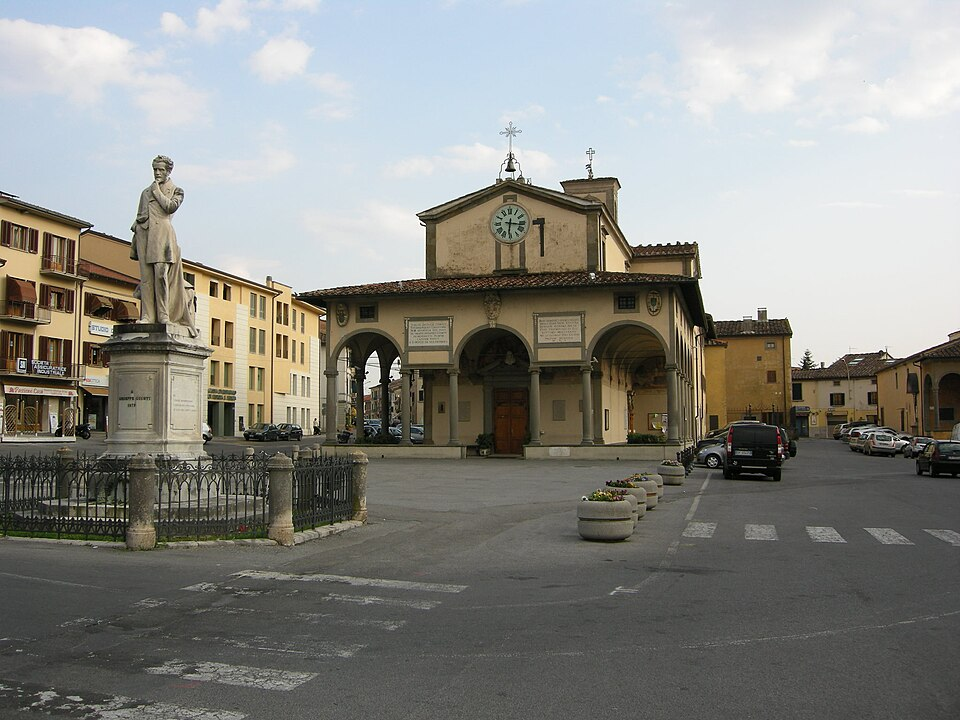
During the Second World War, Monsummano was used as a place of civil internment for foreign Jews, many of whom were later deported and did not survive. In the 20th century, the town became an important centre for the footwear industry, attracting workers from southern Italy, while its spa tourism, based on the Grotta Giusti and Grotta Parlanti, continued to expand.
In 1969, David Bowie made his first appearance in Italy by performing at the International Record Festival in Monsummano Terme. Although he finished second in the competition, he received a special award, and in 2019 the park of Villa Renatico Martini was dedicated to the British artist in his honour.
Point of interest and culture in Monsummano Terme
Among the town’s main religious landmarks are the Sanctuary of Santa Maria della Fontenuova, the Church of San Leopoldo, the Church of San Nicolao in Monsummano Alto, the Church of Saints Michael the Archangel and Lawrence the Martyr, the Oratory of Madonna della Neve, and the Church of Christ the Redeemer.
Its most notable historic and cultural attractions include the Medici Villa of Montevettolini, Villa Martini, the Casa Giusti Museum, the medieval village of Montevettolini, the Yves Montand Theatre, and the historic Osteria dei Pellegrini. The town is also home to the Castle of Monsummano Alto, an important medieval fortress overlooking the surrounding countryside.
Among the area’s natural attractions are the famous Grotta Giusti and Grotta Parlanti, two thermal caves that have contributed to Monsummano Terme’s reputation as a spa destination.
Traditional products of Monsummano Terme

Source(s):
https://it.wikipedia.org/wiki/Monsummano_Terme
Photo(s):
1. Vonvikken, Public domain, via Wikimedia Commons
2. I, Sailko, CC BY-SA 3.0 http://creativecommons.org/licenses/by-sa/3.0/, via Wikimedia Commons