
Hams
Food, Animal source foods, Preserved animal source products, Preserved pork products
Consumption area(s): (Presumably in the same countries where pork is consumed. Therefore, the countries that consumed more than 10 kg of pork per capita in 2022 are considered): Andorra 🇦🇩, Antigua and Barbuda 🇦🇬, Argentina 🇦🇷, Armenia 🇦🇲, Australia 🇦🇺, Austria 🇦🇹, Bahamas 🇧🇸, Barbados 🇧🇧, Belarus 🇧🇾, Belgium 🇧🇪, Belize 🇧🇿, Bolivia 🇧🇴, Bosnia and Herzegovina 🇧🇦, Brazil 🇧🇷, Bulgaria 🇧🇬, Canada 🇨🇦, Cape Verde 🇨🇻, Chile 🇨🇱, China 🇨🇳, Colombia 🇨🇴, Cyprus 🇨🇾, Costa Rica 🇨🇷, Croatia 🇭🇷, Cuba 🇨🇺, Czech Republic 🇨🇿, Denmark 🇩🇰, Dominica 🇩🇲, Dominican Republic 🇩🇴, Ecuador 🇪🇨, Estonia 🇪🇪, Finland 🇫🇮, France 🇫🇷, Georgia 🇬🇪, Germany 🇩🇪, Greece 🇬🇷, Grenada 🇬🇩, Hungary 🇭🇺, Iceland 🇮🇸, Ireland 🇮🇪, Italy 🇮🇹, Japan 🇯🇵, Kiribati 🇰🇮, Laos 🇱🇦, Latvia 🇱🇻, Liechtenstein 🇱🇮, Lithuania 🇱🇹, Luxembourg 🇱🇺, Malawi 🇲🇼, Marshall Islands 🇲🇭, Malta 🇲🇹, Mexico 🇲🇽, Micronesia 🇫🇲, Moldova 🇲🇩, Monaco 🇲🇨, Montenegro 🇲🇪, Nauru 🇳🇷, Netherlands 🇳🇱, New Zealand 🇳🇿, North Korea 🇰🇵, North Macedonia 🇲🇰, Norway 🇳🇴, Palau 🇵🇼, Panama 🇵🇦, Paraguay 🇵🇾, Philippines 🇵🇭, Poland 🇵🇱, Portugal 🇵🇹, Romania 🇷🇴, Russia 🇷🇺, Saint Kitts and Nevis 🇰🇳, Saint Lucia 🇱🇨, Saint Vincent and the Grenadines 🇻🇨, Samoa 🇼🇸, San Marino 🇸🇲, Serbia 🇷🇸, Seychelles 🇸🇨, Slovakia 🇸🇰, Slovenia 🇸🇮, South Korea 🇰🇷, Spain 🇪🇸, Sweden 🇸🇪, Switzerland 🇨🇭, Thailand 🇹🇭, Timor-Leste 🇹🇱, Tonga 🇹🇴, Tuvalu 🇹🇻, Ukraine 🇺🇦, United Kingdom 🇬🇧, United States of America 🇺🇸, Uruguay 🇺🇾, Vanuatu 🇻🇺, Vietnam 🇻🇳, Vatican City 🇻🇦
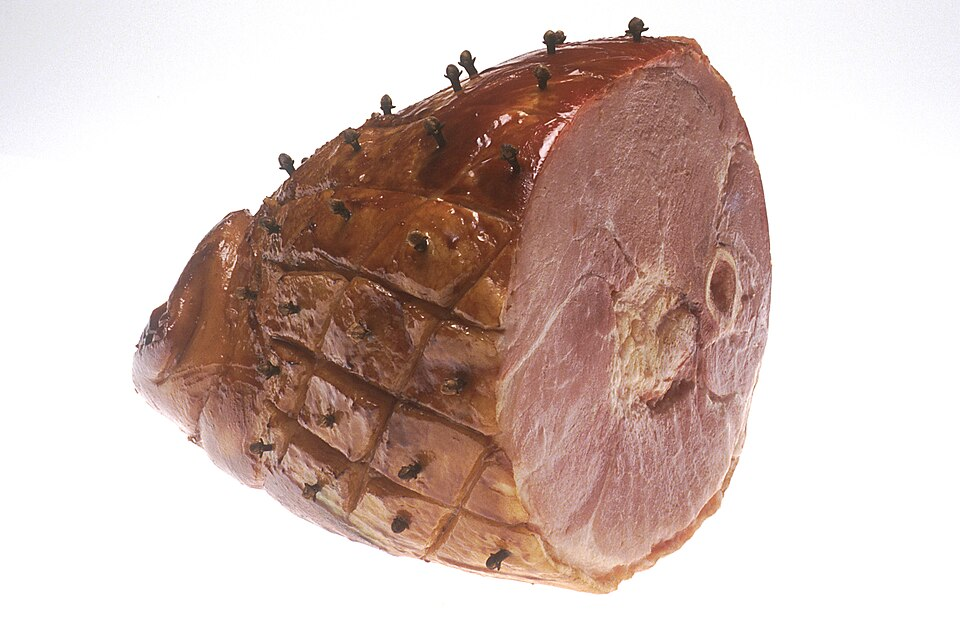
Introduction
Hams refer to a range of preserved pork products obtained from the hind leg of the pig and preserved through curing. The preservation process may involve either wet curing or dry curing, while smoking can be used as an additional technique, depending on the specific product and tradition. As a form of processed meat, ham can be produced from an intact piece of pork leg or from meat that has been mechanically processed and reconstituted into a particular shape.
Description of hams
Ham is most commonly eaten sliced, making it a versatile ingredient for sandwiches and other prepared foods. It can be used on its own, as in a classic ham sandwich, or combined with other ingredients such as cheese. Ham is also featured in several well-known hot and toasted sandwiches, including the French croque-monsieur and the Cuban sandwich. In the United States, it is also frequently used as a pizza topping, where it is combined with a variety of other ingredients.
In the United Kingdom, a distinction is made between ham and gammon. The latter refers to a cured pork leg that is sold either whole or in portions but still requires cooking before it can be eaten. Traditionally, gammon was cured while still attached to the side of pork, alongside the cuts intended to become bacon. Once the cured leg is cooked, it is considered ham.
History of hams
The tradition of preserving pork legs as cured ham dates back thousands of years. Evidence suggests that cured ham was already produced in ancient Italy, with traces associated with the Etruscan civilization dating to the 6th and 5th centuries BC. The practice continued into the Roman era and became sufficiently developed to support long-distance trade.
One of the earliest written references comes from Cato the Elder, who described the salting of ham in De Agri Cultura, a treatise generally dated to around 160 BC. Other historical accounts have proposed an even older tradition in China, while Larousse Gastronomique attributes the origins of ham production to Gaul. Whatever its precise birthplace, the product was clearly established by the Roman period, when cured hams from Gaul were traded and imported into Roman territories, as noted in the writings of Marcus Terentius Varro.
The English term “ham” has an anatomical origin. It derives from the Old English words ham or hom, referring to the hollow or bend at the back of the knee. The word ultimately comes from a Germanic root associated with the idea of something crooked or bent. From approximately the 15th century, it came to designate the pork cut obtained from the hind leg of a pig, giving the term its modern culinary meaning.
Production methods for hams
Ham is produced by preserving pork leg through curing, mainly using either dry curing or wet curing. Dry curing involves covering the meat with salt and allowing it to mature and air-dry for several months or, in some cases, years. Wet curing instead consists of immersing the meat in a salt-based brine, or injecting the curing solution directly into it. Seasonings may be added in both methods.
During curing, the meat gradually develops its characteristic flavour, aroma and texture through the loss of moisture and natural enzymatic processes. Modern curing methods may also use nitrites to improve preservation and maintain the typical colour of the meat.
Smoking can be used as an additional preservation and flavouring technique, exposing the cured meat to wood smoke and giving it a distinctive aromatic profile.
Classification of hams
Hams are classified by cured method, including:
- Dry-cured hams (prosciutto crudo)
- Wet-cured hams (prosciutto cotto)
Photo(s):
1. Renee Comet (Photographer), Public domain, via Wikimedia Commons