
Larciano
Municipality in the province of Pistoia
Earth, Europe, Italy, Tuscany, Province of Pistoia
Introduction
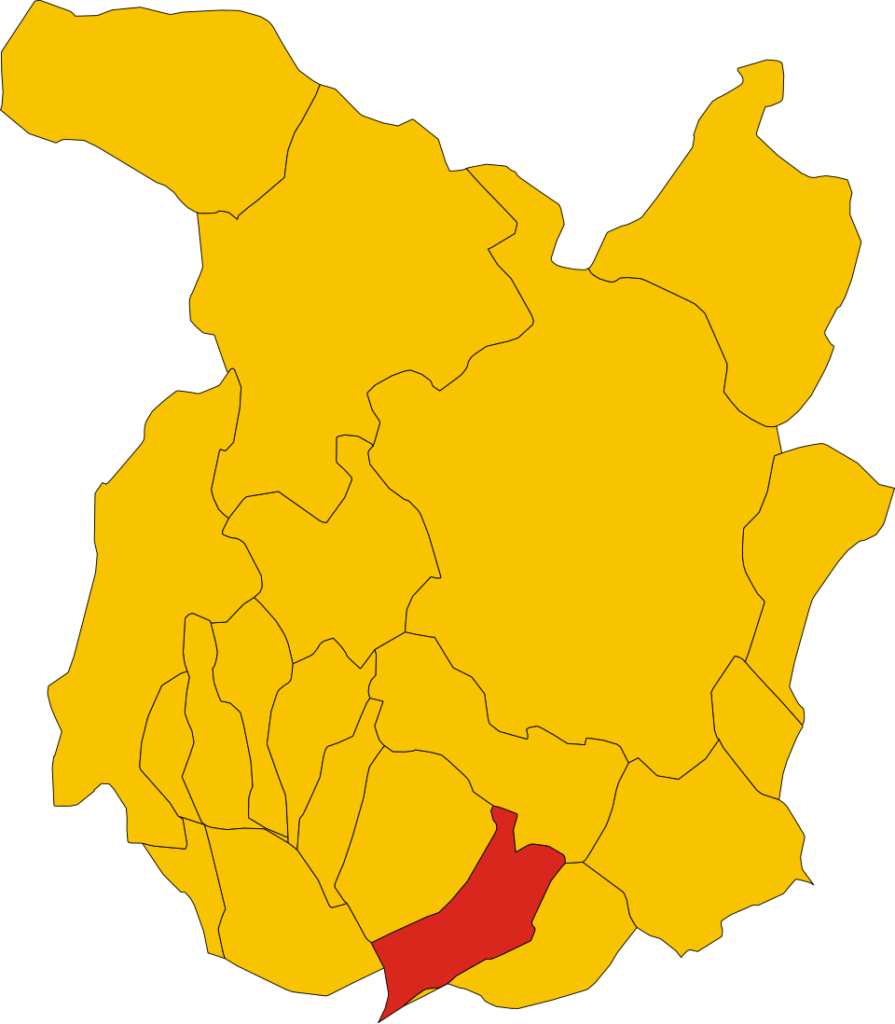
Larciano is a scattered municipality in the Province of Pistoia, in Tuscany. The municipal administration is based in San Rocco, which serves as the main administrative centre. Others main settlements are Castelmartini, Cecina and Larciano Castello. The municipality lies in the Valdinievole, around 50 km west of Florence and approximately 15 km south of Pistoia. Its territory extends along the western slopes of Montalbano and reaches the edge of the Fucecchio Marshes, an important wetland area.
| Area (km² / sq mi) | 24.97 (9.64) |
| Population | 6,338 (2026) |
History of Larciano
The history of Larciano is closely connected with Larciano Castle. From the 10th century, the settlement was controlled by the Guidi counts, whose possession of the castle was later confirmed by Henry VI and Frederick II. In 1225, Larciano and several nearby settlements were sold to the Municipality of Pistoia, becoming an important stronghold within its defensive system on the western side of Montalbano.
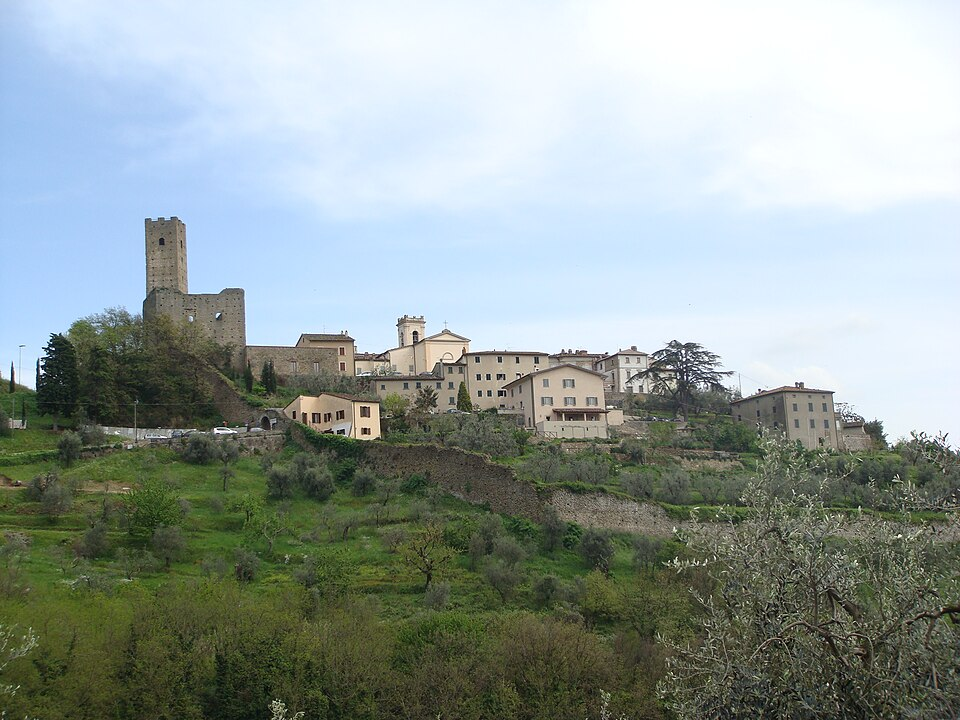
Because of its strategic position, the castle was involved in several medieval conflicts. It was conquered by Florence and Lucca in 1302 during their war against Pistoia, but Pistoia regained control in 1310. By the end of the 14th century, Larciano had become an important defensive base against the threat posed by Gian Galeazzo Visconti. In 1401, Larciano came under Florentine rule and became the seat of a local podesteria. It was later administratively associated with Serravalle and Lamporecchio. Larciano finally obtained municipal independence on 1 July 1897, with several settlements forming part of the new municipality and San Rocco becoming the seat of the town hall.
During World War II, Larciano was used as an internment location for foreign Jewish refugees. Following the establishment of the Italian Social Republic in 1943, two Jewish internees who remained in the area were arrested and subsequently deported and murdered. In 2025, two Stolpersteine were placed in front of the municipal building in memory of Leone Molho and Salomone Mordo.
Larciano was also affected by the Fucecchio Marsh Massacre on 23 August 1944, when German troops killed 174 civilians during a reprisal. Thirty-six victims from Castelmartini are commemorated by a monument inaugurated in 2002 in the presence of Italian President Carlo Azeglio Ciampi.
Point of interest and culture in Larciano
Larciano combines historic architecture, religious heritage, and natural landscapes. Among its main religious landmarks are the Church of San Rocco, the Pieve of San Silvestro, and the churches of San Donnino and San Niccolò. The town’s most distinctive historic monument is the Castle of Larciano, whose surviving walls and medieval gates recall the settlement’s former defensive importance. The nearby Villa Banchieri adds an example of the area’s historic civil architecture.
The municipality also has strong ties to the Fucecchio Marshes, an important natural environment that has influenced local life and agriculture for centuries. This connection is reflected in the Museum of Peasant Civilization Casa Dei, which documents rural traditions and everyday life in the early 20th century. The Civic Museum of Larciano Castle, meanwhile, displays archaeological and historical objects ranging from prehistoric times to the Renaissance.
Larciano’s cultural identity is also shaped by its commemoration of the Fucecchio Marsh massacre of 1944. In Castelmartini, the Garden of Memory and the monument dedicated to the victims provide spaces for remembrance through both memorial and contemporary art. Local traditions remain visible in events such as the Settembre Larcianese (Larciano September Fair), historically connected with livestock and agriculture, the Sagra della ciliegia (Cherry Festival) in Castelmartini, and the Castagnata (Chestnut Festival) in Cecina, where traditional products such as necci, castagnaccio, frugiate, and local wine are celebrated.
Traditional recipes of Larciano

Traditional products of Larciano
Source(s):
https://it.wikipedia.org/wiki/Larciano
Photo(s):
1. Vonvikken, Public domain, via Wikimedia Commons
2. I, Fluctuat, CC BY 2.5 https://creativecommons.org/licenses/by/2.5, via Wikimedia Commons