
Pieve a Nievole
Municipality in the province of Pistoia
Earth, Europe, Italy, Tuscany, Province of Pistoia
Introduction
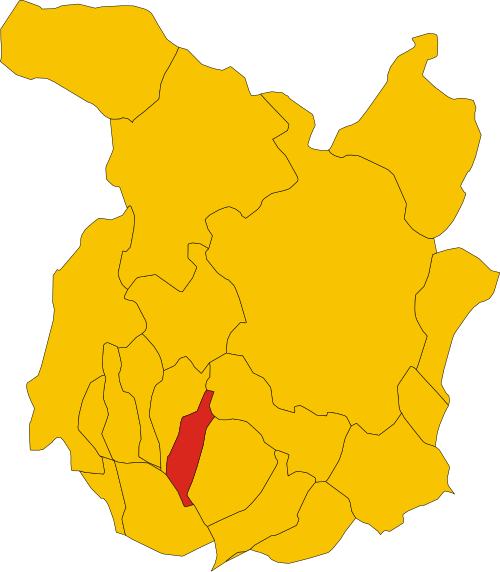
Pieve a Nievole is a municipality in the province of Pistoia, Tuscany, located in the Valdinievole area between Montecatini Terme and Monsummano Terme. The area is crossed by the Nievole River, which has strongly influenced its history and identity.
The name “Pieve” refers to an ancient parish church, while the origin of “Nievole” remains uncertain. The old church of San Pietro a Neure, built near the ancient Via Cassia Minor, is mentioned in documents from the early 8th century, making it one of the oldest religious sites in the region. Most historians believe that “Nievole” derives from an ancient word meaning river or watercourse, referring to the local river. Although some scholars once linked the name to the Latin word for fog because of the area’s marshes, this theory is now generally considered less likely.
| Area (km² / sq mi) | 12.67 (4.89) |
| Population | 9,250 (2026) |
History of Pieve a Nievole
Pieve a Nievole is a small town with a rich historical heritage, best known for Casa Porciani, a Renaissance hunting residence built for the Medici family, which today houses the Town Hall.
The earliest known record mentioning Pieve a Nievole dates back to 716 and concerns a dispute between the bishops of Lucca and Pistoia over religious jurisdiction. This document, published by Lodovico Antonio Muratori, is particularly important because it represents one of the first reliable references to the Bishop and Diocese of Pistoia.
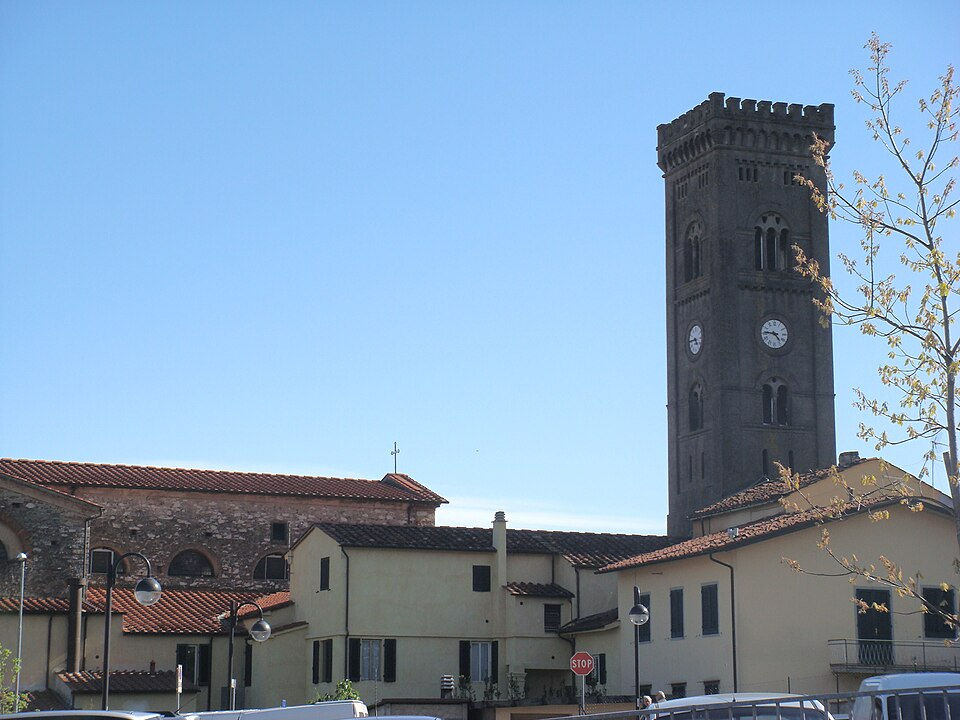
The village developed slowly around its ancient parish church, from which it takes its name, and grew along the important Cassia minor road, a key route connecting different areas of Tuscany. Although often overshadowed by nearby castles and larger towns, Pieve a Nievole was involved in the conflicts between Guelphs and Ghibellines. According to tradition, Dante Alighieri may have passed through this area during these struggles. A local legend tells that, after his exile from Florence in 1302, Dante escaped execution when, questioned about his own identity, he cleverly replied: “He was here when I was here.” The bridge mentioned in the story still exists and is known as Dante’s Bridge.
Pieve a Nievole officially became an independent municipality on 29 June 1905, following a long process that led to its separation from Montecatini Valdinievole (today Montecatini Alto). At the time, it was a small district that also included Bagni di Montecatini, and achieving autonomy required overcoming legal restrictions that prevented the creation of new municipalities with fewer than 4,000 inhabitants.
Points of interest and culture in Pieve a Nievole
Pieve a Nievole preserves several historical and cultural landmarks that reflect the town’s long past. Among the commemorative monuments, there is the bust of Francesco Colzi, placed in the square named after him on 31 July 1904, as well as three memorials dedicated to the Martyrs of the Padule di Fucecchio massacre.
The town’s religious heritage includes the Corpus Domini Chapel, built between 1694 and 1706, and the ancient Parish Church of Saints Peter the Apostle and Mark the Evangelist, whose origins date back to the 4th–5th centuries. Another important religious building is the Compagnia di Sant’Antonio e del Santissimo Crocifisso, dating from 1895.
Among the civil buildings and historic residences, the most notable are Casa Porciani, a 15th-century residence once linked to the Medici family, Villa Pitti-Amerighi from the 18th century, and the 19th-century villas Mimbelli and Brunetti. Other significant landmarks include Villa del Terzo (1647), the Casotto Tonini, also known as Casotto di Adriano, dating back to the 17th–18th centuries, and the Ponticino di Dante, a medieval bridge traditionally associated with Dante Alighieri and dating from the 13th–14th centuries.
Source(s):
https://it.wikipedia.org/wiki/Pieve_a_Nievole
Photo(s):
1. Vonvikken, Public domain, via Wikimedia Commons
2. I, Fluctuat, CC BY 2.5 https://creativecommons.org/licenses/by/2.5, via Wikimedia Commons