
Montecatini Terme
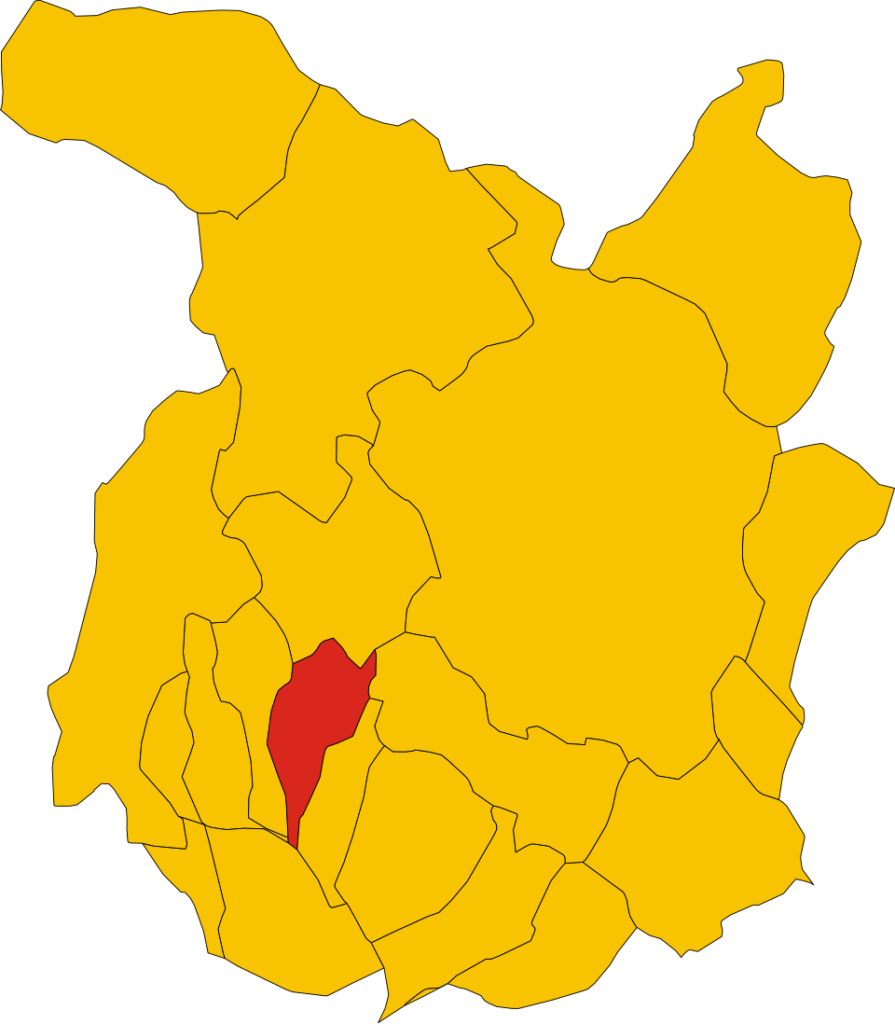
Municipality in the province of Pistoia
Earth, Europe, Italy, Tuscany, Province of Pistoia
Introduction
Montecatini Terme is a municipality in the province of Pistoia, Tuscany, located in the heart of the Valdinievole. Known for its famous thermal baths, the town has built its economy mainly around tourism and wellness, thanks to the historic Terme di Montecatini. In 2021, it was included by UNESCO among the Great Spa Towns of Europe, recognizing its cultural and historical importance.
The town lies in a landscape surrounded by natural features: the Pescia River to the west, the Nievole stream to the east, the Pistoia Mountains to the north, and the Fucecchio Marshes to the southeast. Other important natural areas include the Borra stream, which partly marks the border with Massa e Cozzile, the Colle delle Panteraie, and the large thermal park known as La Pineta.
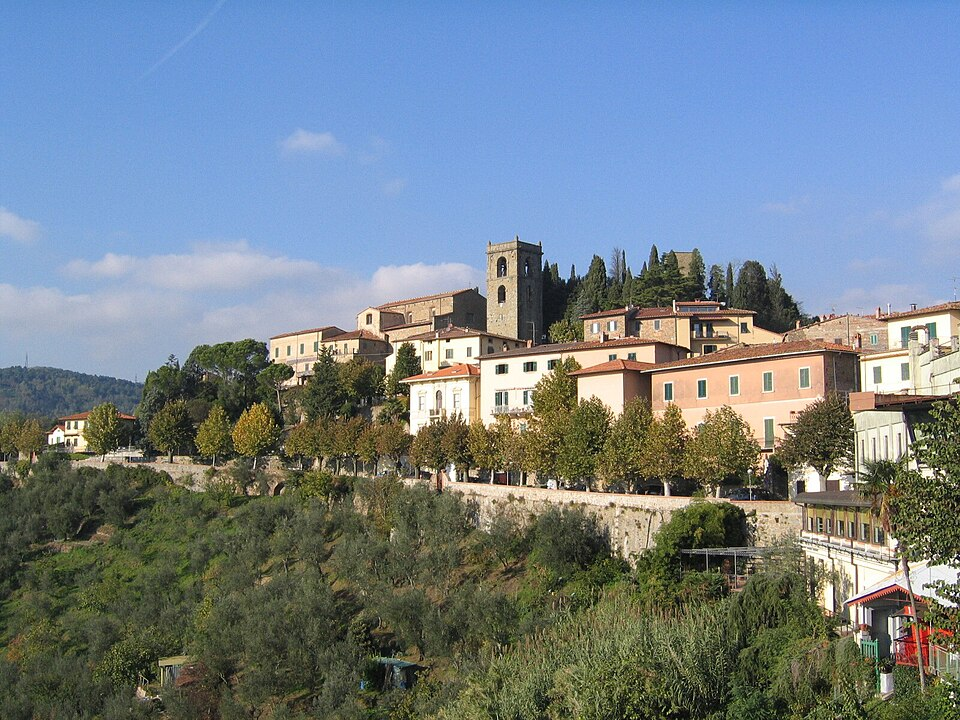
Modern Montecatini Terme developed at the foot of the hill of Montecatino, where the original medieval settlement was located. Today this historic area is known as Montecatini Alto, preserving the origins of the town before the growth of the modern spa center below.
| Area (km² / sq mi) | 17.96 (6.83) |
| Population | 21,867 (2026) |
History of Montecatini Terme
The original settlement developed on the hill now known as Montecatini Alto, while the thermal baths in the plain gradually became renowned for their healing waters. During the Middle Ages, the town endured frequent wars, epidemics, and malaria, as rival cities such as Florence, Pisa, Lucca, and Pistoia fought for control of the region. Despite these difficulties, the local baths gained an excellent reputation, attracting visitors seeking their therapeutic benefits.
After coming under the rule of Florence and later the Medici, only limited improvements were made to the spa facilities. A turning point came in the 18th century under the House of Habsburg-Lorraine, especially during the reign of Grand Duke Pietro Leopoldo. He promoted major drainage works, restored the thermal springs, and transformed Montecatini into a modern spa town, laying the foundations for its future prosperity.
During the 19th century, the town continued to expand. New public buildings and spa facilities were constructed, and the funicular railway linking Montecatini with Montecatini Alto opened in 1898, making the historic hilltop village more accessible. In 1905, Montecatini Alto and the spa district became separate municipalities, while in 1928 the town officially adopted the name Montecatini Terme and joined the newly established Province of Pistoia.
The 20th century marked the golden age of Montecatini as an internationally renowned spa resort. Elegant establishments such as the Excelsior, Tettuccio, and Leopoldine baths were restored or expanded, attracting aristocrats, artists, politicians, and celebrities from across Europe. During the Second World War, however, the town also witnessed the persecution and deportation of many Jewish residents and refugees, before being liberated by Allied forces in 1944.
In the post-war period, Montecatini remained a prestigious destination, although the popularity of spa tourism gradually declined from the 1970s onward. Today, the town continues to attract visitors thanks to its historic thermal heritage, its strategic location near Florence, Pisa, and Lucca, and its wide range of cultural and sporting facilities. In 2021, Montecatini Terme received international recognition when it was designated a UNESCO World Heritage Site as one of the Great Spa Towns of Europe.
Points of interest and culture in Montecatini Terme
Montecatini Terme is home to several important religious landmarks that reflect different periods of its history. The most prominent is the Basilica of Santa Maria Assunta, rebuilt between 1957 and 1962 with its distinctive octagonal design. Other notable churches include the Church of Sant’Antonio, an elegant Neo-Gothic building, the Church of Saints James and Philip in Montecatini Alto, the historic Church of San Pietro, and the Convent of Santa Maria a Ripa, which preserves valuable frescoes and Romanesque architectural features.
The town also features a rich collection of historic buildings. Among the most significant are Villa Forini Lippi, now home to the municipal library, the Town Hall, decorated in the Liberty (Art Nouveau) style, the ornamental Tamerici Pavilion, the historic Montecatini Terme-Monsummano railway station, the Teatro Verdi, and Piazza del Popolo, the city’s main square.
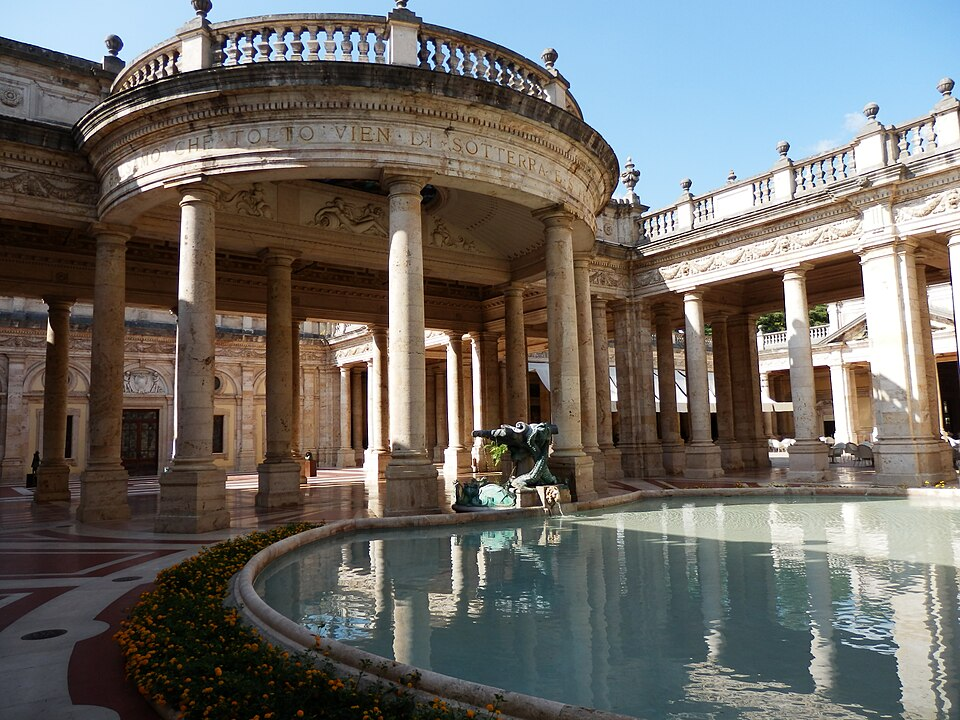
The true symbol of Montecatini is its celebrated spa complex, developed mainly between the 18th and 20th centuries. The most famous establishments include the Terme Tettuccio, renowned for its elegant classical architecture, together with the Excelsior, Leopoldine, Tamerici, Regina, Redi, La Salute, and Torretta baths. These buildings are surrounded by the expansive Thermal Park (La Pineta), which combines gardens, walking paths, and historic spa architecture.
Over the years, Montecatini has established itself as an important cultural center. It welcomed renowned composers such as Giuseppe Verdi, Gioachino Rossini, Giacomo Puccini, and Ruggero Leoncavallo, while the Teatro Verdi continues to host concerts, operas, and theatrical performances. The town is also famous for the long-running Montecatini International Short Film Festival, one of Italy‘s oldest film festivals.
The city’s artistic heritage is closely linked to Galileo Chini, whose Art Nouveau decorations can still be admired in several public buildings and spa establishments. Montecatini also houses works by artists such as Joan Miró and regularly hosts art exhibitions, further strengthening its reputation as a destination where history, architecture, wellness, and culture come together.
Traditional products of Montecatini Terme

Source(s):
https://it.wikipedia.org/wiki/Montecatini_Terme
Photo(s):
1. Vonvikken, Public domain, via Wikimedia Commons
2. I, Lucarelli, CC BY-SA 3.0 http://creativecommons.org/licenses/by-sa/3.0/, via Wikimedia Commons
3. Alexmar983, CC BY-SA 4.0 https://creativecommons.org/licenses/by-sa/4.0, via Wikimedia Commons