
Cialda di Montecatini (Montecatini wafer)
Foods, Culinary bases, Flour-based foods, Wafers
Consumption area(s): Montecatini Terme
Introduction
Cialda di Montecatini (Montecatini Wafer) is a traditional wafer originating from Montecatini Terme, a renowned spa town in the province of Pistoia, Tuscany. This delicate sweet emerged during the early decades of the twentieth century, when the town was a prestigious destination frequented by wealthy visitors from Italy and abroad. Over time, the product became closely associated with the local gastronomic heritage and remains one of the most recognizable specialties of Montecatini.
Description of Cialda di Montecatini
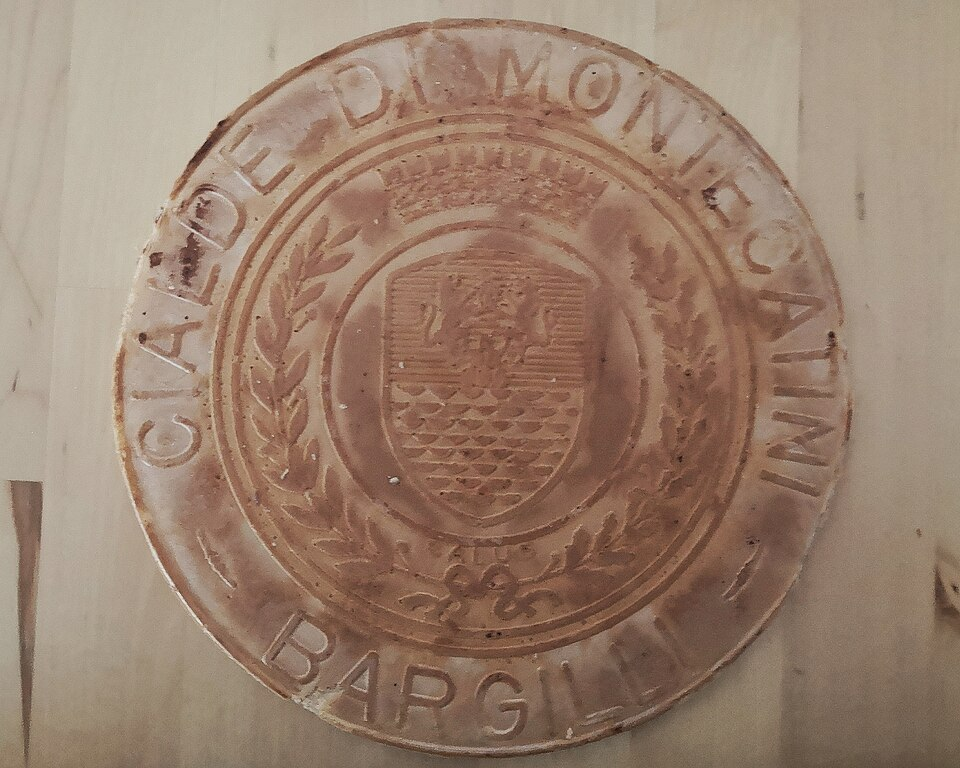
The Cialda di Montecatini is a thin, circular wafer distinguished by its light texture and remarkable crispness. Typically measuring around 16 centimeters (6.3 inch) in diameter and only a few millimeters thick (only a fraction of an inch), it consists of two delicate wafer-like layers enclosing a sweet filling made primarily from ground almonds and sugar.
Its appearance is characterized by a pale hazelnut-golden color, while its aroma is dominated by the intense fragrance of almonds. The flavor is pleasantly sweet and recalls that of traditional wafers, although the generous almond filling provides a richer and more distinctive taste. The texture combines a compact structure with an exceptionally friable and crunchy consistency, making the product particularly delicate.
Traditionally, Cialde di Montecatini are enjoyed as an accompaniment to ice cream, tea, hot chocolate, and dessert wines, especially Vin Santo, with which they form a classic Tuscan pairing. Thanks to their light composition and high energy content, they have also long been appreciated as a breakfast or snack item.
Production method for Cialda di Montecatini
The preparation of Cialde di Montecatini begins with the creation of a simple dough made from milk, egg yolks, and type “00” wheat flour. These ingredients are carefully mixed until a smooth and homogeneous batter is obtained. The dough is then shaped into two very thin sheets that will form the outer layers of the finished product. A filling composed of finely ground almonds, traditionally sourced from southern Italy, and sugar is evenly distributed between the two layers. Once assembled, the pastry is baked in an oven until it develops its characteristic crisp texture and light golden coloration.
Nutritional facts table
Please note that nutritional values may vary slightly depending on the single producer.
| Nutrients | Per 100 g |
| Calories (kcal) | 463.2 |
| Total fat (g) | 13.2 |
| ———Saturated fat (g) | 1.9 |
| Cholesterol (mg) | 20 |
| Sodium (mg) | 393 |
| Total carbohydrates (g) | 70.5 |
| ———Dietary fiber (g) | 11 |
| ———Total sugar (g) | 36.7 |
| Protein (g) | 15.6 |
Source(s):
https://it.wikipedia.org/wiki/Cialda_di_Montecatini
http://prodtrad.regione.toscana.it/LIB_ProdTrad/Prodotto.php?ID=311
Photo(s):
1. Chiarabeni, CC BY-SA 3.0 https://creativecommons.org/licenses/by-sa/3.0, via Wikimedia Commons