
Sunflowerseed oil
Food, Plant source foods, Vegetable oils and derivatives
Consumption area(s) (countries that consumed more than 0.5 kg per person annually in 2023): Afghanistan 🇦🇫, Albania 🇦🇱, Algeria 🇩🇿, Andorra 🇦🇩, Argentina 🇦🇷, Austria 🇦🇹, Azerbaijan 🇦🇿, Bahrain 🇧🇭, Barbados 🇧🇧, Belarus 🇧🇾, Belgium 🇧🇪, Bosnia and Herzegovina 🇧🇦, Botswana 🇧🇼, Bulgaria 🇧🇬, Cabo Verde 🇨🇻, Canada 🇨🇦, Chile 🇨🇱, China 🇨🇳, Costa Rica 🇨🇷, Croatia 🇭🇷, Cyprus 🇨🇾, Czechia Republic 🇨🇿, Ecuador 🇪🇨, Egypt 🇪🇬, Estonia 🇪🇪, Eswatini 🇸🇿, Ethiopia 🇪🇹, Finland 🇫🇮, France 🇫🇷, Gabon 🇬🇦, Gambia 🇬🇲, Georgia 🇬🇪, Germany 🇩🇪, Greece 🇬🇷, Guinea 🇬🇳, Guyana 🇬🇾, Hungary 🇭🇺, Iceland 🇮🇸, India 🇮🇳, Iran 🇮🇷, Iraq 🇮🇶, Ireland 🇮🇪, Israel 🇮🇱, Italy 🇮🇹, Jordan 🇯🇴, Kazakhstan 🇰🇿, Kuwait 🇰🇼, Kyrgyzstan 🇰🇬, Latvia 🇱🇻, Lebanon 🇱🇧, Lesotho 🇱🇸, Libya 🇱🇾, Liechtenstein 🇱🇮, Lithuania 🇱🇹, Luxembourg 🇱🇺, Maldives 🇲🇻, Marshall Islands 🇲🇭, Mauritius 🇲🇺, Mexico 🇲🇽, Moldova 🇲🇩, Monaco 🇲🇨, Mongolia 🇲🇳, Montenegro 🇲🇪, Morocco 🇲🇦, Namibia 🇳🇦, Nepal 🇳🇵, New Zealand 🇳🇿, North Macedonia 🇲🇰, Norway 🇳🇴, Oman 🇴🇲, Palestine 🇵🇸, Paraguay 🇵🇾, Poland 🇵🇱, Portugal 🇵🇹, Qatar 🇶🇦, Romania 🇷🇴, Russia 🇷🇺, Saint Vincent and the Grenadines 🇻🇨, Samoa 🇼🇸, San Marino 🇸🇲, Senegal 🇸🇳, Serbia 🇷🇸, Seychelles 🇸🇨, Slovakia 🇸🇰, Slovenia 🇸🇮, South Africa 🇿🇦, South Korea 🇰🇷, Spain 🇪🇸, Suriname 🇸🇷, Sweden 🇸🇪, Switzerland 🇨🇭, Syria 🇸🇾, Tajikistan 🇹🇯, Tanzania 🇹🇿, Tunisia 🇹🇳, Turkey 🇹🇷, Turkmenistan 🇹🇲, Uganda 🇺🇬, Ukraine 🇺🇦, United Arab Emirates 🇦🇪, United Kingdom 🇬🇧, Uruguay 🇺🇾, Uzbekistan 🇺🇿, Vatican City 🇻🇦, Yemen 🇾🇪, Zambia 🇿🇲
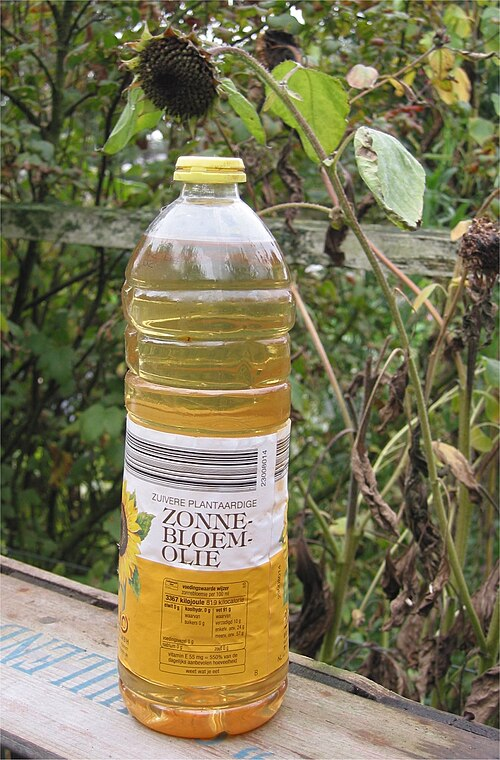
Chemical composition:
- Saponifiable fraction: ~99%
- Saturated fatty acids: ~9.5–16.8%, including 5.0–7.6% palmitic acid (2.6–5.0% in High-Oleic sunflowerseed oil), 2.7–6.5% stearic acid (2.9–6.2% in HO), 0.3–1.5% behenic acid (0.5–1.6% in HO), 0.1–0.5% arachidic acid, and ≤0.5% lignoceric acid, with trace contributions of lauric, myristic, and margaric acids
- Unsaturated fatty acids: ~79–90% (HO or not-dependent), including a highly variable 14.0–39.4% oleic acid (75.0–90.7% in HO), 48.3–74.0% linoleic acid (2.1–17.0% in HO), and minor contributions from palmitoleic acid (≤0.3%), gadoleic acid (≤0.3–0.5%), cetoleic acid (≤0.3%), and linolenic acid (≤0.3%), plus trace levels of eptadecenoic and docosadienoic acids.
- Unsaponifiable fraction: ~1%
Chemical/physical properties:
- Smoke point: 107-213°
- Density: 0.92 kg/l a 15 °C
Introduction
Sunflower oil is a light yellow vegetable oil characterized by a mild, neutral flavor profile, obtained through the extraction of oil from the achene (fruit) of the sunflower plant. It contains a high proportion of unsaturated fatty acids, which makes it widely used for dietary and culinary purposes. One of its notable nutritional features is its elevated content of vitamin E, a compound that plays a key role in protecting the oil from degradation, thereby significantly enhancing its shelf stability and storage life.
Description of sunflowerseed oil
Sunflowerseed oil exhibits a clear dependence between processing method and visual appearance: when produced via cold pressing, it typically shows a pale yellow coloration, whereas hot-pressed oil tends to develop a more yellow–reddish hue due to thermal effects during extraction. Following extraction and refining, the final product becomes transparent and consistently pale yellow. From an organoleptic perspective, it is generally nearly odorless, though subtle aromatic notes can be perceived, often described as nutty, woody, slightly roasted, or vegetal, with an overall mild taste profile.
The fatty acid composition of sunflower oil triglycerides is highly dependent on the botanical variety of the achenes. In conventional sunflowerseed oil, the dominant unsaturated component is linoleic acid (48–74%), a pattern comparable to that observed in safflower oil, making it rich in polyunsaturated fatty acids. However, selective breeding has produced distinct cultivars with markedly altered lipid profiles.
In particular, high-oleic sunflower varieties (HO sunflower) exhibit a substantially elevated proportion of oleic acid (approximately 70–92%), accompanied by a reduced fraction of polyunsaturated fatty acids (~10%). This compositional shift brings the oil closer in profile to olive oil, and is specifically aimed at improving thermal and oxidative stability, making it more suitable for high-temperature applications.
Regarding processing effects, cold-pressed sunflower oil preserves a greater amount of heat-sensitive micronutrients, including vitamins and bioactive fatty acids, provided that the extraction temperature remains below approximately 30 °C, thus preventing degradation of thermolabile compounds and maintaining higher nutritional integrity.
History of sunflowerseed oil
Sunflowerseed oil has a long history of human use, with evidence suggesting that sunflower seeds were already being processed in North America 3,000–4,000 years ago. The introduction of the crop to Europe is commonly attributed to Spanish explorers, who likely transported the oil-bearing seeds from the Americas. Once established in Europe, cultivation and utilization expanded, particularly in Italy, Germany, and France, where the oil became integrated into both culinary and industrial applications.
In the contemporary global market, Russia holds the position of leading producer of sunflowerseed oil, while other significant production regions include the European Union, Argentina, and Ukraine. On a global scale, with an estimated output of approximately 11.5 million tonnes (2008/09 marketing year), sunflower oil ranks as the fourth most produced vegetable oil, following palm, soybean, and rapeseed oils.
Both Ukraine and Russia are key exporters of sunflower oil, which makes global supply chains particularly sensitive to geopolitical disruptions. In this context, the 2022 Russian invasion of Ukraine triggered a noticeable supply shortage in several European markets. The shortage was partially mitigated through substitution with rapeseed oil, expansion of production capacity, and a reduction in speculative market pressure. As a result, supply levels stabilized by August 2022, although market prices remained elevated compared to pre-invasion levels, reflecting persistent structural tensions in the supply chain.
Sunflowerseed oil production methods
The production of sunflowerseed oil involves a sequence of mechanical and, in some cases, chemical processing steps applied to fully ripened sunflower seeds. Initially, the seeds are dehulled (decorticated) and subsequently ground, after which the material can be subjected to cold pressing, yielding an oil generally regarded as high-quality due to minimal thermal degradation.
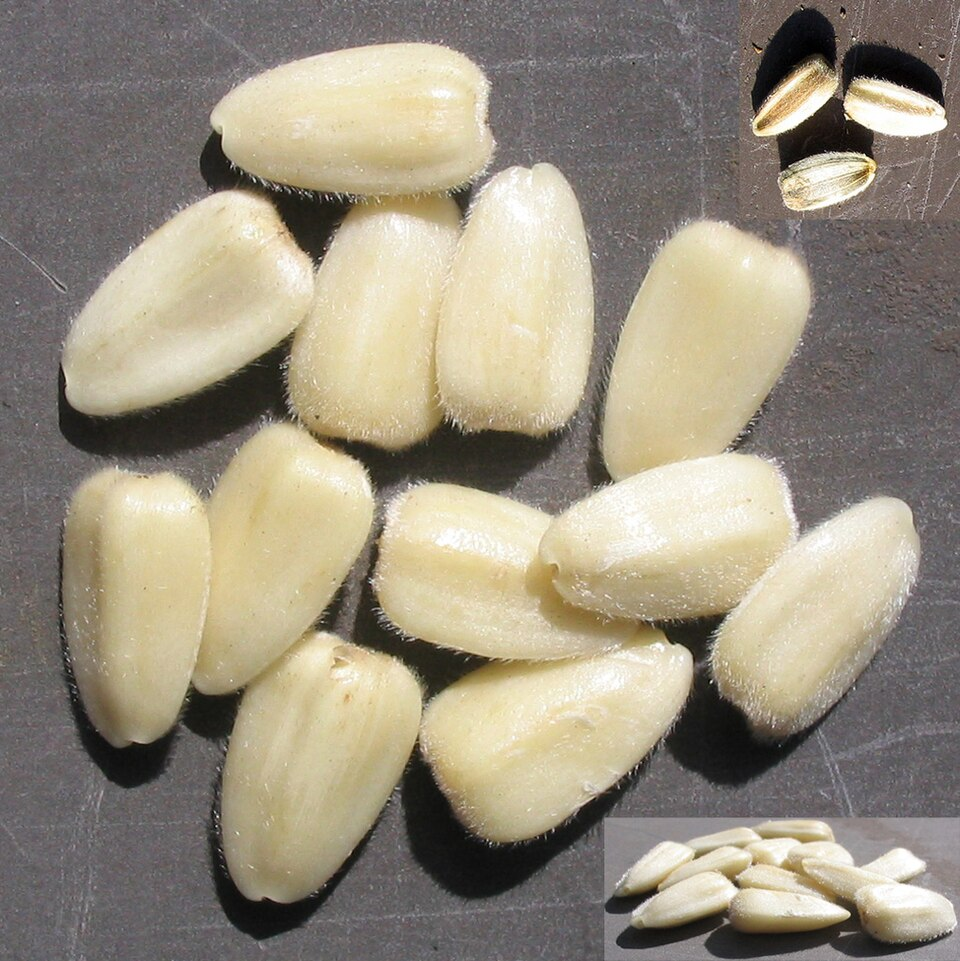
For large-scale or industrial applications, hot pressing is also employed; this approach significantly increases oil yield, although it typically results in a reduction of sensory and nutritional quality. To maximize extraction efficiency, an even higher recovery rate can be achieved through solvent-based extraction techniques. The crude oil obtained may then undergo refining processes, which are designed to eliminate undesirable compounds such as impurities, free fatty acids, and odor-active substances.
Uses of sunflowerseed oil
In the food domain, it is regarded as a multifunctional edible oil, suitable not only for general cooking but also for a broad range of raw and minimally processed applications, including use in salads, cold dishes, dressings and sauce formulations, as well as for the gentle steaming of vegetables, where its mild sensory profile is particularly advantageous.
A distinct functional differentiation arises from high-oleic sunflowerseed oil varieties, which possess enhanced thermal resistance due to their elevated oleic acid content. This improved stability makes them especially appropriate for frying and other high-temperature cooking processes, where conventional sunflowerseed oil would be more prone to degradation.
In addition, sunflowerseed oil serves important roles in specialized food manufacturing, including its use in infant nutrition products, as well as in the formulation of emulsified systems such as mayonnaise and margarine, where its physicochemical properties contribute to texture, stability, and mouthfeel.
Classification of sunflowerseed oil
Sunflowerseed oil can be divided in:
- Refined sunflowerseed oil
- Unrefined cold-pressed sunflowerseed oil
- Unrefined hot-pressed sunflowerseed oil
Nutritional facts table
Please note that nutritional values can vary slightly depending on sunflowerseed oil type
| Nutrients | Per 100 g |
| Calories (kcal) | 884 |
| Total fat (g) | 99.9 |
| ———Saturated fat (g) | 10.3 |
| Cholesterol (mg) | 0 |
| Sodium (mg) | 0 |
| Total carbohydrates (g) | 0 |
| ———Dietary fiber (g) | 0 |
| ———Total sugar (g) | 0 |
| Protein (g) | 0 |
Photo(s):
1. Rasbak, CC BY-SA 3.0 http://creativecommons.org/licenses/by-sa/3.0/, via Wikimedia Commons
2. Darkone (talk · contribs), CC BY-SA 2.5 https://creativecommons.org/licenses/by-sa/2.5, via Wikimedia Commons