
Rosé Wines
Food, Plant source foods, Alcoholic beverages, Fermented alcoholic beverages, Wines, Ordinary wines
Consumption area(s): We were unable to find reliable data on the distribution of this product, but it is likely available in all countries where wine is commonly consumed.
Introduction
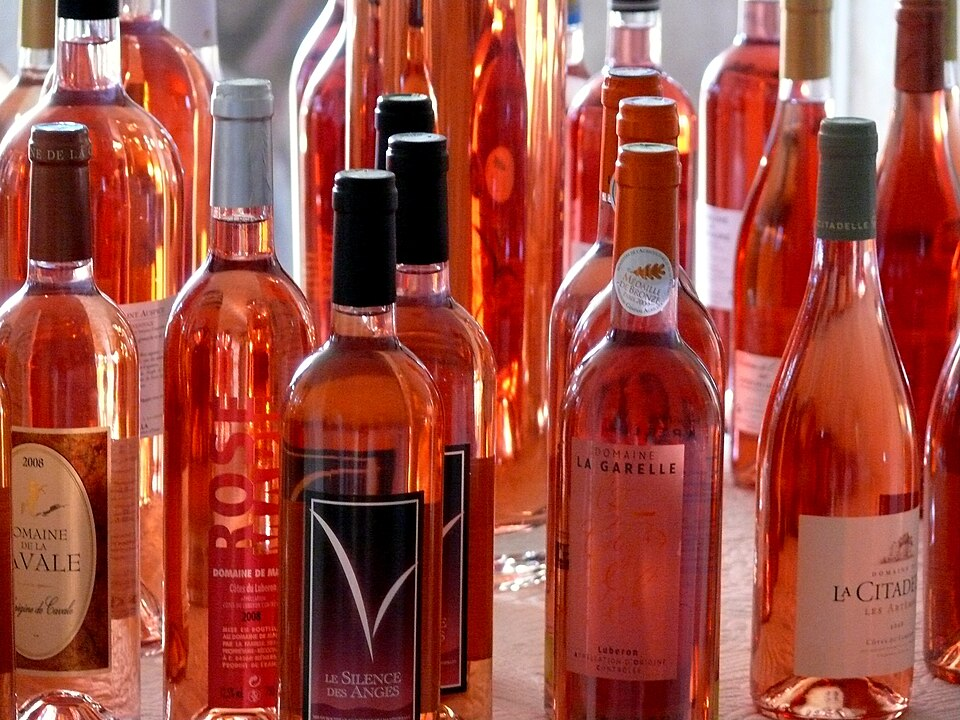
Rosé wines are produced using some contact between grape juice and dark grape skins, but for a much shorter period than in red winemaking. This gives the wine its characteristic pink colour, which can vary from very pale orange to deeper reddish or purplish shades depending on the grape variety and production method. It is known as rosé in several languages, while terms such as rosado, rosat, and rosato are used in Spanish, Catalan, and Italian respectively.
Description of rosé wines
Most grapes have colourless juice, including red varieties such as Cabernet Sauvignon and Pinot Noir. The characteristic colour of red and rosé wines instead comes mainly from anthocyanins, pigments found in the grape skins. During maceration, these compounds are extracted into the juice and can react with tannins and other substances, producing more stable coloured pigments. Because rosé undergoes much shorter skin contact than red wine, it generally contains significantly lower concentrations of anthocyanins.
The final colour of rosé depends on both the grapes variety and the winemaking technique. Anthocyanins are particularly sensitive to acidity and pH, and can appear colourless, red, or bluish depending on the conditions. Winemakers therefore carefully control skin contact, pressing, tannin extraction, and exposure to oxygen to achieve the desired shade while avoiding excessive darkening or browning.
Colour also plays an important role in consumer perception. Studies indicate that people often associate darker rosé wines with greater appeal when judging them visually. However, when the colour is concealed during blind tasting, consumers have frequently shown a preference for lighter-coloured rosés.
The aromas and flavours of rosé are determined primarily by the grape variety, although winemaking practices also have a substantial influence. Since many aromatic compounds are concentrated in the grape skin, the duration and conditions of maceration affect their extraction. The fresh, fruity character typical of many rosés is partly associated with volatile thiols, while other aromatic compounds, including esters, develop during fermentation.
Because rosé generally has low levels of phenolic compounds as a result of limited skin contact, its aromas are relatively vulnerable to oxidation. Some characteristic aromatic compounds can decline considerably within the first year after production. For this reason, rosé is generally best enjoyed relatively soon after release, rather than being stored for long periods.
Rosé can be produced as still, semi-sparkling, or sparkling wine, with styles ranging from very dry wines to noticeably sweet examples.
History of rosé wines
The origins of rosé wine are uncertain, although the earliest wines were probably much lighter in colour than modern red wines. In ancient times, grapes were usually pressed soon after harvest, with limited skin contact, producing lightly coloured wines. Greeks and Romans already understood that longer maceration and harder pressing resulted in darker, more tannic wines, but lighter and fruitier styles were often preferred.
This preference continued into the Middle Ages, particularly with the pale wine of Bordeaux. Among the most prized were the vin d’une nuit, or “wine of one night”, which received only brief skin contact and therefore had a pale pink colour. Champagne also produced pale red and pink wines during the Middle Ages. In the 16th and 17th centuries, Pinot Noir was used to make very pale wines known as Œil de Perdrix, while later improvements in winemaking allowed producers to make genuinely white wines from red grapes. Rosé remained part of Champagne production, sometimes being made by blending a small amount of red wine with white wine to achieve the desired colour and flavour.
After World War II, rosé became particularly popular thanks to Portuguese wines such as Mateus and Lancers, which were sweet and slightly sparkling. Their dominance later declined as consumers increasingly favoured drier rosés and American blush wines.
In the United States, White Zinfandel became especially influential. In 1975, a stuck fermentation at Sutter Home unexpectedly produced a sweeter, pinker Zinfandel, which was subsequently marketed successfully. Around the same period, the term “blush” became associated with semi-sweet pink wines. While European producers generally use rosé regardless of sweetness, in North America blush has traditionally indicated sweeter styles.
During the 21st century, rosé experienced renewed popularity, particularly in the United States, where it became associated with contemporary wine culture. This revival also encouraged new styles and products, including the frozen rosé drink known as frosé.
Production methods for rosé wines
The most widespread method for producing rosé wine involves pressing red grapes relatively early, generally after only 12–24 hours of skin contact. During this short maceration period, compounds such as anthocyanins and tannins are extracted from the skins, seeds, and sometimes stems, contributing colour, flavour, and some protection against oxidation. This approach is one of several techniques used to produce rosé wines, each differing in the degree and timing of contact between the grape juice and the skins.
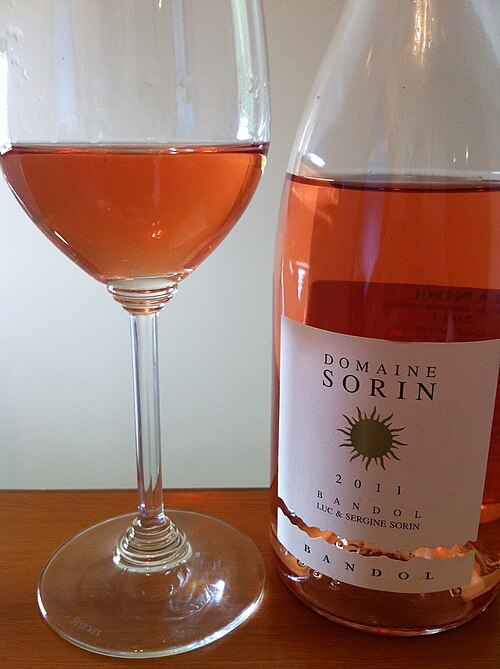
Saignée, meaning “bleeding” in French, consists of removing part of the juice from a tank of grape intended for red wine production. By reducing the amount of juice, the remaining must becomes more concentrated in colour, tannins, and flavour, while the extracted pink juice can be fermented separately as rosé. Although this technique has been used historically in regions such as Bordeaux and Burgundy, some critics argue that rosés produced through saignée are secondary to the red wines from which they originate rather than being deliberately made as rosé wines.
Another approach is vin gris, in which black grapes are pressed almost immediately, with virtually no maceration. Despite its name, meaning “grey wine”, the resulting wine is generally very pale pink. French regulations require gris de gris wines to use lightly coloured grape varieties, while notable examples are associated with areas such as Côtes de Toul in Lorraine and parts of Morocco.
A much less common technique involves decolorizing red wine with activated charcoal. The charcoal absorbs colour compounds as well as various phenolics and other substances. However, because this process can remove much more than just the unwanted colour, it is rarely used for high-quality rosé production.
Classification of rosé wines
Regardless of effervescence and other variables, rosé wines, like wines of other colours, cannot be classified according to a single criterion. Instead, there are three main classification approaches.
Geographic region of production (for wines originating from a specific production area):
Grape variety (based on the grape variety present in the highest proportion, regardless of the geographic origin):
Producer/Brand (classification based on the producing entity, regardless of grape varieties or geographic origin):
Nutritional facts table
| Nutrients | Per 100 g |
| Calories (kcal) | 81 |
| Total fat (g) | 0 |
| ———Saturated fat (g) | 0 |
| Cholesterol (mg) | 0 |
| Sodium (mg) | 0 |
| Total carbohydrates (g) | 1 |
| ———Dietary fiber (g) | 0 |
| ———Total sugar (g) | 0.6 |
| Protein (g) | 0 |
Source(s):
https://en.wikipedia.org/wiki/Ros%C3%A9
Photo(s):
1. nadia & massimo, CC BY 2.0 https://creativecommons.org/licenses/by/2.0, via Wikimedia Commons
2. Agne27, CC BY-SA 3.0 https://creativecommons.org/licenses/by-sa/3.0, via Wikimedia Commons