
Pelophylax
Genus of Ranidae
Food, Animal source foods, Animals (Animalia), Chordates (Chordata), Vertebrates (Vertebrata), Amphibians (Amphibia), Frogs (Anura), Ranidae
Consumption area(s): Europe, Asia, North Africa
Introduction
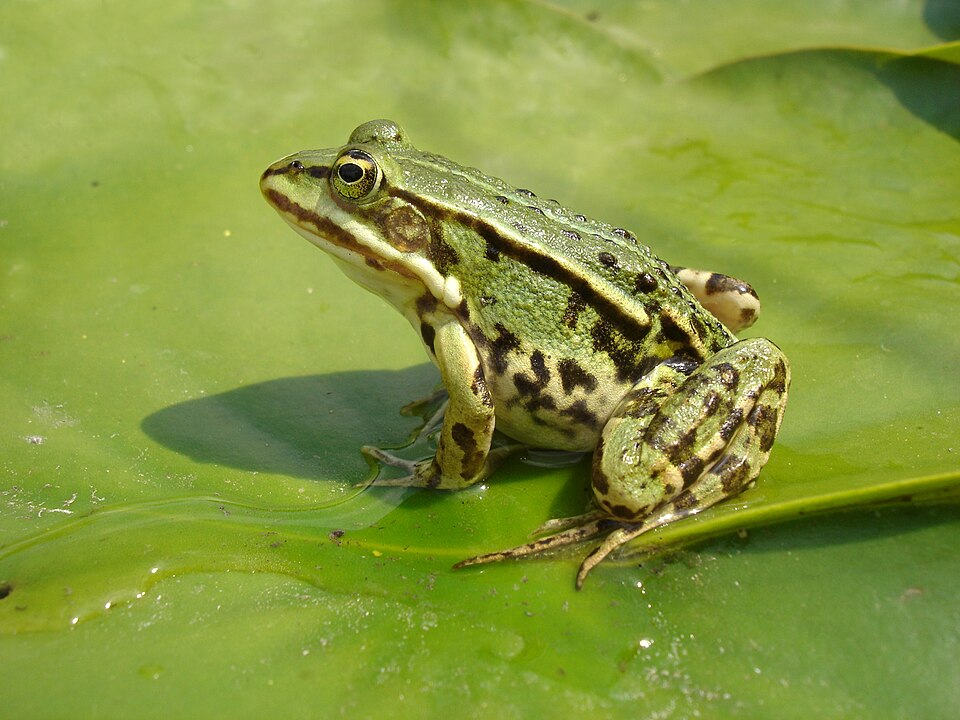
The genus Pelophylax comprises a group of true frogs broadly distributed across Europe, Asia, with some representatives extending into northern Africa. It was formally established in the 19th century to distinguish a set of green-colored frogs from other related forms that had previously been grouped within a broader and more generalized classification. This taxonomic separation reflected clear differences from the more terrestrial brown frogs, which had been categorized earlier within a different genus.
Members of this genus are commonly referred to as water frogs, a name that reflects their strong ecological association with aquatic environments, particularly during warmer months. They typically inhabit ponds, lakes, and wetlands, where they remain for extended periods. In contrast, closely related frogs are more frequently observed on land, provided that environmental moisture is adequate. Despite their preference for water-rich habitats, some species demonstrate notable ecological flexibility. Certain frogs within this group are capable of surviving in arid regions, occupying isolated water sources such as desert pools.
Classification of Pelophylax
This genus is divided in species. Among them:
- Albanian water frog
- Cretan frog
- Daruma pond frog
- Dark-spotted frog
- Eastern golden frog
- Epirus water frog
- European edible frog
- Graf’s hybrid frog
- Italian edible frog
- Italian pool frog
- Levant water frog
- Marsh frog
- Perez’s frog
- Pool frog
- Sahara frog
- Yellow river frog
Source(s):
https://en.wikipedia.org/wiki/Pelophylax
Photo(s):
1. Helge Busch-Paulick (Grand-Duc @ Wikipedia), CC BY 3.0 https://creativecommons.org/licenses/by/3.0, via Wikimedia Commons