
Buccellato di Lucca (Lucca Buccellato)
Foods, Culinary bases, Flour-based foods, Structured non-laminated leavened doughs
Consumption area(s): Piana di Lucca
Introduction
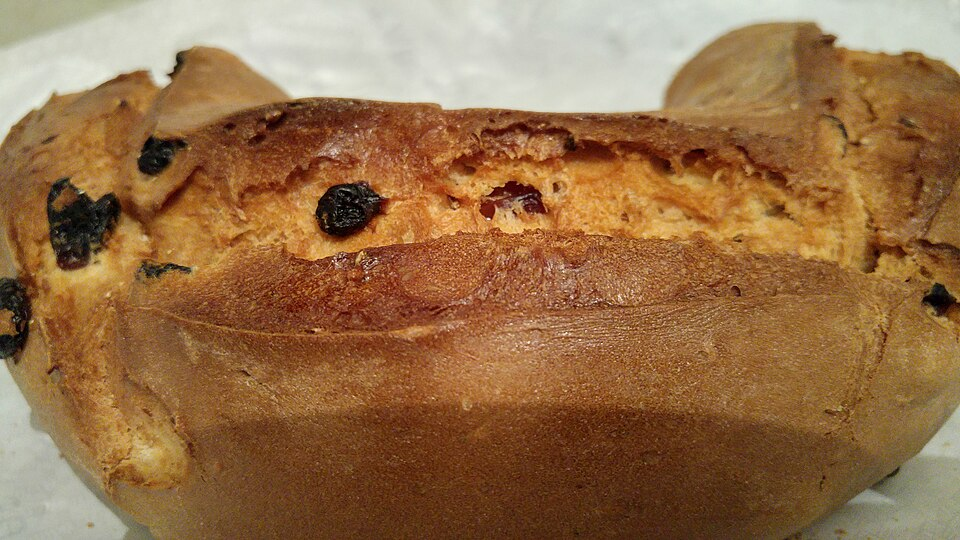
The Buccellato di Lucca (Lucca Buccellato) is a traditional Tuscan sweet bread shaped either as a ring (doughnut-style) or an elongated loaf, characterized by its bronze-brown surface and soft, fragrant interior. It is typically sold in portions ranging from 300 g, 600 g, to 900 g, and is always consumed fresh. Because of its artisanal nature and short shelf life, it is not pre-packaged, but instead wrapped at the moment of sale in bakeries.
Description of Buccellato di Lucca
This pastry is defined by a soft, lightly sweet leavened dough, enriched with ingredients such as soft wheat flour, sugar, eggs, butter, milk, raisins, and anise seeds, along with baker’s yeast and salt. The external surface appears dark, glossy, and slightly caramelized, a result of brushing with egg and sugar glaze before baking. Inside, the structure is airy yet compact, with a fragrant profile dominated by anise and raisins notes. A characteristic superficial cut is often made on the upper surface to support even rising during fermentation.
Although traditionally shaped as a ring, today it is also commonly produced as a smaller loaf form, which is easier to transport and portion. There is no single standardized recipe: each bakery preserves its own artisan formulation, reflecting a deeply rooted local tradition. A common contemporary practice involves repurposing slightly stale Buccellato: slices are buttered on both sides and toasted in the oven, transforming them into a crisp texture similar to rusk-style bread slices.
Consumption is versatile and strongly tied to pairing traditions. It is typically enjoyed with Vin Santo, red wine, coffee with cream, or combined with ricotta and rum.
History of Buccellato di Lucca
The name “Buccellato” originates from the late Latin term “buccellatum”, meaning a type of bread or biscuit formed as a ring of small portions (buccellae). The Latin root “buccella” translates as “bite” or “mouthful,” referring to its natural division into shareable pieces. In ancient Roman tradition, buccellatum referred to a simple, durable bread consumed by lower social classes and distributed as military rations, reinforcing its historical association with practicality and sustenance.
The Buccellato di Lucca evolved from this ancient concept, originally resembling a circular ceremonial bread often carried on the arm by locals after attending Mass, especially during Sunday traditions. Over time, it became a symbol of local identity, consumed during special occasions such as Confirmations and prominently featured during the festival of the Exaltation of the Holy Cross.
A well-known Lucchese saying encapsulates its cultural importance:
“Chi viene a Lucca e non mangia il buccellato è come se non ci fosse mai stato” (“Whoever comes to Lucca and does not eat Buccellato is as if they were never there”), highlighting its role as an essential element of the city’s gastronomic heritage.
Nutritional facts table
Please note that nutritional values may vary slightly depending on the ingredients used.
Photo(s):
1. Camelia.boban, CC BY-SA 4.0 https://creativecommons.org/licenses/by-sa/4.0, via Wikimedia Commons