
Vin Santo Toscano (Tuscan Vin Santo)
Food, Plant source foods, Alcoholic beverages, Fermented alcoholic beverages, Wines, Passito wines
Consumption area(s): Tuscany
Introduction
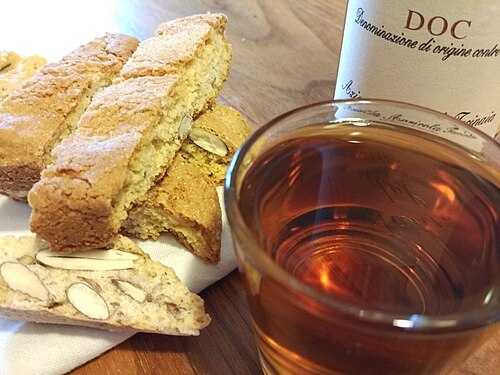
Vin Santo Toscano (Tuscan Vin Santo) is a traditional Tuscany passito wine whose name translates as “holy wine.” It is most closely associated with Tuscany, where it has long been produced as part of the regional winemaking heritage. A defining element of its identity is the use of dried grapes, a traditional method that concentrates sugars and aromas before fermentation. Although it is widely recognized as a sweet wine, its taste profile can vary significantly, ranging from very dry styles to intensely sugary expressions, depending on production choices and aging conditions.
Description of Vin Santo Toscano
Vin Santo Toscano is typically produced using white grape varieties, especially Trebbiano and Malvasia, which form the backbone of most traditional expressions. In certain variations, Sangiovese is also employed, particularly when crafting a rosé-style version known as “Occhio di Pernice”. This diversity of grapes allows for significant variation in aroma, structure, and final appearance.
A defining characteristic of production is the use of dried grapes, a technique that concentrates natural sugars and intensifies flavor. After harvest, the grapes are left to dehydrate either on straw mats placed in warm, ventilated rooms or suspended on indoor drying racks. This controlled drying phase is essential in creating the wine’s signature richness and aromatic depth. Despite being categorized as a dessert wine, Vin Santo Toscano does not follow a single sweetness profile. Its expression can range from nearly bone-dry styles, reminiscent of Fino Sherry, to extremely luscious and sweet versions.
The wine’s appearance and sensory profile can also vary considerably. Its color may span from light amber tones to deep, almost orange hues, depending on oxidation and aging conditions. On the palate, it often reveals complex notes of nuts, honey, and subtle cream-like nuances, contributing to its rich and layered character.
Historically, Vin Santo Toscano has been associated with various Italian wine classifications and is recognized under multiple DOC (Denominazione di Origine Controllata – Controlled Designation of Origin) and IGT (Indicazione Geografica Tipica – Typical Geographical Indication) designations.
Production methods for Vin Santo Toscano
After harvest in September or October, grapes selected for Vin Santo Toscano are traditionally arranged on straw mats and placed in elevated or sheltered indoor areas such as under rafters or stairways. They are stored in warm, well-ventilated rooms, where gradual air circulation promotes slow dehydration and moisture loss.
This drying stage, known as desiccation, plays a crucial role in shaping the wine’s character. As water evaporates from the berries, the natural sugars become increasingly concentrated, intensifying both sweetness and aromatic potential. The duration of drying is flexible: longer periods generally lead to higher levels of residual sugar, allowing producers to tailor the final style of the wine.
Once the desired level of concentration is reached, fermentation can begin. Depending on stylistic goals, crushing and fermentation may start after only a few weeks or be delayed until late March. Some winemakers introduce a natural starter culture called a “madre”, which contains active yeasts and a small amount of previously produced Vin Santo Toscano. This traditional method is believed to accelerate fermentation while also enhancing complexity and depth in the final wine.
Following fermentation, the wine is transferred into small wooden barrels for aging, typically made of oak in modern production. Regulatory standards in many DOC regions require a minimum maturation period of around three years, although extended aging of five to ten years is common among artisanal producers seeking greater refinement.
Historically, barrels were often constructed from chestnut wood, which is far more porous and rich in tannins than oak. This material encouraged significant evaporation and strong interaction with oxygen, resulting in large internal air gaps known as ullage. The resulting oxidation produced the wine’s characteristic deep amber color, but also introduced intense oxidative notes that were sometimes considered imperfections by modern standards.
From the late 20th century onward, many producers gradually shifted toward oak barrels, while still preserving the traditional practice of not topping up the vessels. This allows a controlled level of oxidative aging, producing a balance between historical character and improved stability. At the same time, more precise temperature control in cellars has been introduced, helping to preserve fresher aromatic qualities and reduce unwanted deviations.
Some winemakers continue to experiment with alternative woods such as chestnut, cherry, or juniper, and may blend wines aged in different barrel types to increase aromatic layering and structural complexity. In cases where oxidation becomes excessive or the wine fails to evolve as intended, certain batches of Vin Santo Toscano may be redirected toward vinegar production, where their concentrated and oxidized profiles can still find high culinary value.
Nutritional facts table
Please note that nutritional values may slightly vary depending on the specific product.
| Nutrients | Per 100 g |
| Calories (kcal) | 112 |
| Total fat (g) | 0 |
| ———Saturated fat (g) | 0 |
| Cholesterol (mg) | 0 |
| Sodium (mg) | 0 |
| Total carbohydrates (g) | 16 |
| ———Dietary fiber (g) | 0 |
| ———Total sugar (g) | 16 |
| Protein (g) | 0 |
Photo(s):
1. Popo le Chien, CC0, via Wikimedia Commons