
Massa e Cozzile
Municipality in the province of Pistoia
Earth, Europe, Italy, Tuscany, Province of Pistoia
Introduction
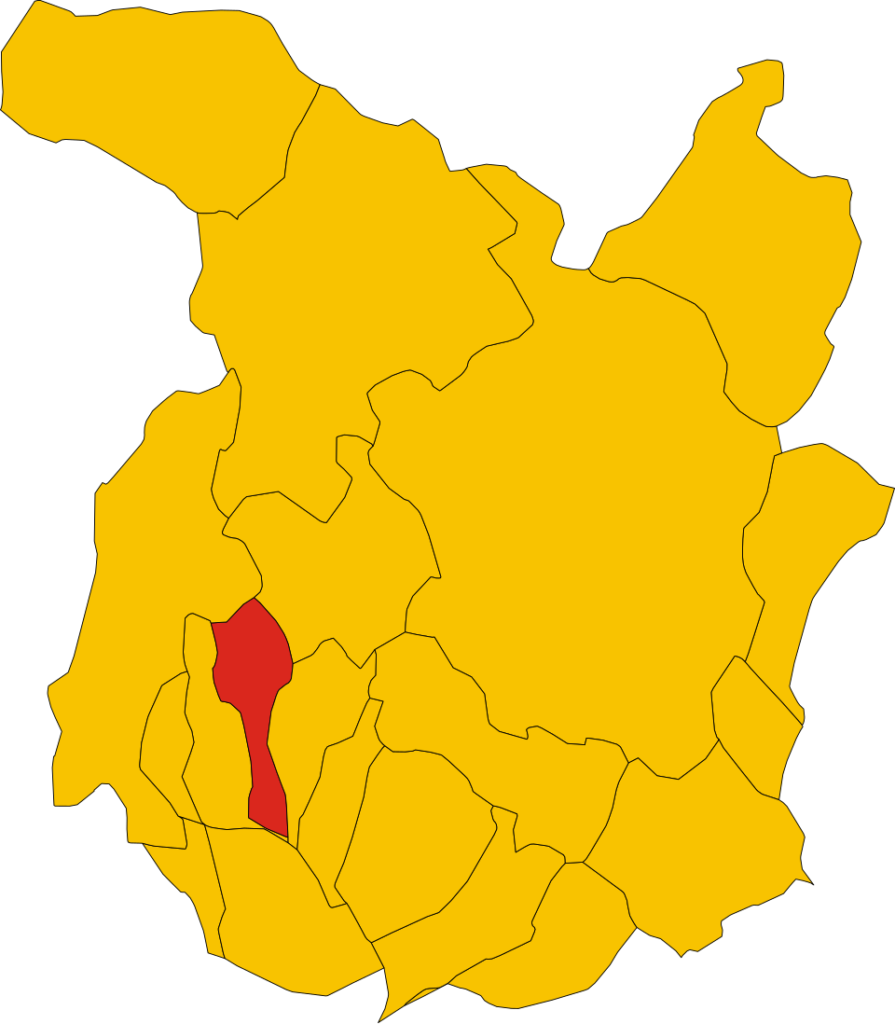
Massa e Cozzile is a municipality in the province of Pistoia (Tuscany), composed of several villages spread across a mainly hilly landscape in the Valdinievole area, with some lowland settlements of more recent development. The name “Massa” derives from the Latin massa, meaning an agricultural estate or feudal landholding, while the origin of “Cozzile” is uncertain and likely local in nature. The territory includes villages such as Massa, Cozzile, Vacchereccia, Le Molina, and Vangile, along with more populated lowland areas like Margine Coperta and Traversagna.
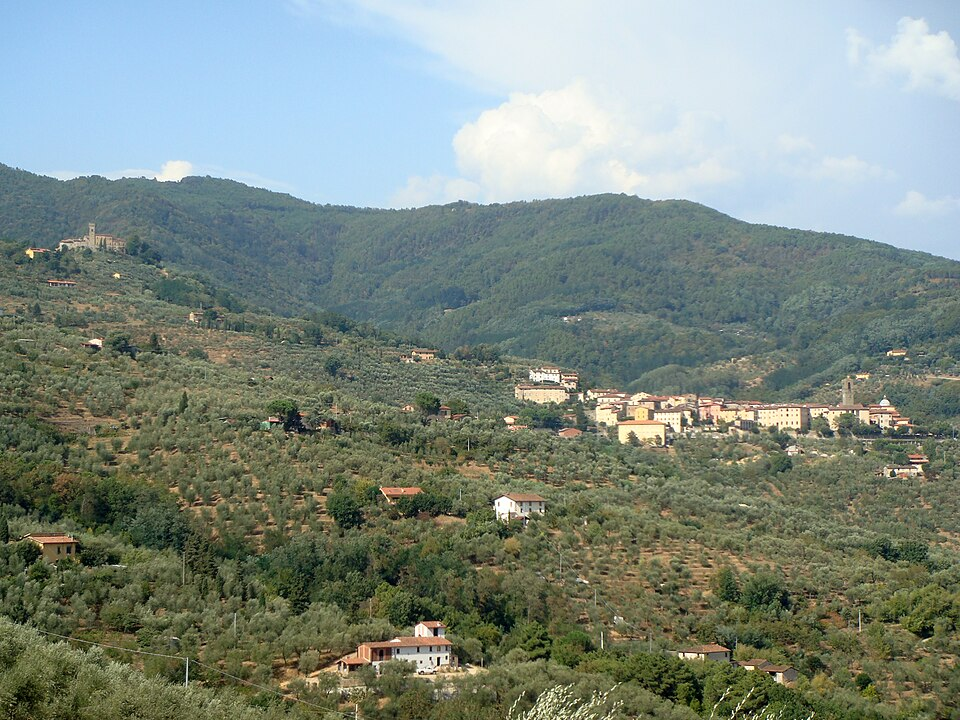
The historic village of Massa is a small medieval settlement located near Montecatini Terme, surrounded by olive trees and chestnut woods, while Cozzile is known for its well-preserved castle and elevated views over the entire Tuscan region on clear days. From the panoramic path of Sottolemura, the area offers wide views over the Valdinievole and surrounding mountains. The municipality is also crossed by several waterways, including the Rio Gamberaio, the Rio dei Parenti, and the Borra stream, which shape the local landscape and flow toward the nearby wetlands.
| Area (km² / sq mi) | 16.01 / 9.95 |
| Population | 7,747 (2026) |
History of Massa e Cozzile
During prehistoric times, the area of Massa e Cozzile was inhabited by small settlements and later became a contested territory between the Ligurians and the Etruscans. After the Roman conquest, the region was incorporated into the Roman sphere of influence, with settlements of legionary veterans and the passage of the important Via Cassia, which connected Rome to Luni.
The origins of Massa date back to this period, probably as an agricultural settlement between the 4th and 3rd centuries BC. Over the centuries, the ancient structure disappeared almost completely, leaving only a few remains, including Porta ai Campi and Porta a Buggiano. The first historical mention of Massa’s parish church dates to 976 AD.
During the Middle Ages, Massa was controlled by the Da Buggiano family and later entered the influence of Lucca. Between the 13th and 14th centuries, it became a rural municipality and, with the foundation of the castle of Cozzile, acquired the name Massa Valdinievole, which later became Massa e Cozzile.
In 1303, Massa conquered the fortress of Verruca from Pistoia, although it was later abandoned. The coexistence of Massa, Cozzile, and Verruca gave the municipality a polycentric identity, with each community maintaining its own role and influence. After 1328, following the decline of Lucca’s power, Massa e Cozzile came under Florentine control and obtained several privileges thanks to its strategic position. Its administrative status changed over time, until it became part of the province of Pistoia in 1928.
During the 20th century, the municipality underwent strong urban development, especially in Margine Coperta and Traversagna, which transformed from rural areas into modern urban centers. In 1944, during the Italian Resistance, German soldiers destroyed a bridge over the Borra stream and killed local worker Aladino Sabatini, whose name was later given to the road connecting the two villages.
Points of interest and culture in Massa e Cozzile
Massa is the administrative center of Massa e Cozzile, although the municipality does not have an official capital because it is a scattered municipality. This medieval village lies at 223 meters above sea level and has around 300 inhabitants. Surrounded by olive groves and chestnut woods, it offers panoramic views of the Valdinievole, including Montecatini Terme, nearby villages, and the Pisan Mountains.
Cozzile, located about 3 km from Massa, is a small medieval village famous for its well-preserved castle. Thanks to its elevated position, on clear days it offers views across much of Tuscany. The village is connected to Massa by a modern road, while an ancient route following older paths still survives.
Margine Coperta and Traversagna represent the modern and economic heart of the municipality. Developed mainly after the Second World War, these areas grew rapidly and now host most of the population and services. Margine Coperta is known for the Church of Santa Rita, decorated with frescoes dedicated to the saint, while Traversagna contains the Church of the Holy Trinity and the historic Villa Gusci.
Vangile is a smaller village located along the road of the same name. It preserves the Oratory of Saints Sebastian and Roch, built in 1632 during a period of epidemic in Valdinievole. In the past, the area was also known for important industrial activities.
Source(s):
https://it.wikipedia.org/wiki/Massa_e_Cozzile
Photo(s):
1. Vonvikken, Public domain, via Wikimedia Commons
2. Fluctuat, CC BY-SA 3.0 https://creativecommons.org/licenses/by-sa/3.0, via Wikimedia Commons