
Peanut oil (groundnut oil)
Food, Plant source foods, Vegetable oils and derivatives
Consumption area(s) (countries that consumed more than 0.5 kg per person annually in 2023): Algeria 🇩🇿, Angola 🇦🇴, Burkina Faso 🇧🇫, Cameroon 🇨🇲, China 🇨🇳, Ghana 🇬🇭, Guinea 🇬🇳, Guinea-Bissau , Italy 🇮🇹, Ivoiry Coast 🇨🇮, Laos 🇱🇦, Lebanon 🇱🇧, Malawi 🇲🇼, Myanmar 🇲🇲, Netherlands 🇳🇱, Nicaragua 🇳🇮, Niger 🇳🇪, Nigeria 🇳🇬, Rwanda 🇷🇼, San Marino 🇸🇲, Senegal 🇸🇳, Sierra Leone 🇸🇱, Tonga 🇹🇴, United Arab Emirates 🇦🇪, Vatican City 🇻🇦, Zimbabwe 🇿🇼
Chemical composition:
- Saponifiable fraction: ~99%
- Saturated fatty acids: ~16.9%, including 8–14% palmitic acid, 1.5–5% stearic acid, 2–4% behenic acid, and ~1.5% arachidic acid (plus 1–2% lignoceric acid)
- Unsaturated fatty acids: ~78–80%, including 35–69% oleic acid, 0.5–1.5% gadoleic acid, and 13–35% linoleic acid
- Unsaponifiable fraction: ~1%
Chemical/physical properties:
- Smoke point: 160-235°
- Density: 0,911–0,925 kg/l a 15 °C
Introduction
Peanut oil—also referred to as groundnut oil or arachis oil—is a type of vegetable oil extracted from peanuts. Its taste is typically light and neutral, although oil produced from roasted peanuts develops a noticeably richer, more intense peanut aroma and flavor.
This oil is widely incorporated into the cuisines of American, Chinese, Indian, African, and Southeast Asian traditions, where it is used both as a general-purpose cooking medium and, when roasted, as a flavor-enhancing ingredient. One of its key properties is a relatively high smoke point compared to many other edible oils, which makes it particularly suitable for high-temperature cooking methods such as frying.
Description of peanut oil
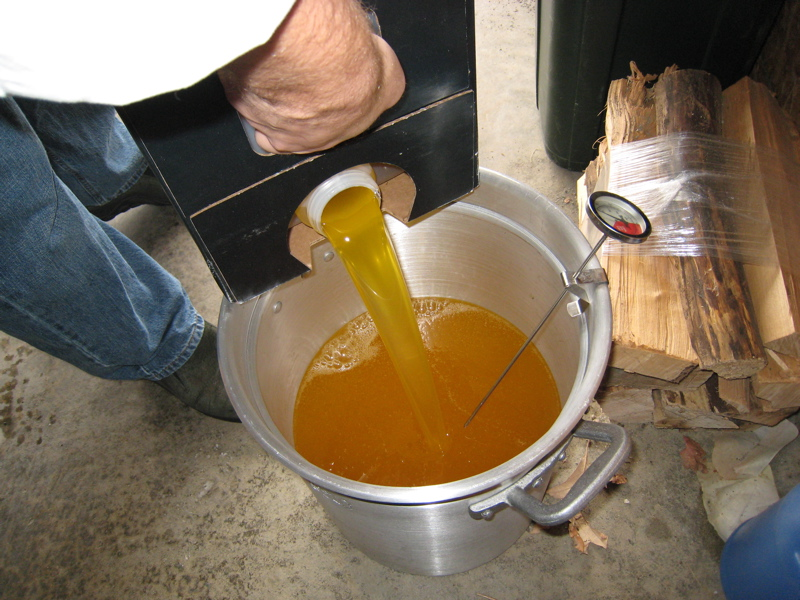
Conventional peanut oil and African peanut oil differ in both appearance and sensory characteristics. Standard peanut oil generally displays a pale yellow coloration, whereas the refined form appears almost white and greasy in texture. African varieties, by contrast, range from colorless to slightly yellow.
Cold-pressed peanut oil is characterized by a noticeable peanut-like flavor, sometimes accompanied by mildly fruity and slightly metallic notes. In comparison, hydrogenated peanut oil is nearly odorless. African peanut oil also retains a distinct peanut taste, although its overall profile is usually milder and more nutty. Oils obtained from the first cold pressing are considered particularly flavorful, while refined peanut oil tends to be almost neutral in taste.
The oil has a relatively high smoke point, around 160 °C for standard peanut oil and approximately 230 °C when refined, making the latter especially suitable for high-temperature cooking. Its melting point ranges from roughly −2 °C to +3 °C, although the oil already becomes noticeably thicker and more viscous at temperatures near 10 °C.
Another important characteristic is its good oxidative stability. Compared with many other edible oils, peanut oil becomes rancid more slowly. When stored in a sealed container, protected from light and kept cool, it may remain usable for up to one or two years, while even at room temperature it can last for several months. Despite these advantages, peanut oil may still trigger peanut allergies. However, individuals with allergies often tolerate refined peanut oil better than the cold-pressed variety.
Production methods for peanut oil
After harvesting, peanuts undergo a drying phase lasting roughly two to four weeks, during which their moisture content decreases from around 40% to approximately 5–7%. Once dried, the kernels—containing nearly 45% oil—are separated from their shells, typically through the use of disc mills or corrugated rollers. To obtain the oil, the seeds are first cleaned with sieves, then crushed in roller mills and finally subjected to cold pressing using screw presses.
To maximize extraction efficiency, the residual oil left in the press cake may subsequently be recovered with n-hexane extraction. The solvent is later removed by distillation, producing an oil considered lower in quality than mechanically cold-pressed peanut oil.
Several grades and processing categories of peanut oil are recognized. Cold-pressed peanut oil is generally regarded as the most natural form and is valued for its stronger flavor profile. In contrast, most commercially available peanut oil is refined in order to achieve a more uniform composition and quality standard. Refining also eliminates undesirable substances such as aflatoxins, along with contaminants including heavy metals and pesticide residues.
Within the European Pharmacopoeia, refined peanut oil is listed as Arachidis oleum raffinatum and must comply with strict purity and compositional requirements before being approved for pharmaceutical applications. These standards regulate parameters such as the fatty acid profile of triglycerides, the proportion of unsaponifiable matter, and the amount of free fatty acids. Pharmaceutical-grade peanut oil is also widely employed in the cosmetic and food industries.
The same pharmacopoeia also describes hydrogenated peanut oil (Arachidis oleum hydrogenatum), produced through partial hydrogenation. In its normal state, it appears as a soft white to pale-yellow mass that melts into a clear light-yellow liquid when heated.
Uses of peanut oil
Due to its relatively high flash point, the oil exhibits strong thermal stability and performs especially well in high-temperature cooking applications such as frying, grilling, and deep-frying. For this reason, it is widely used in Chinese and other Asian culinary traditions, particularly in wok cooking.
In addition to its refined form, peanut oil is also used in some cultures as a general fat source in cooking, contributing to overall dietary lipid intake in both household and industrial food preparation. Moreover, less refined varieties—such as cold-pressed peanut oil or certain traditional African peanut oils—are sometimes used not only as cooking fats but also as flavoring agents, adding a characteristic nutty aroma and enhancing the sensory profile of specific dishes.
Classification of peanut oil
Peanut oil can be divided in:
- Afrikan peanut oil
- Hydrogenated peanut oil
- Refined peanut oil
- Unrefined peanut oil
Nutritional facts table
Please note that nutritional values can vary slightly depending on peanut oil type
| Nutrients | Per 100 g |
| Calories (kcal) | 899 |
| Total fat (g) | 99.9 |
| ———Saturated fat (g) | 16.9 |
| Cholesterol (mg) | 0 |
| Sodium (mg) | 0 |
| Total carbohydrates (g) | 0 |
| ———Dietary fiber (g) | 0 |
| ———Total sugar (g) | 0 |
| Protein (g) | 0 |
Photo(s):
1. emilee rader from Lansing, MI, USA, CC BY-SA 2.0 https://creativecommons.org/licenses/by-sa/2.0, via Wikimedia Commons