
Carbonated water
Consumption area(s): Earth
Introduction
Carbonated water refers to water infused with carbon dioxide gas, either through artificial pressurization or via natural geological activity. This process of carbonation generates tiny bubbles, which give the beverage its characteristic fizzy and refreshing texture. Popular varieties include club soda and minaral or manufactured sparkling water. These drinks are commonly distributed in cans and bottles, although they can also be prepared instantly using commercial carbonation devices in restaurants and bars or produced domestically with CO₂ cartridge systems.
Description of carbonated water
Club soda is a type of artificially carbonated water that typically contains added mineral salts, such as sodium bicarbonate or potassium salts, which are used to modify taste and reduce the perceived acidity of dissolved carbon dioxide. In contrast, natural sparkling waters contain minerals that originate from the geological source itself, reflecting the composition of the aquifer. Commercial sparkling waters may be either simply carbonated water with minimal mineral content or, in some formulations, lightly mineralized to imitate natural water profiles.
Certain regions, including Selters in Germany’s Taunus Mountains, Mihalkovo in the Bulgarian Rhodope Mountains, and Medžitlija in North Macedonia, are known for artesian sources that naturally produce effervescent mineral waters.
When carbon dioxide (CO₂) dissolves in water, it forms a limited quantity of carbonic acid (H₂CO₃), giving the drink its subtly sharp and tangy flavor. As a result, carbonated water generally has a pH between 5 and 6, making it moderately acidic—comparable to some fruit juices, though still far less acidic than the environment found inside the human stomach.
History of carbonated water
Many traditional alcoholic beverages, including beer, champagne, cider, and spritzers, originally obtained their characteristic bubbles through the natural process of fermentation. During the seventeenth and eighteenth centuries, several scientists began experimenting with the artificial creation of carbonated water. Early pioneers such as William Brownrigg, Gabriel François Venel, and Dr. Macbride explored methods of dissolving carbon dioxide into water, although the chemical mechanisms behind carbonation were not yet fully understood.
A major breakthrough occurred in 1767 when Joseph Priestley developed a practical technique for producing carbonated water by exposing water to gas released during beer fermentation in a brewery. Priestley noticed that the treated liquid had a fresh and pleasant flavor, and later described the procedure in a scientific publication. His invention rapidly inspired other European inventors, who improved the technology and designed more efficient systems capable of producing larger quantities of carbonated water.

By the late eighteenth century, industrial production of artificial mineral water had begun. Entrepreneurs such as Thomas Henry and Johann Jacob Schweppe transformed carbonation from a scientific curiosity into a commercial product. Schweppe, in particular, refined the bottling process and founded the Schweppes Company in Geneva before expanding operations to London. Around the same period, the expression “soda water” became widespread because compounds containing sodium carbonate or sodium bicarbonate were frequently added to enhance flavor and regulate acidity.
Today, carbonated water is produced by forcing pressurized CO₂ into water, which increases the gas’s solubility. Once the container is opened, the pressure decreases and the dissolved gas escapes, creating the familiar effervescence and bubbles. Modern industrial carbon dioxide is generally obtained from large-scale industrial activities, including the combustion of fossil fuels and processes linked to hydrogen production.
Carbonated water production methods
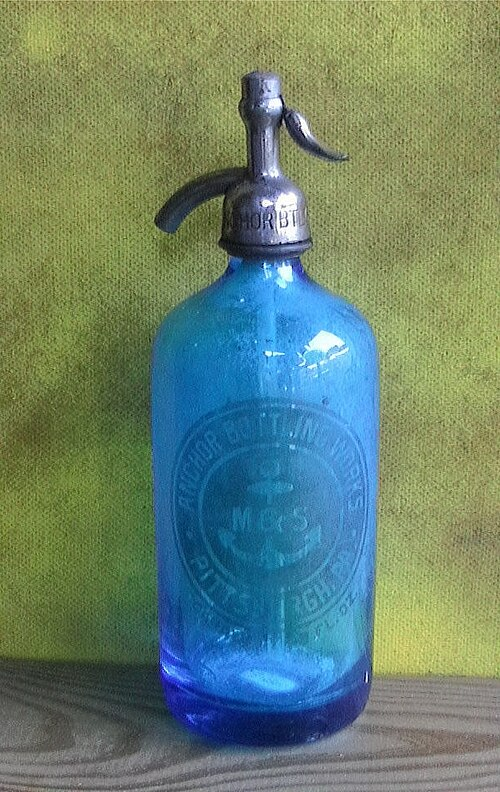
Historically, several devices were developed to produce and preserve carbonated water. One of the most iconic inventions was the soda siphon, a pressurized container made of glass or metal that became extremely popular in both bars and middle-class homes during the early twentieth century. Inside the siphon, the force created by compressed carbon dioxide (CO₂) pushed the carbonated water through an internal tube whenever the valve was activated. Commercial models arrived already filled, while domestic versions allowed users to carbonate ordinary water through small disposable gas cartridges.
Another important nineteenth-century invention was the gasogene, a Victorian machine created to generate sparkling beverages through a chemical reaction. The apparatus contained separate compartments filled with tartaric acid and sodium bicarbonate; when combined, these substances produced carbon dioxide, which increased the internal pressure and forced the liquid upward through a tube. Because the device relied on high pressure inside fragile glass chambers, explosions were relatively common.
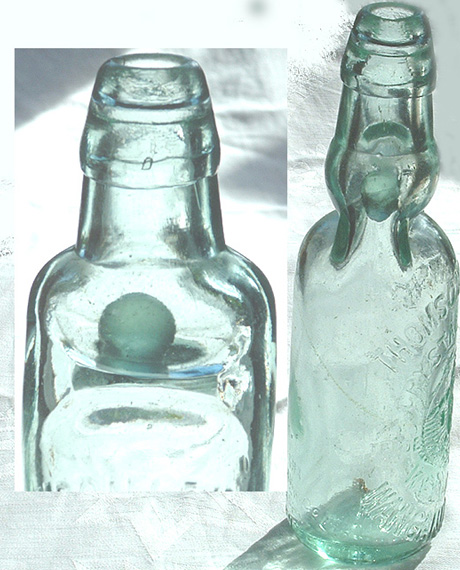
In 1872, inventor Hiram Codd patented the famous Codd-neck bottle, specifically designed for carbonated drinks. The bottle contained a glass marble held tightly against a rubber seal by the pressure of the gas, preventing carbonation from escaping. Its distinctive structure allowed the marble to move into a separate chamber when the bottle was opened, making pouring possible without blocking the neck. The design became highly successful throughout Europe, Asia, and Australia, and survives today in beverages such as the Japanese Ramune.
Modern home carbonation systems, generally known as soda makers or soda carbonators, simplified the production of carbonated water. These appliances inject pressurized CO₂ into water using reusable canisters and are often combined with flavored syrups to create soft drinks. One of the most famous brands is SodaStream, which achieved major popularity during the 1970s and 1980s before experiencing a commercial revival decades later.
Modern carbonated water is produced through controlled carbonation processes in which carbon dioxide (CO₂) is dissolved into water under low temperature and high pressure. In soda siphons, chilled and filtered water (around 8 °C) is sealed and then pressurized with CO₂, sometimes with small amounts of sodium bicarbonate or similar alkaline compounds added to reduce the acidity caused by carbonic acid formation. The system is then brought to high pressure (about 120 psi), allowing a large quantity of gas to remain dissolved until the drink is released.
In modern restaurants and bars, carbonators are commonly used to produce soda water on demand. These machines pump water into a sealed chamber where it is mixed with compressed CO₂ at roughly 100 psi. The resulting pressurized carbonated water is then dispensed directly through taps or mixed with flavorings before serving, producing consistent effervescence and texture.
Uses of carbonated water
Carbonated beverages rely heavily on carbonated water as their primary base. In most soft drinks, it is combined with a sweetener and various flavorings such as cola, citrus, or ginger, creating the characteristic fizzy beverages widely consumed worldwide. Beyond sugary drinks, plain sparkling water is often chosen as a substitute for soft drinks or alcoholic beverages, offering a non-sweet alternative with the same effervescence. A related variant, club soda, contains added mineral salts such as sodium bicarbonate or potassium sulfate, which adjust its taste profile. Some producers also create lightly flavored sparkling waters by infusing essential oils or natural aromatic compounds.
In the context of alcoholic drinks, carbonated water serves as an important diluting agent. It is commonly used to lengthen strong spirits, transforming short drinks into long drinks by reducing alcohol intensity while adding fizz. It plays a key role in popular mixes such as whiskey and soda, Campari and soda, and various highball cocktails, where it enhances texture and refreshment. It is also used with flavored syrups or cordials to lighten beverages like orange squash.
Beyond beverages, carbonated water has found applications in culinary techniques, particularly in Western cooking. It is increasingly used in batter mixtures for deep-frying as a substitute for still water. The trapped carbon dioxide bubbles help create a lighter structure in the dough, producing a texture similar to tempura. Food scientists explain that these gas pockets expand during frying, contributing to a crisp, airy coating and giving the impression of a lighter, less dense fried product.
Classification of carbonated water
Carbonated water con be divided in:
- Club soda
- Sparkling water
Photo(s):
1. Pbroks13 at English Wikipedia, Public domain, via Wikimedia Commons
2. Popular Science Monthly Volume 5, Public domain, via Wikimedia Commons
3. Moriori, Public domain, via Wikimedia Commons