
Zucchini (or courgettes)
Cultivar of Cucurbita pepo
Food, Plant source foods, Plants (Plantae), Flowering plats (angiospermae), Mesangiosperms, Eudicots, Core eudicots, Superrosids, Rosids, Fabids (Eurosids I), Cucurbitales, Cucurbitaceae, Cucurbita, Cucurbita pepo
Cultivar name: Cucurbita pepo var. cylindrica
Consumption area(s): Earth
Note: For better understanding, please read the article on flowering plants (angiospermae) first. If you come across unfamiliar words, you can click on any highlighted term to open the glossary with definitions of key botanical terms.
Introduction
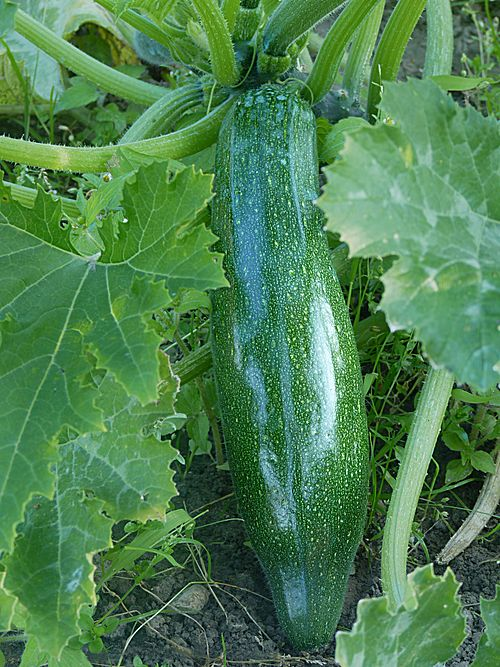
Zucchini (or Courgettes) are summer squashes characterized by a vining, herbaceous growth habit. The fruits are typically harvested while young, when their seeds and rind are still tender and edible. Although closely related to the marrow, zucchini are distinct, and their fruit may only be referred to as marrow once they reach full maturity. This plant is valued for its culinary versatility, delicate texture, and nutritional content while still immature, making it a staple in summer vegetable gardens.
Description of zucchini (or courgettes)
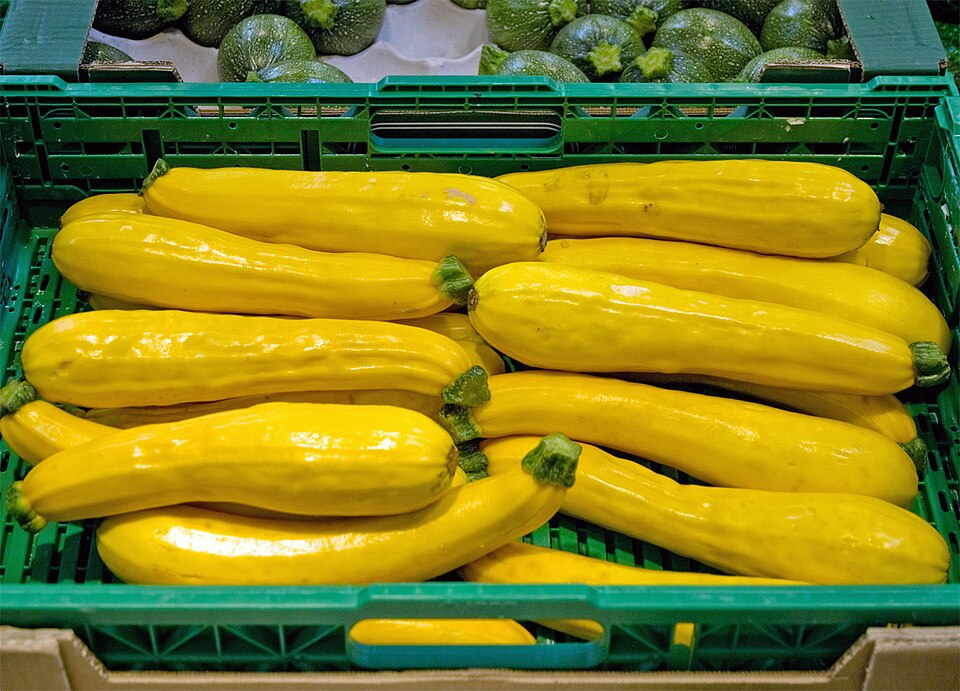
Typical zucchini fruits usually appear in various shades of green, while the golden variety displays a deep yellow to orange hue. When left to fully mature, they can reach up to 3 feet (1 meter) long, but they are generally harvested much earlier, around 6–10 inches (15–25 cm) in length.
From a botanical perspective, the zucchini’s fruit is classified as a type of berry formed from the swollen ovary of its flower and protected by an epicarp. In culinary practice, zucchini is treated as a vegetable, commonly cooked and served as a side dish or savory preparation, although it can occasionally be incorporated into sweet recipes.
History of zucchini (or courgettes) as food
Zucchini traces its origins to the Americas, specifically Mesoamerica. The green, cylindrical squashes that are harvested while immature and commonly called zucchini were first cultivated in northern Italy roughly three centuries after American cucurbits were introduced. This development seems to have taken place in the late 19th century, although the earliest documented mention of the term “zucchini” appears in a Milan publication from 1901.
In the United States, zucchini first appears in records from the early 1920s, most likely brought by Italian immigrants. It was probably initially grown in California, and by 1928, a New York State vegetable report listed zucchini as one of 60 cultivated varieties of Cucurbita pepo, indicating its established presence in American agriculture by that time.
Production methods for zucchini (or courgettes)
Zucchini, while generally easy to cultivate, relies heavily on bee activity for proper pollination, like all other squash. In regions with declining pollinator populations or heavy pesticide use, such as areas with frequent mosquito spraying, gardeners may notice fruit abortion, where young fruits start to grow but then wither or rot. This occurs when insufficient pollen reaches the female flowers and can be mitigated through manual pollination or by encouraging more bees.
Uses of zucchini (or courgettes)
Zucchini intended for culinary use are generally harvested young, usually under 8 inches (20 cm) in length, when the seeds remain soft and the skin is tender. Fully mature zucchini can exceed 40 inches (1 m), often containing hardened seeds and tougher rinds, which typically require peeling and removing the seeds before use. Fruits with the flowers still attached are considered especially fresh and immature, prized for their sweeter flavor.
These squash are most commonly cooked, and a wide range of preparation methods is used, including steaming, boiling, grilling, baking, stuffing, barbecuing, or frying. Zucchini can also be incorporated into baked goods, such as zucchini bread, where raw grated zucchini is combined with flour and spices.
Thanks to their delicate taste, zucchini are often served simply sautéed with butter or olive oil and herbs, though they can also feature in more complex dishes. The skin is typically left on. When frying, slices are often patted dry to maintain their shape during cooking, similar to techniques used with eggplant. Zucchini can also be enjoyed raw, either sliced or shredded in cold salads, or lightly cooked in warm salads, as seen in Thai or Vietnamese cuisine. Larger, more mature zucchini are particularly suitable for use in breads.
Classification of zucchini (or courgettes)
In this cultivar, several specific cultivar can be found, including:
- Bianco di Trieste
- Black Beauty
Nutritional facts table for the fruits
Since nutritional values can vary slightly depending on the cultivar, the figures provided below represent general averages.
| Nutrients | Per 100 g |
| Calories (kcal) | 16 |
| Total fat (g) | 0.18 |
| ———Saturated fat (g) | 0.04 |
| Cholesterol (mg) | 0 |
| Sodium (mg) | 10 |
| Total carbohydrates (g) | 3.35 |
| ———Dietary fiber (g) | 1.1 |
| ———Total sugar (g) | 1.73 |
| Protein (g) | 1.21 |
Recipes that use this product as an ingredient:
Photo(s):
1. Jamain, CC BY-SA 3.0 https://creativecommons.org/licenses/by-sa/3.0, via Wikimedia Commons
2. Rik Schuiling / TropCrop-TCS, CC BY-SA 4.0 https://creativecommons.org/licenses/by-sa/4.0, via Wikimedia Commons