
Whole milk
Food, Animal source foods, Dairy products, Milk
Consumption area(s): Earth, except for Africa and some tropical regions.
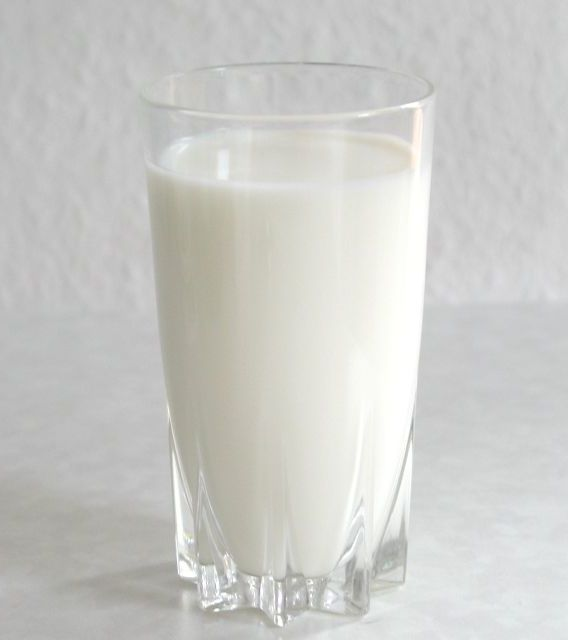
Introduction
Whole milk is a type of drinking milk characterized by a minimum fat content that may vary according to national regulations, but generally averages around 3.5% in cow’s milk. To ensure a certain degree of fat standardization, the production process typically includes cream separation (the fat fraction of milk). However, when standardization is not required, whole milk may remain unskimmed, meaning it is left in its natural state, without undergoing either thermal or mechanical treatments.
Description of whole milk
Cream separation, also known as skimming, is usually carried out before pasteurization for reasons of efficiency and quality control. It can be performed either by gravity creaming (allowing the milk to rest for 12–24 hours, during which fat rises to the surface forming a cream layer) or by centrifugation (separating fat using a rotating machine that exploits centrifugal force). The resulting skimmed milk contains a residual fat content between 0.1% and 0.5%, and is subsequently recombined with cream to achieve the desired final fat percentage. In the case of whole milk, this recombination restores the fat content to at least the minimum level required by law.
Whole milk retains its original nutritional profile, making it richer and fuller-bodied compared to skimmed varieties. It is often preferred for its full flavor and for use in culinary preparations that require a significant contribution of natural fats.
Classification of whole milk
This type of milk is classified according to the same criteria used for milk in general, as described in the dedicated section.
Nutritional facs table
It should be noted that nutritional values may vary depending on the fat content and the processing method. The values reported here refer to whole UHT cow’s milk.
| Nutrients | Per 100 g |
| Calories (kcal) | 60 |
| Total fat (g) | 3.25 |
| ———Saturated fat (g) | 1.86 |
| Cholesterol (mg) | 10 |
| Sodium (mg) | 40 |
| Total carbohydrates (g) | 4.52 |
| ———Dietary fiber (g) | 0 |
| ———Total sugar (g) | 5.26 |
| Protein (g) | 3.22 |
Recipes that use this product as an ingredient:


Source(s):
https://it.wikipedia.org/wiki/Latte
https://en.wikipedia.org/wiki/Milk
Photo(s):
1. Stefan Kühn, CC BY-SA 3.0 http://creativecommons.org/licenses/by-sa/3.0/, via Wikimedia Commons