
Vitaceae
Family of Vitales
Food, Plant source foods, Plants (Plantae), Flowering plats (angiospermae), Mesangiosperms, Eudicots, Core eudicots, Superrosids, Rosids
Consumption area(s): Earth
Note: For better understanding, please read the article on flowering plants (angiospermae) first. If you come across unfamiliar words, you can click on any highlighted term to open the glossary with definitions of key botanical terms.
Introduction
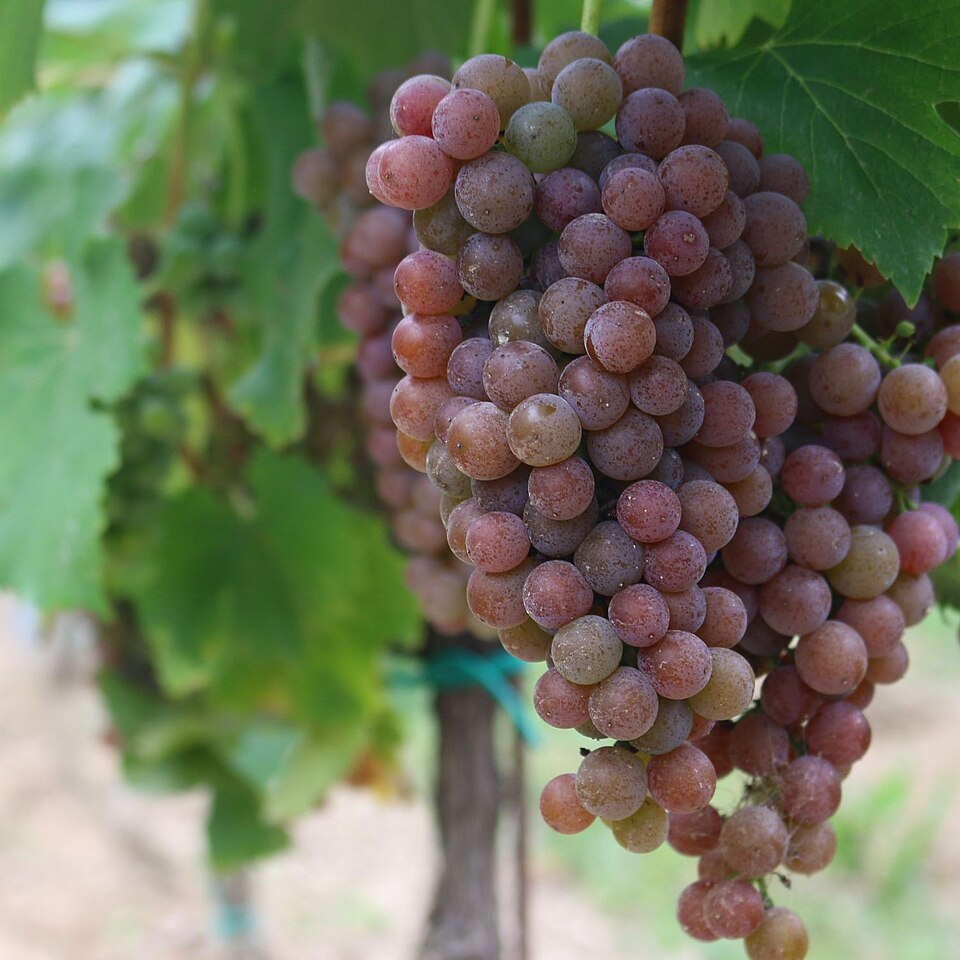
The Vitaceae, commonly referred to as the grape family, represents a lineage of flowering plants placed within the single-family order Vitales. This botanical group comprises about twenty genera and roughly nine hundred species, among which well-known examples include various grapevines and the ornamental Virginia creeper. The designation of the family originates from the genus Vitis, which is one of its most characteristic representatives.
A large proportion of these plants occurs in tropical regions, where they often function as vigorous climbing species that play an important role in ecosystem structure. Although lianas are especially frequent, certain members may develop as shrubs or even attain a tree-like growth form.
Description of Vitaceae
Species belonging to the Vitaceae are predominantly climbing species equipped with tendrils positioned opposite their leaves, a structural feature that enhances their capacity to ascend surrounding vegetation. Owing to this adaptation, they are often regarded as some of the most efficient climbers in both tropical and temperate ecosystems.
Growth forms within the family are variable, ranging from slender vines and robust woody lianas to, more rarely, shrubs or even tree-like individuals, and in certain cases the tissues may show a succulent consistency. Their fruits are typically berries, while the foliage is arranged in an alternate pattern, with blades that can be either simple or compound and margins that vary from serrated to lobed.
Another notable characteristic observed in many genera of Vitaceae, such as Cissus and Vitis, is the formation of pearl bodies, also termed food bodies. These minute spherical structures, typically developing on leaves or stems, are interpreted as part of a defensive strategy while simultaneously acting as a nutritional reward for associatedorganisms, particularly ants and mites, thereby facilitating intricate symbiotic relationships within their communities.
Classification of Vitaceae
This family is subdivided according to genus. Among these are:
- Cissus (water grape)
- Grapes (Vitis)
Photo(s):
1. Arielle.desoucey, CC BY-SA 4.0 https://creativecommons.org/licenses/by-sa/4.0, via Wikimedia Commons