
Red wines
Food, Plant source foods, Alcoholic beverages, Fermented alcoholic beverages, Wines, Ordinary wines
Consumption area(s): We were unable to find reliable data on the distribution of this product, but it is likely available in all countries where wine is commonly consumed.
Introduction
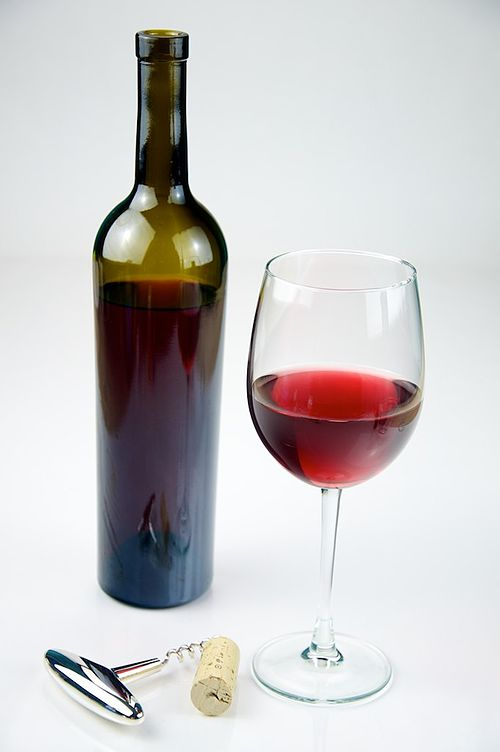
Red wines are produced through the fermentation of dark grapes, commonly referred to as red grapes. Their colour can display a wide range of shades depending on age: young wines typically show a purplish-red hue, while with maturation the colour gradually shifts toward brick-red, eventually developing brownish tones in older wines.
Although the pulp of most dark grapes is actually pale or greenish-white, the distinctive colour of red wine originates from anthocyanin pigments found in the grape skins. During vinification, these compounds are released into the fermenting liquid, shaping not only the colour but also a substantial part of the wine’s aromatic profile and flavour.
A crucial step in red wine production is the extraction of compounds from the grape skins. This process provides the wine with its characteristic colour, as well as tannins and aromatic compounds that give structure, depth, and complexity to the final product.
Production methods for red wines
The production processof red wine begins with the handling of grapes immediately after harvest. Whether hand-picked or machine-harvested, the grape clusters are collected in dedicated containers and conveyed by means of a screw transport system toward the processing equipment.
Upon arrival at the winery, the clusters may be intact or already partially destemmed, sometimes containing residual leaves and vegetal material. Since stems can impart astringent and herbaceous notes, destemming is performed to separate the berries from the woody structures using a perforated rotating drum fitted with paddles. This is followed by crushing, carried out by adjustable rollers that gently break the berries, with pressure calibrated according to the oenologist’s objectives. The outcome of this stage is the must, a mixture of juice, grape skins, and seeds, which is then transferred into fermentation vessels made of stainless steel, concrete, or oak wood.
To prevent oxidation and regulate the onset of fermentation, a controlled dose of sulfur dioxide is added. In some cases, macerating enzymes, such as glucanases, are employed to enhance colour and aroma extraction, while the addition of tannins contributes to colour stability. Occasionally, the must is cooled to around 10 °C for a short pre-fermentative maceration, aimed at intensifying aromatic compounds without excessive tannin extraction.
Alcoholic fermentation begins through the action of yeasts, which may be indigenous (naturally present on the grape skins) or selected strains, such as Saccharomyces ellipsoideus, chosen according to the desired sensory profile. During fermentation, the solid grape material rises to the surface forming a cap, which must be managed through techniques such as pump-overs (drawing liquid from the bottom and spraying it over the cap), punch-downs (submerging the cap manually or mechanically), or delestage (draining the fermenting must and reintroducing it over the cap). Temperature control is essential: fermentations at 25–28 °C enhance fruity aromas, while higher temperatures, up to 35 °C, promote tannin structure and ageing potential.
Once fermentation is complete, pressing separates the wine from the pomace. The free-run wine, which flows without mechanical pressure, accounts for approximately 60–70% of the total volume, while the remaining 30–40% derives from the pressed fraction, which is richer in tannins and polyphenols. Depending on the winemaking strategy, these fractions may be vinified separately or blended at a later stage. Commonly used presses range from continuous presses to pneumatic presses, the latter allowing for a gentler extraction.
This is followed by malolactic fermentation, a process that converts malic acid into lactic acid, reducing acidity and enhancing mouthfeel and softness. This transformation may occur spontaneously or be induced through selected bacteria. The wine is then racked to separate it from the lees and stabilized with sulfur dioxide to ensure preservation. Ageing takes place in stainless steel tanks, concrete vats, or oak barrels, whose size and toasting level significantly influence the final aromatic profile.
Prior to bottling, some wines undergo fining, a clarification process using agents such as egg white or gelatin, which improve clarity and stability. Wines intended for early consumption may also be subjected to cold stabilization to prevent the formation of tartrate crystals. Filtration ensures visual clarity and microbiological stability, after which the wine is packaged in glass bottles sealed with cork closures, while alternative formats such as Bag-in-Box or Tetra Pak are used for specific market needs.
Classification of red wines
Regardless of effervescence and other variables, red wines, like wines of other colours, cannot be classified according to a single criterion. Instead, there are three main classification approaches.
Geographic region of production (for wines originating from a specific production area):
- Amarone della Valpolicella DOCG
- Aglianico del Vulture DOCG
- Barbaresco DOCG
- Barolo DOCG
- Brunello di Montalcino DOCG
- Cannonau di Sardegna DOC
- Carmignano DOCG
- Chianti DOC
- Chianti Classico DOCG
- Dolcetto d’Alba DOC
- Frascati DOC
- Lambrusco DOC
- Lazio IGT
- Lambrusco DOC
- Maremma Toscana IGT
- Montepulciano d’Abruzzo DOC
- Montepulciano d’Abruzzo DOCG
- Morellino di Scansano DOC
- Primitivo di Manduria DOC
- Puglia IGT
- Sagrantino di Montefalco DOC
- Salento IGT
- Sicilia IGT
- Toscana IGT
- Trentino IGT
- Valpolicella DOC
- Veneto IGT
Grape variety (based on the grape variety present in the highest proportion, regardless of the geographic origin):
- Aglianico
- Aglianicone
- Albana Nera
- Aleatico
- Alicante
- Ancellotta
- Barbera
- Barbera dell’Emilia
- Bombino nero
- Bonarda
- Bovale sardo
- Brachetto
- Sangiovese
- Cabernet franc
- Cabernet-Sauvignon
- Caddiu
- Cagnulari
- Calabrese
- Canaiolo
- Canina
- Cannonau
- Carignano
- Casetta
- Castiglione
- Centesimino
- Cesanese
- Chatus
- Ciliegiolo
- Clinton
- Colorino
- Corvina
- Corvinone
- Croatina
- Dolcetto
- Fortana
- Franconia
- Frappato
- Freisa
- Fumin
- Gaglioppo
- Gamay
- Grappello Ruberti
- Greco nero
- Grignolino
- Groppello
- Lacrima
- Lagrein
- Lambrusco
- Longanesi
- Magliocco canino
- Malvasia di Casorzo
- Malvasia di Schierano
- Malvasia nera di Brindisi
- Malvasia nera di Lecce
- Mammolo
- Marzemino
- Merlot
- Molinara
- Monica
- Montepulciano
- Moscato di Scanzo
- Moscato rosa
- Nebbiolo
- Negrara
- Negrettino
- Negroamaro
- Nerello
- Nerello mascalese
- Nero Buono
- Nero d’Avola
- Neyret
- Nieddera
- Nocera
- Notardomenico
- Ottavianello
- Perricone
- Pignolo
- Pinot nero
- Primitivo
- Prugnolo
- Raboso
- Rebo
- Rondinella
- Rossese
- Rossignola
- Ruchè
- Sagrantino
- Sangiovese
- Schiava
- Schioppettino
- Sciascinoso
- Susumaniello
- Syrah
- Teroldego
- Terrano del Carso Triestino
- Tintilia
- Vernaccia
- Vespolina
- Vin de Nus
Producer/Brand (classification based on the producing entity, regardless of grape varieties or geographic origin):
- Tavernello
Nutritional facts table
Please note that nutritional values may slightly vary depending on the type of wine. Here, the values for Chianti Classico DOCG wine are reported.
| Nutrients | Per 100 g |
| Calories (kcal) | 81 |
| Total fat (g) | 0 |
| ———Saturated fat (g) | 0 |
| Cholesterol (mg) | 0 |
| Sodium (mg) | 0 |
| Total carbohydrates (g) | 1 |
| ———Dietary fiber (g) | 0 |
| ———Total sugar (g) | 0.6 |
| Protein (g) | 0 |
Recipes that use this product as an ingredient:

Source(s):
https://en.wikipedia.org/wiki/Red_wine
Photo(s):
1. Evan Swigart from Chicago, USA, CC BY 2.0 https://creativecommons.org/licenses/by/2.0, via Wikimedia Commons