
Neognaths (Neognathae)
Infraclass of birds (Aves)
Food, Animal source foods, Animals (Animalia), Chordates (Chordata), Vertebrates (Vertebrata), Birds (Aves)
Consumption area(s): Earth
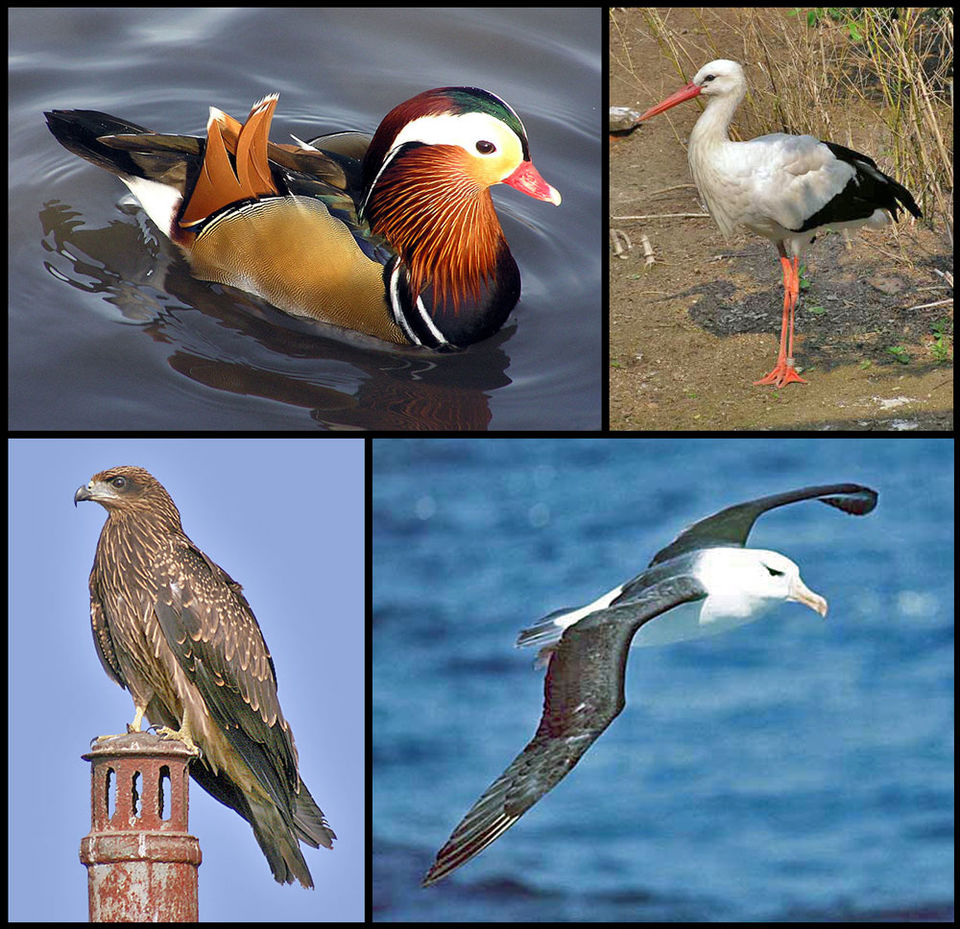
Introduction
The Neognaths (Neognathae) belongs to the bird class Aves. The name originates from Ancient Greek, combining néos (“new” or “young”) and gnáthos (“jaw”), a reference to the structure that distinguishes this group from more primitive ones. Almost all modern birds are classified in Neognathae, making it by far the largest and most diverse avian infraclass. The only living birds not included in this group are the tinamous and the ratites (such as ostriches and their relatives), which instead form the separate lineage Palaeognathae. Today, Neognathae encompasses nearly 10,000 extant species, representing the overwhelming majority of living bird diversity across the planet.
Description of Neognaths (Neognathae )
This infraclass also includes the order Passeriformes, commonly known as perching birds. This order is extraordinarily diverse and represents roughly 60% of all living bird species. In terms of species richness, Passeriformes is one of the most extensive groups of terrestrial vertebrates: it contains about twice as many species as the mammalian order Rodentia and roughly five times more than Chiroptera, the order that includes bats. Within Neognathae there are also several very small and unusual orders, sometimes composed of species whose evolutionary relationships remain uncertain, such as the distinctive hoatzin.
From an anatomical perspective, neognath birds share several skeletal characteristics. Their metacarpal bones are fused, the third digit of the wing is elongated, and the vertebral column typically includes thirteen or fewer vertebrae. They are distinguished from members of Palaeognathae mainly by aspects of the jaw and palate structure.
Moreover, a palate structure resembling that of neognaths is also observed in certain ornithuran birds, suggesting that similar cranial features appeared in multiple branches of early bird evolution.
Classification of Neognaths (Neognathae )
This infraclass is divided in orders:
- Accipitriformes (Black kite, Golden eagle, Griffon vulture)
- Anseriformes (Canada goose, Mallard, Mute swan)
- Apodiformes (Asian palm swift, Edible-nest swiftlet, White-nest swiftlet)
- Bucerotiformes (African grey hornbill, Red-billed hornbill, Southern ground hornbill)
- Caprimulgiformes (Common nighthawk, European nightjar, Pauraque)
- Cariamiformes (Black-legged seriema, Red-legged seriema)
- Charadriiformes (Atlantic puffin, Black-tailed godwit, Northern lapwing)
- Ciconiiformes (Abdim’s stork, Marabou stork, White stork)
- Coliiformes (Blue-naped mousebird, Red-faced mousebird, Speckled mousebird)
- Columbiformes (Common wood pigeon, Mourning dove, Rock dove)
- Coraciiformes (Common kingfisher, European bee-eater, White-throated kingfisher)
- Cuculiformes (Asian koel, Greater coucal, Pheasant coucal)
- Eurypygiformes (Kagu, Sunbittern)
- Falconiformes (Gyrfalcon, Peregrine falcon, Saker falcon)
- Galliformes (Chukar partridge, Common pheasant, Common quail, Domestic chickens, Gray partridge, Helmeted guineafowl, Japanese quail, Red junglefowl, Rock partridge, Wild turkey)
- Gaviiformes (Arctic loon, Common loon, Pacific loon)
- Gruiformes (Common moorhen, Sandhill crane, Whooping crane)
- Leptosomiformes (Cuckoo roller)
- Mesitornithiformes (Brown mesite, Subdesert mesite, White-breasted mesite)
- Musophagiformes (Great blue turaco, Guinea turaco, White-cheeked turaco)
- Opisthocomiformes (Hoatzin)
- Otidiformes (Great bustard, Houbara bustard, Kori bustard)
- Passeriformes (Eurasian skylark, House sparrow, Red-billed quelea)
- Pelecaniformes (African sacred ibis, Great egret, Great white pelican)
- Phaethontiformes (Red-billed tropicbird, Red-tailed tropicbird, White-tailed tropicbird)
- Phoenicopteriformes (Andean flamingo, Greater flamingo, Lesser flamingo)
- Piciformes (Black woodpecker, Great spotted woodpecker, Keel-billed toucan)
- Podicipediformes (Great crested grebe, Horned grebe, Little grebe)
- Procellariiformes (Black-browed albatross, Northern fulmar, Sooty shearwater)
- Psittaciformes (Budgerigar, Eclectus parrot, Monk parakeet)
- Pterocliformes (Black-bellied sandgrouse, Namaqua sandgrouse, Pin-tailed sandgrouse)
- Sphenisciformes (Adélie penguin, Chinstrap penguin, Gentoo penguin)
- Strigiformes (Barn owl, Eurasian eagle-owl, Snowy owl)
- Suliformes (Brown booby, Great cormorant, Magnificent frigatebird)
- Trogoniformes (Black-throated trogon, Collared trogon, Resplendent quetzal)
Source(s):
https://en.wikipedia.org/wiki/Neognathae
Photo(s):
1. Mandarin.duck.arp.jpg: User:ArpingstoneAlbaa.jpg:Kils at de.wikipediaLater versions were uploaded by ArtMechanic at de.wikipedia.Black_Kite_I2_IMG_0992.jpg: User:J.M.GargCap_bily.jpg: User:Karakalderivative work: Urutseg, CC BY-SA 3.0 https://creativecommons.org/licenses/by-sa/3.0, via Wikimedia Commons