
Milk
Food, Animal source foods, Dairy products
Consumption area(s): Earth
Introduction
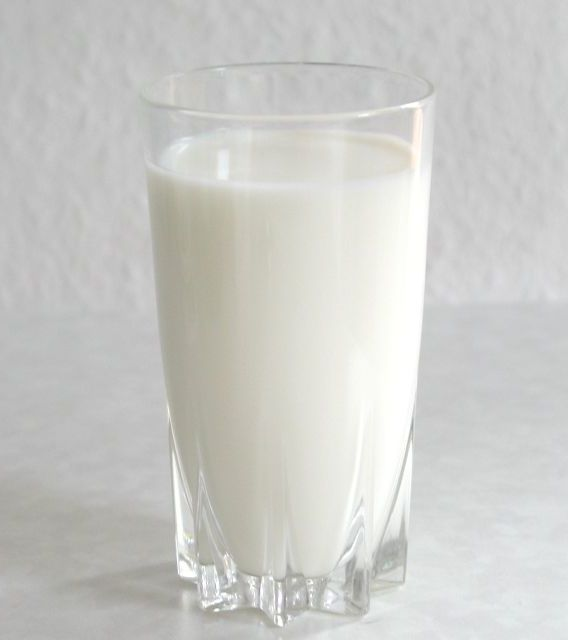
Milk is a whitish liquid substance secreted by the mammary glands of mammals, and it is crucial during the early stages of life, as it provides the primary source of nourishment before infants are able to consume solid foods. This liquid is rich in nutrients such as proteins, fats, and calcium, and also contains lactose, a sugar unique to milk. In many societies—particularly in Western cultures—milk consumption is not limited to infancy but continues into adulthood, mainly through milk obtained from domesticated animals such as cows, goats, and sheep.
Description of milk
At the dawn of human history, only children were able to digest lactose, as the enzyme lactase, essential for its digestion, was produced only during the early years of life. To overcome this limitation, ancient populations processed milk into cheese or curds, thereby reducing its lactose content. However, a genetic mutation that appeared thousands of years ago in certain European populations allowed for the persistence of lactase into adulthood, enabling direct milk consumption even after weaning.
Lactase levels peak shortly after birth and decline over time if milk is not regularly consumed. Communities that retained lactose tolerance adapted to using milk from a variety of animals. Although all female mammals can produce milk for a period after giving birth, cow’s milk dominates the global market, accounting for approximately 85% of worldwide production.
In addition to cattle, other animals contribute to global milk production, including goats, buffaloes, sheep, and camels. In 2011, buffalo milk accounted for about 11%, goat milk 2%, sheep milk 1.4%, and camel milk 0.2% of total production. In some countries, such as Russia and Sweden, small-scale moose farms also exist.
Despite the fact that pig milk is compositionally similar to cow’s milk, pigs are rarely milked due to practical issues related to their anatomy and the difficulty of storage. On rare occasions, pig milk cheese is produced, though it is extremely expensive. Milk remains an exceptionally versatile ingredient, used in preparations such as puddings, hot chocolate, French toast, yogurt, milkshakes, and coffee-based beverages like cappuccino and latte.
History of milk as food
Humans began regularly consuming milk from other mammals after the domestication of animals during the Neolithic Revolution. This process, which occurred at different times and places, began around 9000 BCE in Mesopotamia and reached the Americas much later, around 3500 BCE. The most important dairy species—cattle, sheep, and goats—were first domesticated in Southwest Asia, although cattle were domesticated multiple times by different populations.
From Southwest Asia, domesticated species spread into Europe and South Asia, reaching regions such as Britain and Scandinavia only after 4000 BCE. Populations in Central Europe and the British Isles subsequently learned to milk animals.
In Africa, sheep and goats were also introduced from Southwest Asia, while some African cattle breeds were likely domesticated independently. Camels, domesticated in the 4th millennium BCE in central Arabia, became important sources of milk in North Africa and the Arabian Peninsula. In contrast, in regions such as East Asia, Australia, and the Americas, milk was not historically a staple of the diet, largely due to the absence of suitable dairy animals or the dominance of hunter-gatherer economies. Milk consumption spread more widely only with the arrival of European colonialism.
During the Middle Ages, milk was considered a healthy beverage, especially in contrast to often-contaminated water, and was sometimes referred to as a “virtuous white liquid.” Some believed it to be a transformation of maternal blood, which gave it particular religious and medical significance. In 1605, the explorer George Weymouth claimed that certain Native American populations in Maine milked deer, though modern scholars consider this a misunderstanding. In reality, some indigenous groups produced beverages derived from nuts. The first cows arrived in New England in 1624, and urban milk consumption increased significantly with the growth of industry.
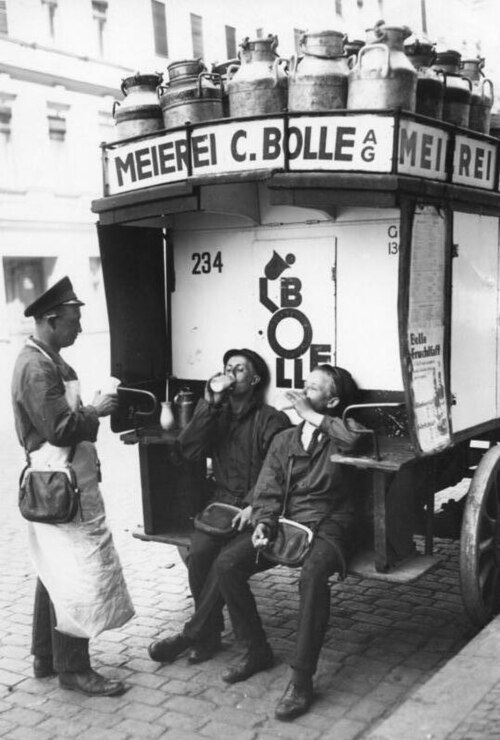
The last major revolution in milk production occurred when the chemist Louis Pasteur developed the method of pasteurization in 1863, demonstrating that moderate heating could eliminate harmful bacteria without compromising the quality of wine. This process was later applied to milk and other foods. Pasteurization equipment spread rapidly in countries such as Germany, Denmark, and Sweden by 1885, and it remains widely used today.
Production methods for milk
Milk production begins immediately after parturition, when the female produces milk to nourish her offspring. However, in farming systems, production continues even after weaning, sustained through regular milking stimulation. The main stages are outlined below:
- Milking: this is the process of extracting milk from the mammary glands. It can be carried out either manually or mechanically. In hand milking, the farmer applies rhythmic pressure using fingers and palm to direct milk toward the teats. This method is still common in small-scale farms, particularly for goats and sheep. In large-scale operations, mechanical milking is used, based on vacuum systems: suction units connected to a pump extract milk through liners and tubes, channeling it into a collector and then into storage tanks. Regardless of the method, milk is immediately cooled to 4°C to inhibit bacterial growth, and then transported in refrigerated tanks to dairy plants.
- Filtration and clarification: upon arrival at the processing facility, milk undergoes mechanical filtration to remove any coarse impurities.
- Cream separation (optional): milk may then be subjected to a process that separates the cream (fat fraction) from skimmed milk. This step is essential for fat standardization: cream can later be reintroduced to achieve whole, semi-skimmed, or skimmed milk, depending on the desired fat content. If standardization is not required, this step may be skipped. Separation can occur either before or after pasteurization, though it is typically performed beforehand for efficiency and quality control. The two main methods are:
- Gravity separation (creaming): milk is left to rest for 12–24 hours, allowing fat to rise to the surface and form a cream layer.
- Centrifugation: milk is spun at high speed in a centrifuge, separating components based on density. The fat globules (cream) are forced outward and collected separately from the lighter skimmed phase.
- Pasteurization or alternative treatments: milk must undergo a thermal treatment in many countries to become marketable (otherwise it is classified as raw milk). The most common method is HTST pasteurization (High Temperature Short Time), which heats milk to 72 °C for 15 seconds, followed by rapid cooling. This eliminates nearly all pathogenic bacteria (such as E. coli or Mycobacterium paratuberculosis), ensuring safety and a shelf life of about 2–3 weeks under refrigeration. Alternative or complementary processes include:
- Microfiltration: skimmed milk is passed through ceramic membranes that remove up to 99.9% of microorganisms. The cream, pasteurized separately, is then recombined, yielding milk similar to fresh milk but with extended shelf life.
- Ultrafiltration: retains proteins and fats, while water and lactose pass through. The result is a protein-enriched, lower-sugar, concentrated milk, often used in cheese-making or specialized products.
- UHT treatment (Ultra High Temperature): provides the longest shelf life (up to 6 months at room temperature) by heating milk to 138 °C for 2–4 seconds and packaging it under sterile conditions. This process, however, leads to some vitamin losses (notably B1 and C) and slight flavor alterations.
- Homogenization: often performed just before or after pasteurization, this is a mechanical treatment that reduces fat globules into very small particles, preventing cream separation. Milk is forced under high pressure through narrow channels, causing turbulence and cavitation. This improves visual uniformity, giving milk a whiter and creamier appearance, while also enhancing microbiological stability and shelf life. Although optional, homogenization is widely used in commercial milk. Some traditional milks remain non-homogenized, retaining a visible cream layer.
- Packaging and distribution: once processed, milk is packaged in sterile containers (bottles, cartons such as Tetra Pak, etc.), labeled with an expiration date, and distributed to retailers. Cold chain logistics are required for pasteurized and microfiltered milk, whereas UHT milk can be transported at room temperature until opened.
Milk composition
Milk is a complex colloidal system composed of fats, proteins, and carbohydrates dispersed in an aqueous phase. It serves as a fundamental nutritional resource for young organisms, supporting growth and development. The pH of cow’s milk ranges from 6.7 to 6.9, similar to that of other mammals.
Whole milk contains a significant proportion of lipids, primarily saturated fats, along with omega-6 and omega-3 fatty acids. Fat exists as globules surrounded by a membrane of lipids and proteins, which stabilizes them and prevents coalescence. Milk also contains fat-soluble vitamins (A, D, E, K) and essential fatty acids, crucial for health.
Milk proteins are dominated by caseins, which form micelles stabilized by calcium phosphate. These spherical aggregates are coated with κ-casein, which prevents aggregation and maintains milk as a stable suspension. In addition to caseins, milk contains whey proteins such as β-lactoglobulin, found in the liquid fraction remaining after coagulation during cheese production.
Carbohydrates in milk consist mainly of lactose, a disaccharide composed of glucose and galactose, responsible for milk’s mild sweetness and a major contributor to its caloric content. Lactose accounts for approximately 4.8% of milk, though levels may vary. Cow’s milk is also a rich source of minerals, particularly calcium and phosphate, which are structurally associated with casein via calcium phosphate complexes.
Classification of milk
Milk is primarily classified according to the producing animal, including:
- Camel’s milk
- Cow’s milk
- Donkey’s milk
- Goat’s milk
- Moose’s milk
- Reindeer’s milk
- Sheep’s milk
Regardless of origin, milk is also classified by its fat content:
- Semi-skimmed milk
- Skimmed milk
- Whole milk
Independently of these criteria, milk may be further categorized based on the microbial reduction process applied (or absence thereof, as in raw milk). This classification is rarely specified in recipes, except for raw milk. Types include:
- Raw milk
- Microfiltered milk
- Pasteurized milk
- UHT milk
Finally, some milk products exhibit specific characteristics, such as:
- Powdered milk (water removed)
- Lactose-free milk (lactose hydrolyzed or removed for intolerant individuals)
Nutritional facts table
Nutritional values may vary depending on the animal source, fat content, and processing method. The values typically reported refer to whole UHT cow’s milk.
| Nutrients | Per 100 g |
| Calories (kcal) | 60 |
| Total fat (g) | 3.25 |
| ———Saturated fat (g) | 1.86 |
| Cholesterol (mg) | 10 |
| Sodium (mg) | 40 |
| Total carbohydrates (g) | 4.52 |
| ———Dietary fiber (g) | 0 |
| ———Total sugar (g) | 5.26 |
| Protein (g) | 3.22 |
Source(s):
https://it.wikipedia.org/wiki/Latte
https://en.wikipedia.org/wiki/Milk
https://it.wikipedia.org/wiki/Mungitura
Photo(s):
1. Stefan Kühn, CC BY-SA 3.0 http://creativecommons.org/licenses/by-sa/3.0/, via Wikimedia Commons
2. Bundesarchiv, Bild 183-2004-0708-501 / CC-BY-SA 3.0, CC BY-SA 3.0 DE https://creativecommons.org/licenses/by-sa/3.0/de/deed.en, via Wikimedia Commons