
Malvids (Eurosids II)
Clade of Rosids
Food, Plant source foods, Plants (Plantae), Flowering plats (angiospermae), Mesangiosperms, Eudicots, Core eudicots, Superrosids, Rosids
Consumption area(s): Earth
Note: For better understanding, please read the article on flowering plants (angiospermae) first. If you come across unfamiliar words, you can click on any highlighted term to open the glossary with definitions of key botanical terms.
Introduction
Malvids (Eurosids II), represent a major group within the clade of Angiosperms (flowering plants). Within this broader classification, the Fabids constitute a substantial subdivision, encompassing approximately 31,000 plant species. These species are organized into 8 distinct orders, which together comprise a total of 59 families.
Description of Malvids (Eurosids II)
As with the broader Rosid clade, there are no well-defined non-molecular traits that consistently unify the species classified within the Malvids. Shared morphological features are relatively scarce. Among the limited common characteristics are the fact that the petals and sepals are typically free rather than fused, and that the ovules are generally bitegmic and crassinucellate.
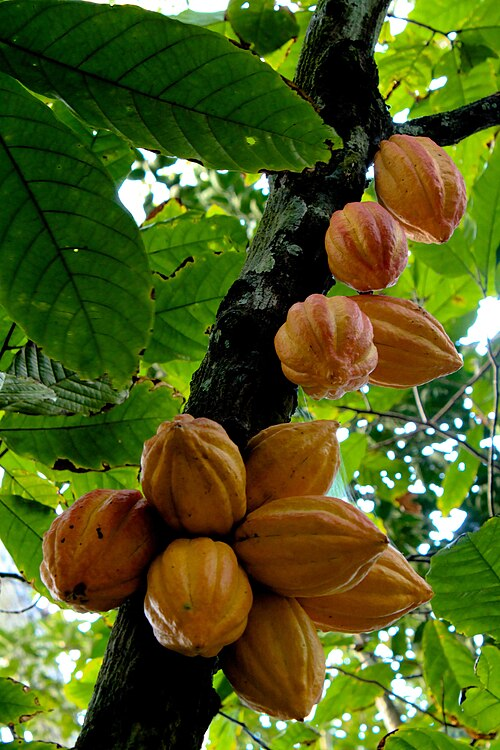
Several economically and culturally significant plant families belong to this group. The Brassicaceae encompasses crops such as broccoli, turnips, mustards, and radishes. The Malvaceae includes species responsible for producing cocoa beans, cola nuts, and okra. Within the Lythraceae, pomegranates were already cultivated during the Bronze Age, while wild water chestnuts formed a substantial part of the diet of prehistoric European populations.
Species of Eucalyptus are recognized as the tallest known flowering plants, capable of exceeding 100 meters in height. They are widely cultivated both for timber and for their essential oils, which are used in confectionery, perfumery, and medicinal cough remedies.
Classification of Malvids (Eurosids II)
This clade is in turn subdivided into orders. Among them are:
- Brassicales (arugula, cabbages, horseradish, mustard, papayas, radishes)
- Geraniales (krameria, scented geraniums)
- Huerteales (African citronella, gomphandra)
- Malvales (baobab, cocoa, durian, hibiscus, mallow, okra)
- Myrtales (cloves, eucalyptus, feijoa, guava, jabuticaba, pomegranates, myrtle)
- Picramniales (Picramnia antidesma, Picramnia pentandra)
- Sapindales (grapefruit, lemons, lychee, mango, nutmeg, oranges)
Photo(s):
1. Luisovalles, CC BY 3.0 https://creativecommons.org/licenses/by/3.0, via Wikimedia Commons