
Liqueurs
Food, Plant source foods, Alcoholic beverages
Consumption area(s): It can be assumed that this product is distributed almost globally, with the exception of countries with a strong Muslim majority, where this type of food is not consumed for religious reasons.
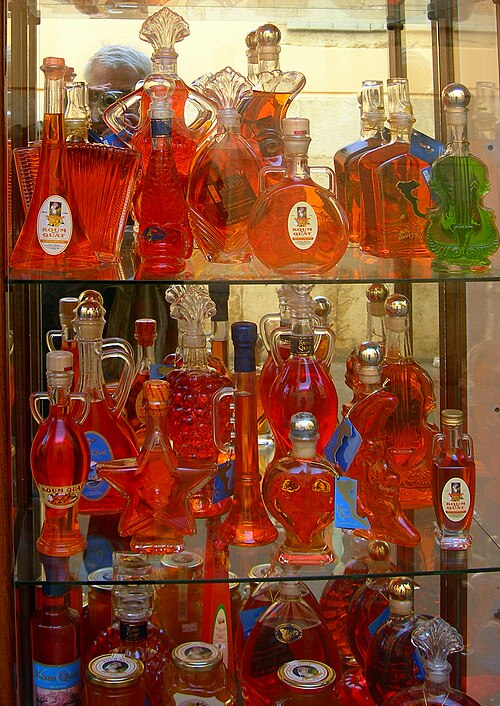
Introduction
Liqueurs are alcoholic beverages produced starting from a base of purified ethyl alcohol, to which flavouring ingredients such as fruit, sugar, herbs, or spices are added. This type of product is characterized by a sweet and aromatic profile, resulting from the combination of alcohol and the added components that shape its taste.
These beverages are often consumed after meals or paired with desserts, thanks to their sweet nature and smooth texture. Unlike traditional spirits, they do not require long aging periods, although they may rest for a short time. The result is an intense and aromatic preparation, also valued in cooking and mixology for its versatility. They therefore form a distinct category, separate from both fermented and distilled beverages.
History of liqueurs
Flavoured alcoholic beverages originated as herbal medicinal remedies, used for therapeutic purposes. Their production is documented as early as the 13th century in France, where they were often developed within monasteries, as in the famous case of Chartreuse, still produced today according to ancient monastic recipes.
Over time, these preparations lost their medicinal function and became consumer beverages, appreciated for their rich and varied flavour profiles. Today, they are produced in many countries and are part of the gastronomic and social traditions of numerous cultures.
Production methods for liqueurs
Flavouring in these liqueurs can be achieved through different techniques, such as the use of essential oils, cold maceration, hot infusion, or percolation of alcohol with herbs and other aromatic substances. Each method allows the extraction of aromas and flavours from the ingredients, giving the beverage its distinctive characteristics.
During production, additional components are included to balance flavour and texture, such as a sweetening agent (often sugar syrup) and water to adjust the alcohol content. In some cases, colourants may also be used to achieve the desired appearance, completing both the visual and sensory profile of the beverage.
Classification of liqueurs
This category of alcoholic beverages is primarily classified according to the main ingredient used for flavouring (a separate category is dedicated to products with multiple aromas). The main types include:
- Multi-flavoured liqueurs
- Anise liqueurs
- Lemon liqueurs
- Orange liqueurs
- Pistachio liqueurs
- Plum liqueurs
Source(s):
https://en.wikipedia.org/wiki/Liqueur
https://it.wikipedia.org/wiki/Liquore
Photo(s):
1. Edal, CC BY-SA 3.0 https://creativecommons.org/licenses/by-sa/3.0, via Wikimedia Commons