
Hens
Food, Animal source foods, Animals (Animalia), Chordates (Chordata), Vertebrates (Vertebrata), Birds (Aves), Neognaths (Neognathae), Galliforms (Galliformes), Phasianidae, Gallus, Gallus gallus, Domestic chickens
Scientific name: Gallus gallus domesticus
Consumption area(s): Earth
Introduction
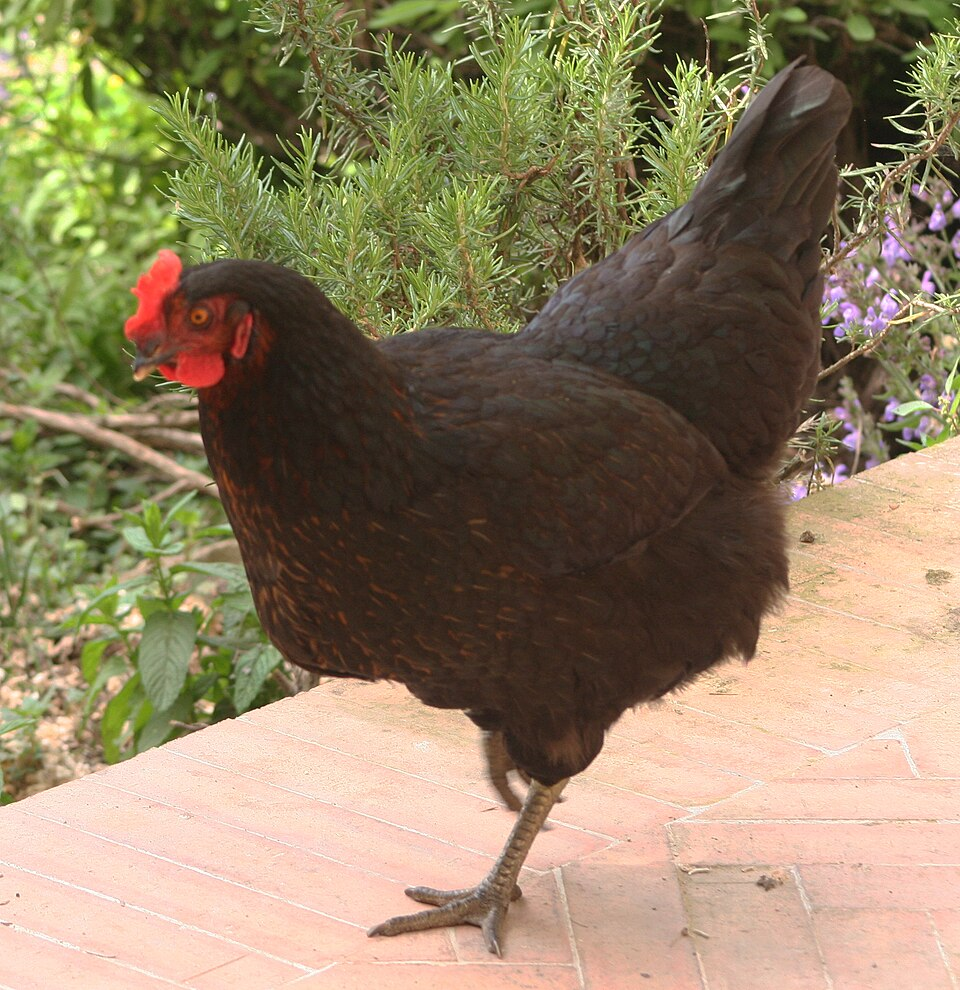
Hens are mature female domestic chickens. They are primarily kept for egg production, and their role as layers shapes much of their meat. Unlike young broilers, capons, or roosters, their physiology and muscle structure produce meat that is denser, darker, and more flavorful. Having lived longer, often producing eggs, their muscles develop more connective tissue and collagen, making them firmer and less tender than a broiler’s breast, yet perfectly suited for slow, moist cooking.
Description of hens
Hens are adult female chickens and represent the reproductive core of domestic flocks. Their morphology is broadly similar to that of other chickens: the body is rounded, the wings are relatively short, and the legs are largely unfeathered. Like other adult chickens, hens possess a fleshy crest on the head known as the comb and paired wattles hanging beneath the beak, although these structures are generally less developed than in males. In most breeds the hen retains a comparatively compact body conformation, reflecting selection primarily for egg production rather than display traits. Communication plays an important role in their behaviour. Hens produce a variety of clucking vocalizations, including characteristic calls associated with egg laying.
Reproduction is centered on the hen’s egg–laying and brooding behaviour. When laying eggs, hens often show a preference for communal nesting sites, selecting nests that already contain eggs and sometimes moving nearby eggs into their chosen location. As a result, a flock commonly concentrates its eggs in a limited number of preferred nests rather than using one nest per individual.
Under natural conditions, a hen typically continues laying until a complete clutch has formed. Only then does she begin incubation. During this phase she remains on the nest for prolonged periods, leaving only briefly, and may respond defensively if disturbed by puffing up her feathers or striking. Incubation lasts about 21 days, during which the hen maintains the temperature and humidity necessary for embryonic development.
Uses of hens
From a culinary perspective, hens are prized for the depth of flavor their meat imparts. While a broiler offers mild, tender flesh that can handle pan-searing, a hen’s breast and legs benefit from braising, stewing, or slow roasting, allowing collagen to enriching both the meat and any accompanying sauce, stock or broths. Their skin and fat, though leaner than a capon’s, provide a subtle richness and help baste the meat during cooking.
Nutritional facts table of domestic chickens
Although chickens are sometimes consumed whole, it is not possible to provide even approximate nutritional values, as these vary greatly depending on the specific cut. For this reason, reference should be made to the nutritional tables of individual cuts.
Recipes that use this product as an ingredient:
Source(s):
https://en.wikipedia.org/wiki/Chicken
Photo(s):
1. Davide Fabbri, Public domain, via Wikimedia Commons