
Fabaceae (or Leguminosae)
Family of Fabales
Food, Plant source foods, Plants (Plantae), Flowering plats (angiospermae), Mesangiosperms, Eudicots, Core eudicots, Superrosids, Rosids, Fabids (Eurosids I), Fabales
Consumption area(s) (countries that consumed more than 9 kg per person per year in 2022): Angola 🇦🇴, Argentina 🇦🇷, Australia 🇦🇺, Austria 🇦🇹, Bahrain 🇧🇭, Barbados 🇧🇧, Belize 🇧🇿, Benin 🇧🇯, Brazil 🇧🇷, Burkina Faso 🇧🇫, Burundi 🇧🇮, Cameroon 🇨🇲, Canada 🇨🇦, Cape Verde 🇨🇻, Chad 🇹🇩, Chile 🇨🇱, Comoros 🇰🇲, Costa Rica 🇨🇷, Cuba 🇨🇺, Democratic Republic of the Congo 🇨🇫, Djibouti 🇩🇯, Dominica 🇩🇲, Dominican Republic 🇩🇴, El Salvador 🇸🇻, Equatorial Guinea 🇬🇶, Ethiopia 🇪🇹, Equatorial Guinea 🇬🇶, Eritrea 🇪🇷, Fiji 🇫🇯, Finland 🇫🇮, Gabon 🇬🇦, Gambia 🇬🇲, Ghana 🇬🇭, Grenada 🇬🇩, Guatemala 🇬🇹, Guinea 🇬🇳, Guyana 🇬🇾, Honduras 🇭🇳, India 🇮🇳, Indonesia 🇮🇩, Iran 🇮🇷, Iraq 🇮🇶, Israel 🇮🇱, Japan 🇯🇵, Kazakhstan 🇰🇿, Kenya 🇰🇪, Kyrgyzstan 🇰🇬, Malawi 🇲🇼, Mali 🇲🇱, Mauritania 🇲🇷, Mauritius 🇲🇷, Mexico 🇲🇽, Myanmar 🇲🇲, Nauru 🇳🇷, Nepal 🇳🇵, Nicaragua 🇳🇮, Niger 🇳🇪, Nigeria 🇳🇬, Norway 🇳🇴, Oman 🇴🇲, Palestine 🇵🇸, Panama 🇵🇦, Paraguay 🇵🇾, Peru 🇵🇪, Qatar 🇶🇦, Rwanda 🇷🇼, Saint Kitts and Nevis 🇰🇳, Saint Lucia 🇱🇨, Saint Vincent and the Grenadines 🇻🇨, Senegal 🇸🇳, Seychelles 🇸🇨, Sierra Leone 🇸🇱, Singapore 🇸🇬, South Sudan 🇸🇸, Sri Lanka 🇱🇰, Sudan 🇸🇩, Suriname 🇸🇷, Syria 🇸🇾, Tanzania 🇹🇿, Timor-Leste 🇹🇱, Togo 🇹🇬, Tonga 🇹🇴, Trinidad and Tobago 🇹🇹, Tunisia 🇹🇳, Turkey 🇹🇷, Uganda 🇺🇬, United Arab Emirates 🇦🇪, Vanuatu 🇻🇺, Venezuela 🇻🇪, Vietnam 🇻🇳, Zambia 🇿🇲
Note: For better understanding, please read the article on flowering plants (angiospermae) first. If you come across unfamiliar words, you can click on any highlighted term to open the glossary with definitions of key botanical terms.
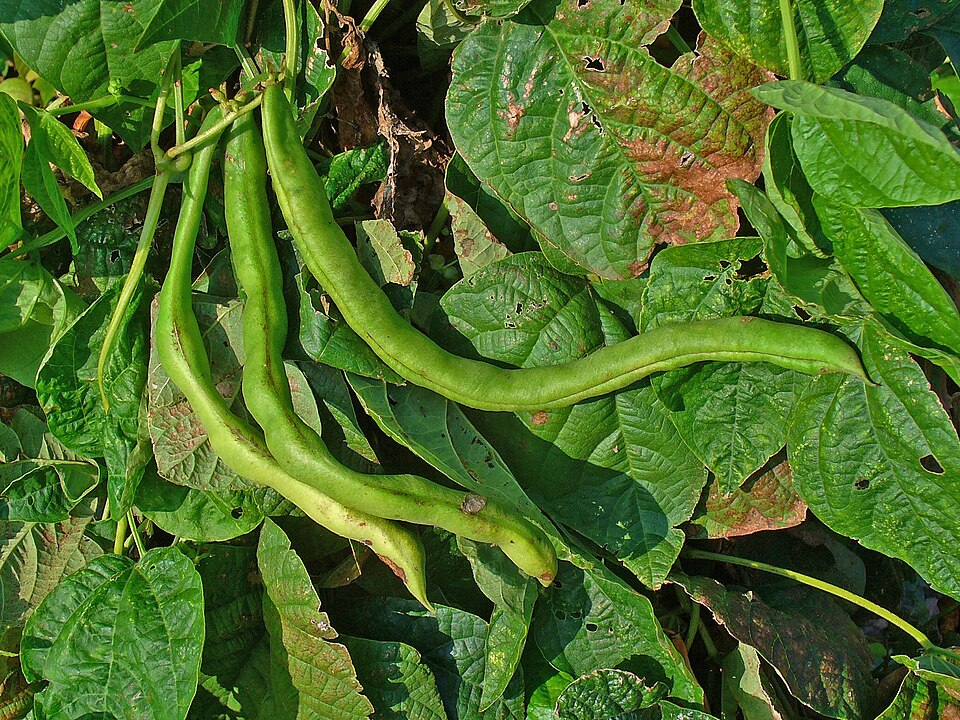
Introduction
Fabaceae (Leguminosae), comprise one of the world’s largest and most economically significant families of flowering plants. This group includes trees, shrubs, and both perennial and annual herbs, distinguished by their legume-shaped fruit and compound leaves with stipules.
Distributed across almost every continent, they rank as the third-largest family of land plants, surpassed only by Orchidaceae and Asteraceae, with an estimated 765 genera and close to 20,000 species. With about 7% of all flowering plants belonging to this group, Fabaceae hold a particularly strong presence in tropical rainforests and dry forests of Africa and the Americas.
For thousands of years, many members of this family have been central to human diets, standing alongside cereals, fruits, and tropical roots as staple foods closely intertwined with human evolution. In agriculture, Fabaceae provide key crops such as soybeans, pea, chickpea, broad bean, beans (genus Phaseolus), beans (genus Vigna), alfalfa, peanut, carob, tamarind, fenugreek, and liquorice
Description of Fabaceae (or Leguminosae)
The Fabaceae family displays remarkable variation in form, from towering trees such as to tiny annual herbs, though most members are perennial and herbaceous. Their inflorescences are generally indeterminate, sometimes reduced to a single flower. Flowers possess a short hypanthium, a single carpel carried on a brief gynophore, and, after fertilization, develop into leguminous fruits.
Many species bear tendrils, enabling them to climb. Some grow upright, others as epiphytes or vines, using their stems or leaf structures for support. Depending on the species, they may thrive in sunlit habitats, moderately moist environments, or arid regions.
The leaves are typically alternate and compound, most often arranged in an even- or odd-pinnately compound pattern. Trifoliate leaves are common in genera like Trifolium and Medicago, while palmately compound leaves are rare. In subfamilies such as Caesalpinioideae, bipinnate leaves occur frequently. Stipules are always present, varying from leaf-like forms, to spine-like, to nearly inconspicuous. Margins may be entire or serrated and, in some plants, leaflets have evolved into tendrils, as in Vicia.
In their roots, many Fabaceae form specialized structures called nodules that host rhizobia bacteria. These microorganisms capture nitrogen gas (N₂) from the atmosphere and convert it into plant-usable forms such as nitrate (NO₃⁻) or ammonia (NH₃), a process known as nitrogen fixation. This symbiosis benefits both partners: the plant gains nutrients, and the bacteria receive carbohydrates and shelter. Certain Phaseoleae, such as Apios, also produce edible tubers.
The flowers of Fabaceae share some structural traits: usually five fused sepals, five free petals, and a short cup-shaped hypanthium. They are generally hermaphroditic, with ten stamens and a single superior ovary on a curved style. Inflorescences are often indeterminate, and most species rely on insects for pollination, with flowers adapted to attract them.
The ovary usually transforms into a type of dry fruit known as a legume, which characteristically dehisces (opens along a seam) on two sides. This fruit form is commonly referred to as a “pod,” though the term can also describe some other fruit varieties. In some plant species, the typical legume has diversified into several different fruit structures.
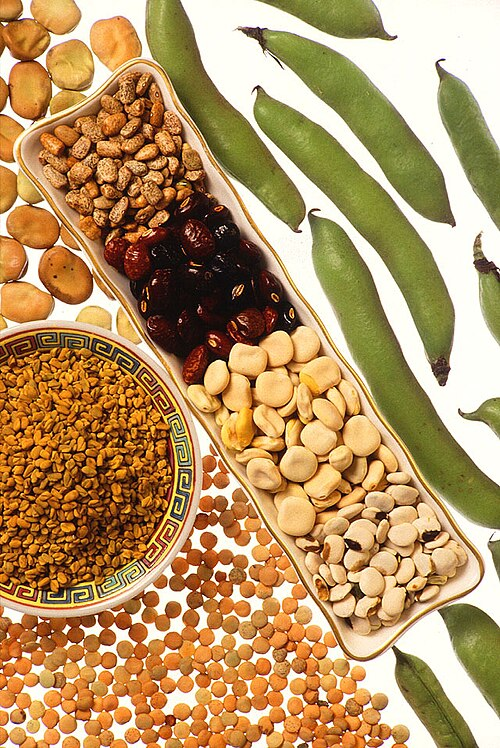
Legumes have become a cornerstone in the production of plant-based alternatives to meat and dairy, finding increasing space in the global market as a sustainable protein source. Their versatility and nutritional value make them an essential ingredient in many vegan and vegetarian diets. Nutritionally, legumes offer a remarkable combination of protein, dietary fibre, complex carbohydrates, and essential minerals. For instance, just 100 grams of cooked chickpeas can provide around 18% of the daily recommended protein intake, 30% of fibre, 43% of folate, and 52% of manganese, highlighting their role as a nutrient-dense food.
Hisotry of legume as food
Neanderthals already incorporating wild legumes into their diets between 70,000 and 40,000 years ago. Evidence of their cultivation has been discovered in various regions worldwide, such as along the Ravi River in Punjab, part of the Indus Valley Civilization dating back to 3300 BCE. In Egypt, signs of lentil farming have been uncovered near the pyramids, while ancient Mesopotamian cuneiform tablets reveal recipes that included legumes. Additionally, dried pea seeds found in a Swiss village from the Stone Age suggest that this crop was already widespread in the Eastern Mediterranean and Mesopotamia at least 5,000 years ago, and in Britain as early as the 11th century.
Soybean was domesticated in China roughly 5,000 years ago, originating from the wild vine Glycine soja. The oldest domesticated beans in the Americas were discovered in the Guitarrero Cave in Peru, dating to the 2nd millennium BCE. Genetic studies of Phaseolus vulgaris confirm its origin in Mesoamerica, from where it spread alongside traditional regional crops like maize and squash.
Classification of Fabaceae (or Leguminosae)
The Fabaceae family is divided into several subfamilies:
- Caesalpinioideae (acacia, cassia, senna)
- Cercidoideae (bauhinia)
- Detarioideae (fava beans, tamarind)
- Dialioideae (dialium)
- Faboideae (beans, chickpeas, lupins, peas)
Photo(s):
1. H. Zell, CC BY-SA 3.0 https://creativecommons.org/licenses/by-sa/3.0, via Wikimedia Commons
2. Keith Weller, Agricultural Research Service, USDA, Public domain, via Wikimedia Commons