
Cucurbitales
Order of Fabids (Eurosids I)
Food, Plant source foods, Plants (Plantae), Flowering plats (angiospermae), Mesangiosperms, Eudicots, Core eudicots, Superrosids, Rosids, Fabids (Eurosids I)
Consumption area(s): Earth
Note: For better understanding, please read the article on flowering plants (angiospermae) first. If you come across unfamiliar words, you can click on any highlighted term to open the glossary with definitions of key botanical terms.
Introduction
The Cucurbitales represent an order of angiosperms placed within the rosid clade of dicotyledonous plants. Biogeographically, the order shows a predominantly tropical distribution, while only a restricted number of groups extend into subtropical and temperate zones.
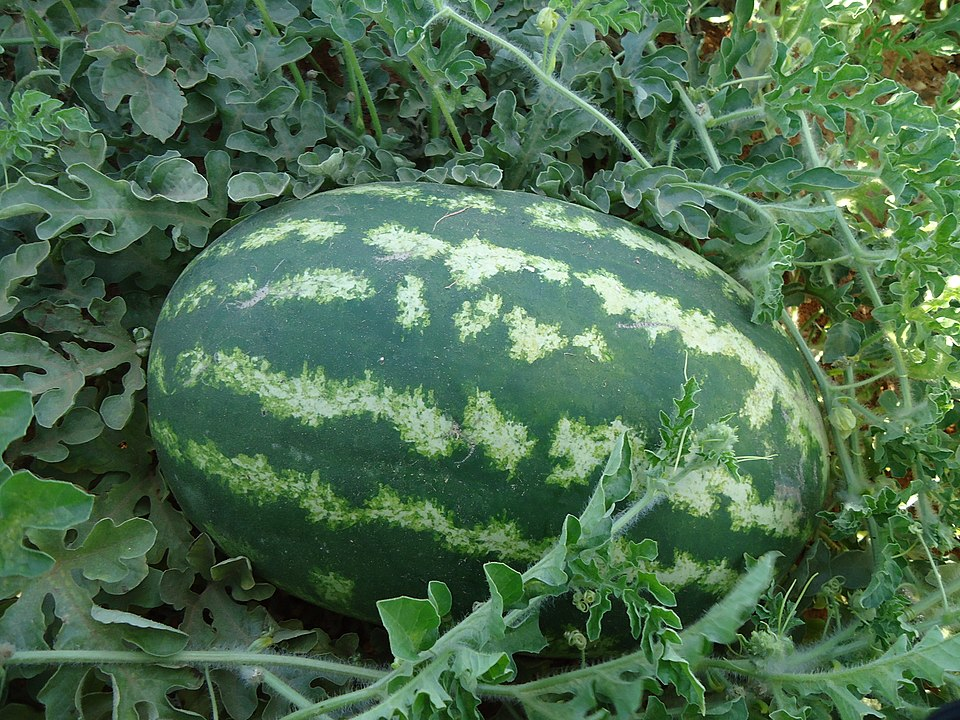
Among its constituent families, the Cucurbitaceae—commonly referred to as the gourd family—are of particular agricultural significance. This lineage encompasses several important food crops, including squashes and pumpkins, watermelon, and cucumbers and melons, all widely cultivated for human consumption.
Description of Cucurbitales
The taxa included in the Cucurbitales display markedheterogeneity, encompassing a wide structural spectrum. Within the order, the Cucurbitaceae comprise trees, shrubs, and numerous herbaceous forms. The leaf margin is typically entire, more rarely dentate. The presence of stipules is regarded as an ancestral condition for the order; however, they are absent in Cucurbitaceae.
From an anatomical perspective, several derived characters have been identified as unifying features of the order. These include the absence of mucilage cells, the lack of stellate trichomes, the presence of libriform fibers, and particular structural traits of the xylem tracheary elements.
Reproductive systems within the order are notably diverse and evolutionarily labile. The ancestral condition is considered to be the presence of bisexual flowers, as observed in Coriariaceae, Anisophylleaceae, and Apodanthaceae. Nevertheless, monoecy occurs in the latter three families, while Begoniaceae are strictly monoecious. The remaining families are predominantly dioecious, although secondary monoecy and additional reproductive configurations have evolved within Cucurbitaceae.
The perianth is generally differentiated into calyx and corolla, and the segments are typically free (not fused), except in the Cucurbitaceae, where partial fusion occurs. The ovary is usually inferior.
The so-called core gourd lineage—Begoniaceae, Datiscaceae, Tetramelaceae, and Cucurbitaceae—shares several predominant floral traits: basifixed anthers, latrorse or extrorse pollen sacs, a tricarpellate gynoecium, and parietally positioned ovules.
Fruit morphology within the order is highly variable. Drupes occur in Anisophylleaceae, drupes in Corynocarpaceae, pepo-type berries in Cucurbitaceae, and capsular fruits in most other families. The central lineage typically produces numerous seeds per fruit, whereas Anisophylleaceae, Corynocarpaceae, and Coriariaceae bear a single seed.
Classification of Cucurbitales
This order is divided into families. Among these we find:
- Begoniaceae (Begonias)
- Cucurbitaceae (cucumbers, melons, pumpkins, watermelons, zucchinis)
Photo(s):
1. فارس البلغم, CC BY-SA 3.0 https://creativecommons.org/licenses/by-sa/3.0, via Wikimedia Commons