
Common nutmeg
Food, Plant source foods, Plants (Plantae), Flowering plats (angiospermae), Mesangiosperms, Magnolids, Magnoliales, Myristicaceae, Myristica, Common nutmeg trees
Species name: Myristica fragrans
Consumption area(s): Earth
Note: For better understanding, please read the article on flowering plants (angiospermae) first. If you come across unfamiliar words, you can click on any highlighted term to open the glossary with definitions of key botanical terms.
Introduction
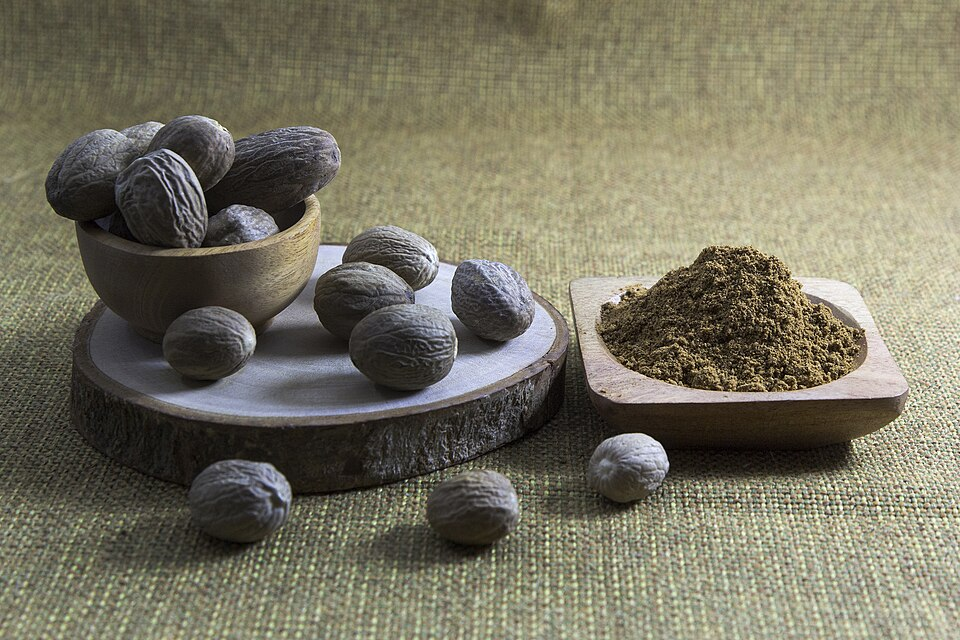
Common nutmeg refers to the seed of Myristica fragrans, as well as the powdered spice produced by grinding it. Beyond its culinary use, this seed is also an important raw material for obtaining nutmeg essential oil and nutmeg butter, both widely utilized in various industries. The primary center of production is the Banda Islands in the Maluku archipelago of Indonesia, which represent the historical and natural origin of the true nutmeg tree and remain a key area for the cultivation of both nutmeg and mace.
History of common nutmeg
The earliest traces of nutmeg usage come from archaeological residues dated to about 3,500 years ago on Pulau Ai, one of the Banda Islands in eastern Indonesia. This small volcanic archipelago, part of the Maluku Islands, remained the exclusive global source of both nutmeg and mace until the nineteenth century. The spice was already circulating as early as 1500 BCE, highlighting its long-standing economic importance.
By the sixth century CE, nutmeg had reached India and progressively moved westward toward Constantinople. Later, by the thirteenth century, Arab merchants had identified its origin in the Banda Islands but deliberately concealed this information to maintain control over trade routes and profits, limiting European access to its source.
The European colonial phase began in the early sixteenth century, when Portugal, under Afonso de Albuquerque, captured Malacca, a crucial commercial hub. Soon after, an expedition led by António de Abreu reached the Banda Islands in 1512, marking the first European contact with the nutmeg-producing region. Although the Portuguese engaged in trade, they failed to establish a stable monopoly or permanent territorial control.
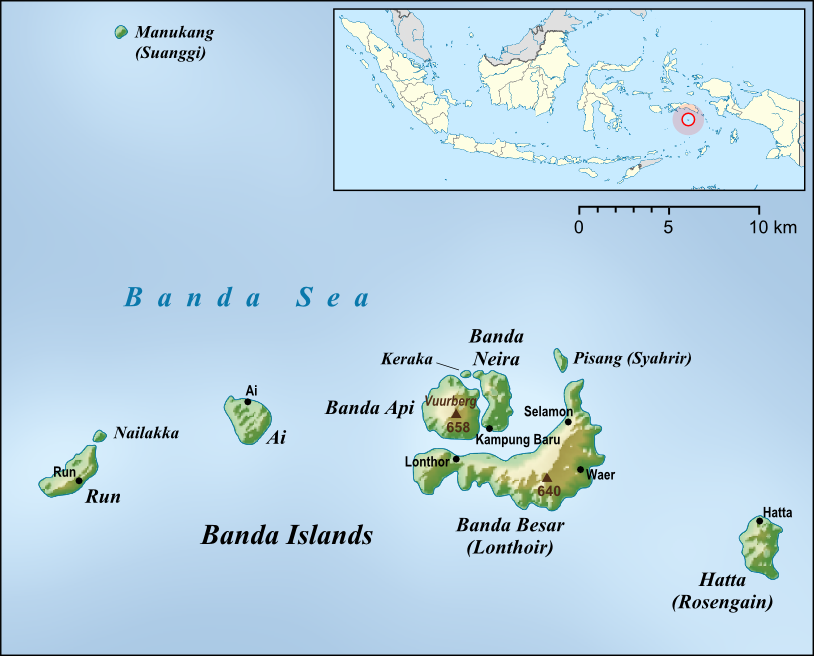
In the seventeenth century, the Dutch East India Company (VOC) sought to dominate the nutmeg trade through violent conquest, culminating in the massive depopulation of the Banda Islands in 1621. Survivors were killed, displaced, or enslaved, and the Dutch imposed a plantation system to regulate production tightly.
During the Napoleonic Wars, Britain temporarily seized the islands and redistributed nutmeg plants to other colonies, including Sri Lanka, Penang, Singapore, Zanzibar, and especially Grenada, which later became a major producer. The legacy of this expansion is reflected in Grenada’s national flag, which features a stylized nutmeg fruit. Dutch authority over the original Spice Islands persisted until World War II.
Production methods for common nutmeg
The true nutmeg, derived from Myristica fragrans of the Myristicaceae family, originates from the Moluccan Islands in Indonesia, historically known as the Spice Islands. Over time, its cultivation expanded to regions such as Penang, the Caribbean—notably Grenada—and Kerala in southern India, once a major center of the spice trade. Historical accounts, including those by Hendrik van Rheede, suggest that knowledge of nutmeg use spread to India through ancient routes linking Southeast Asia.
Nutmeg trees are dioecious, meaning individual plants are either male or female. They can be propagated through both seeds and vegetative techniques like cuttings. However, seed propagation produces about half male plants, which do not yield fruit, and the plant’s sex only becomes evident after several years. Due to this inefficiency and variability, other methods are widely preferred.
Nutmeg trees require long maturation periods, with the first harvest occurring only after 7 to 9 years, and full productivity reached around two decades after planting. In their native habitat, particularly in the Banda Islands, nutmeg trees often grow alongside the Kenari tree (Canarium indicum) in a form of ecological association, where the latter provides shade and protection from strong winds, supporting optimal growth conditions.
After harvesting, the seeds undergo a slow drying process under the sun that can last from several months up to half a year. As moisture gradually evaporates, the inner kernel contracts and separates from the rigid outer coat, producing a characteristic rattling sound when shaken. The shell is then manually cracked, typically using simple tools, to extract the edible core.
Once dried, the nutmeg seeds appear as oval-shaped structures with a greenish-brown coloration and a distinctly grooved surface. They are roughly comparable in size to a small egg, measuring a few centimeters in length and weighing only a few grams after complete dehydration.
Uses of common nutmeg
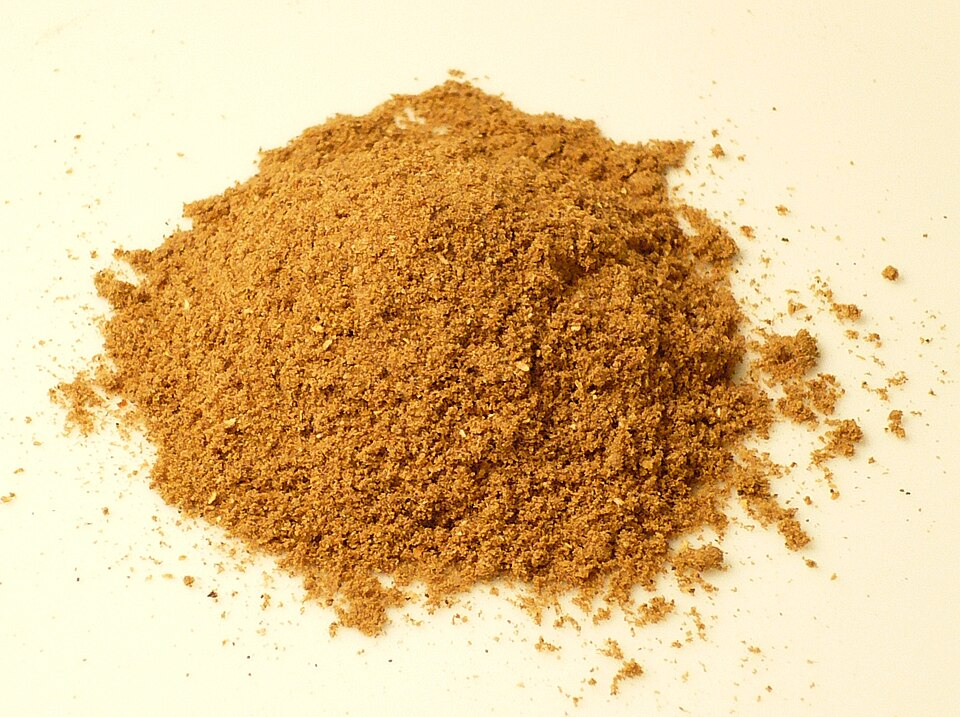
Nutmeg and mace share closely related aromatic profiles, though nutmeg tends to be slightly sweeter, while mace offers a more refined and delicate taste. Mace is often favored in lighter dishes because it imparts a bright orange coloration, reminiscent of saffron. Nutmeg, on the other hand, is widely used as a flavoring agent across numerous preparations and can be freshly grated from whole seeds using specialized or general-purpose tools.
In Indonesian cuisine, nutmeg plays a significant role in savory preparations, particularly in spiced soups such as soto, konro, and oxtail or rib-based broths, as well as in dishes like bakso and sup kambing. It is also incorporated into meat gravies and stews, including semur, and appears in recipes influenced by European culinary traditions, such as beef steaks, meat rolls, and tongue dishes.
Within Indian gastronomy, nutmeg is used in both sweet and savory contexts. In the Kerala Malabar region, it is added to meat dishes and occasionally to desserts in small quantities to enhance aroma. It may also be included in spice blends like garam masala, though typically in limited amounts due to its potency.
In European culinary traditions, nutmeg is commonly associated with vegetable-based dishes, especially those involving potatoes and spinach, as well as processed meats, soups, sauces, and baked goods. Nutmeg is a classic ingredient in rice pudding and is frequently used in Dutch cuisine with vegetables such as Brussels sprouts and cauliflower.
It also features in seasonal beverages like mulled wine, mulled cider, and eggnog. In Scottish cooking, both spices are key components of haggis, while in Italian cuisine, nutmeg is integral to fillings for some pasta like tortellini and in meatloaf preparations. Additionally, it is a characteristic spice in pumpkin-based desserts and other winter squash dishes.
In the Caribbean, nutmeg is frequently used in beverages, including cocktails such as the Bushwacker, Painkiller, and rum punch, where it is typically added as a final aromatic garnish sprinkled on top.
Nutmeg, beyond their common role as culinary spices, have historically been associated with psychoactive and aphrodisiac properties. However, these effects are largely based on traditional beliefs, as scientific evidence remains insufficient to confirm them. When consumed in large quantities, nutmeg can lead to toxic reactions, including acute psychosis. The risk of adverse effects is particularly elevated in individuals with pre-existing psychiatric disorders and during pregnancy, where its consumption may pose additional health concerns.
Nutritional facts table of common nutmeg
It should be noted that nutritional values may vary depending on the cultivar.
| Nutrients | Per 100 g |
| Calories (kcal) | 525 |
| Total fat (g) | 36.31 |
| ———Saturated fat (g) | 25.94 |
| Cholesterol (mg) | 0 |
| Sodium (mg) | 16 |
| Total carbohydrates (g) | 49.29 |
| ———Dietary fiber (g) | 20.8 |
| ———Total sugar (g) | 28.49 |
| Protein (g) | 5.84 |
Recipes that use this product as an ingredient:

Photo(s):
1. Herusutimbul, CC BY-SA 4.0 https://creativecommons.org/licenses/by-sa/4.0, via Wikimedia Commons
2. Lencer, CC BY-SA 3.0 https://creativecommons.org/licenses/by-sa/3.0, via Wikimedia Commons
3. Badagnani, CC BY 3.0 https://creativecommons.org/licenses/by/3.0, via Wikimedia Commons