
Cloves
Syzygium aromaticum, Species of Syzygium
Food, Plant source foods, Plants (Plantae), Flowering plats (angiospermae), Mesangiosperms, Eudicots, Core eudicots, Superrosids, Rosids, Malvids (Eurosids II), Myrtales, Myrtaceae, Syzygium
Species name: Syzygium aromaticum
Consumption area(s): Earth
Note: For better understanding, please read the article on flowering plants (angiospermae) first. If you come across unfamiliar words, you can click on any highlighted term to open the glossary with definitions of key botanical terms.
Introduction
Cloves are dried, highly fragrant flower buds obtained from Syzygium aromaticum, a tropical tree belonging to the Myrtaceae family. This species originally comes from the Maluku Islands in Indonesia, historically known as the Moluccas. Valued for their intense aroma and pungent taste, cloves are widely employed as a spice in culinary preparations. Because cultivation occurs in multiple regions with staggered harvest periods, cloves can be sourced and distributed continuously, ensuring their availability on the global market throughout the entire year.
Description of the plant
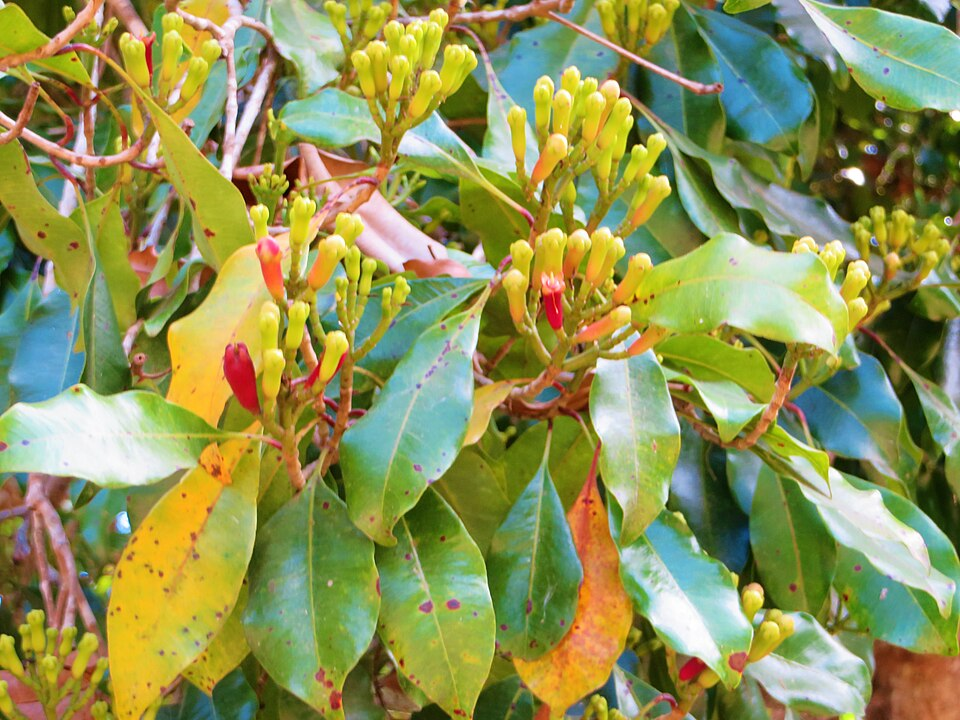
The clove tree is an evergreen species that can reach a height of approximately 8–12 meters. It bears broad leaves and produces vivid crimson flowers arranged in terminal clusters.
Description of the edible parts (flower buds)
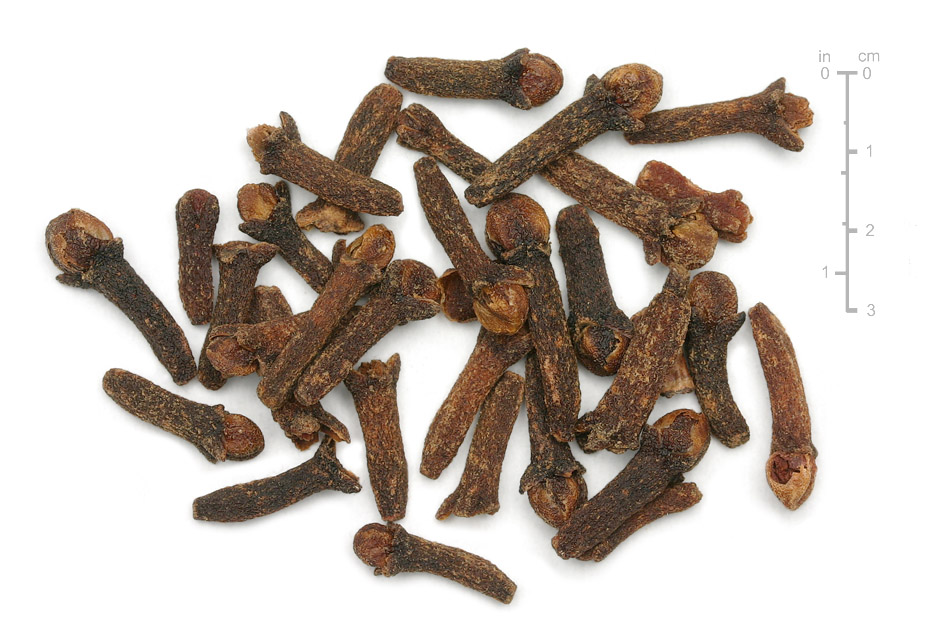
The developing flower buds begin with a light coloration, shift to green, and finally become bright red at the optimal stage for collection. At harvest, the buds measure around 1.5–2 centimeters in length. Structurally, each consists of an elongated calyx ending in four outward-pointing sepals, while four still-closed petals form a compact spherical structure at the center.
The so-called clove stalks are the thin portions of the inflorescence axis. Their exterior appears brownish, uneven, and longitudinally wrinkled, with a short fracture and a distinctly dry, woody consistency. Mother cloves, also known as anthophylli, correspond to the mature fruits of the plant: oval, brown berries containing a single seed within one chamber. Blown cloves are fully opened flowers from which both the corolla and stamens have been removed. In contrast, exhausted cloves refer to buds that have undergone distillation, resulting in the partial or complete extraction of their essential oil.
History of cloves as food
Before the arrival of European colonial powers, cloves were found only on a handful of islands in the Maluku archipelago—notably Bacan, Makian, Moti, Ternate, and Tidore—collectively celebrated as the Spice Islands. As early as around 1500 BCE, Austronesian seafarers were already trading them across an extensive maritime network that later became integrated into the broader Silk Road system and the intercontinental spice trade. The first systematic cultivation beyond their native range took place on the eastern coast of Madagascar, where growers developed three main production models: plantation monocultures, managed agro-parks, and more diversified agroforestry systems.
Archaeological discoveries confirm that cloves circulated far beyond Southeast Asia in antiquity. A specimen uncovered at Terqa, in present-day Syria, within a house destroyed by fire around 1720 BCE, indicates their presence in the Near East well before Roman times. Additional evidence has emerged from Batujaya in Indonesia (dated between 100 BCE and 200 CE) and from the Mekong Delta in Vietnam, where starch residues were detected on stone implements. Written records also attest to their early cultural role in Asia: during the Han dynasty (circa 200 BCE), Chinese court officials were reportedly required to chew cloves to freshen their breath before addressing the emperor.
In the medieval period, the commercial reach of cloves expanded dramatically, extending into Europe and the Middle East. Chinese sources from the Song dynasty (960–1279 CE) describe private merchants acquiring cloves from Austronesian intermediaries, while under the Yuan dynasty (1271–1368 CE) direct expeditions to the Maluku Islands were organized. Their prestige and economic worth were such that they appear in papal donation records, including references in the Liber Pontificalis, and in the writings of travelers like Cosmas Indicopleustes. Botanical traces further reveal their use in European funerary contexts.
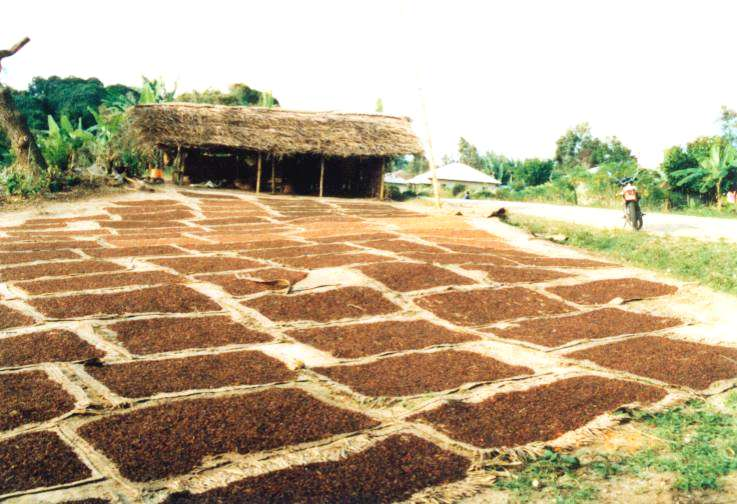
During the colonial era, the Dutch East India Company sought to dominate the clove trade, much as it had attempted with nutmeg. However, the widespread cultivation of clove trees across the Maluku Islands prevented complete monopoly control. A renowned specimen known as the Afo tree, located on Ternate, is regarded as one of the oldest surviving clove trees. According to tradition, seedlings from this tree were clandestinely obtained in 1770 by the French administrator Pierre Poivre, facilitating the establishment of clove plantations in Mauritius and later in Zanzibar, which would become a leading global producer. Today, the principal suppliers are Indonesia, Madagascar, Tanzania, Sri Lanka, and the Comoros.
Uses of cloves
Across Asian, African, Mediterranean, and Near and Middle Eastern food traditions, cloves are valued for the depth and warmth they bring to both savory and sweet preparations. They enhance meat dishes—including preparations such as baked ham—as well as curries and marinades, while also complementing fruits like apples, pears, and rhubarb. In beverages, they are infused into hot drinks to provide a pronounced aroma, frequently blended with lemon and sugar to balance their intensity.
Cloves are a recurring ingredient in numerous spice mixtures. In Southeast Asia, they form part of the Malay blend rempah empat beradik (“four sibling spices”), together with cinnamon, cardamom, and star anise. In Western culinary practice, they contribute to blends such as pumpkin pie spice and speculaas spice, where they add pungency and aromatic persistence.
In Mexican gastronomy, known locally as clavos de olor, cloves are typically combined with cumin and cinnamon to enrich sauces and stews. Within Peruvian cuisine, they appear in a broad spectrum of recipes, from savory dishes like carapulcra to desserts such as arroz con leche.
The dominant contributor to their sensory profile is eugenol, a highly aromatic phenolic compound present in the essential oil. Owing to its potency, only small amounts of the spice are needed. Cloves integrate particularly well with cinnamon, allspice, vanilla, red wine, basil, onion, citrus peel, star anise, and peppercorns, allowing for layered and harmonized flavor compositions.
Nutritional facts table of flower buds
Since nutritional values can vary slightly depending on the cultivar, the figures provided below represent general averages.
| Nutrients | Per 100 g of dried buds |
| Calories (kcal) | 323 |
| Total fat (g) | 20.07 |
| ———Saturated fat (g) | 5.44 |
| Cholesterol (mg) | 0 |
| Sodium (mg) | 243 |
| Total carbohydrates (g) | 61.21 |
| ———Dietary fiber (g) | 34.2 |
| ———Total sugar (g) | 2.38 |
| Protein (g) | 5.98 |
Recipes that use this product as an ingredient:
Photo(s):
1. Prof. Chen Hualin, CC BY-SA 4.0 https://creativecommons.org/licenses/by-sa/4.0, via Wikimedia Commons
2. Brian Arthur, CC BY-SA 3.0 http://creativecommons.org/licenses/by-sa/3.0/, via Wikimedia Commons
3. Pemba.mpimaji, CC BY-SA 3.0 http://creativecommons.org/licenses/by-sa/3.0/, via Wikimedia Commons