
Citrus
Genus of Aurantioideae
Food, Plant source foods, Plants (Plantae), Flowering plats (angiospermae), Mesangiosperms, Eudicots, Core eudicots, Superrosids, Rosids, Malvids (Eurosids II), Sapindales, Rutaceae, Aurantioideae
Consumption area(s) (countries with per capita consumption exceeding 5 kg per year in 2022): Albania 🇦🇱, Algeria 🇩🇿, Andorra 🇦🇩, Angola 🇦🇴, Antigua and Barbuda 🇦🇬, Argentina 🇦🇷, Armenia 🇦🇲, Australia 🇦🇺, Austria 🇦🇹, Azerbaijan 🇦🇿, Bahamas 🇧🇸, Bahrain 🇧🇭, Barbados 🇧🇧, Belarus 🇧🇾, Belgium 🇧🇪, Belize 🇧🇿, Bhutan 🇧🇹, Bolivia 🇧🇴, Bosnia and Herzegovina 🇧🇦, Botswana 🇧🇼, Brazil 🇧🇷, Brunei 🇧🇳, Bulgaria 🇧🇬, Canada 🇨🇦, Cape Verde 🇨🇻, Central African Republic 🇨🇫, Chile 🇨🇱, China 🇨🇳, Cyprus 🇨🇾, Colombia 🇨🇴, Costa Rica 🇨🇷, Croatia 🇭🇷, Czech Republic 🇨🇿, Denmark 🇩🇰, Djibouti 🇩🇯, Dominica 🇩🇲, Dominican Republic 🇩🇴, Ecuador 🇪🇨, Egypt 🇪🇬, El Salvador 🇸🇻, Estonia 🇪🇪, Eswatini 🇸🇿, Fiji 🇫🇯, Finland 🇫🇮, France 🇫🇷, Georgia 🇬🇪, Germany 🇩🇪, Ghana 🇬🇭, Greece 🇬🇷, Grenada 🇬🇩, Guatemala 🇬🇹, Guinea 🇬🇳, Guinea-Bissau 🇬🇼, Guyana 🇬🇾, Haiti 🇭🇹, Honduras 🇭🇳, Hungary 🇭🇺, Iceland 🇮🇸, India 🇮🇳, Indonesia 🇮🇩, Iran 🇮🇷, Iraq 🇮🇶, Ireland 🇮🇪, Israel 🇮🇱, Italy 🇮🇹, Jamaica 🇯🇲, Japan 🇯🇵, Jordan 🇯🇴, Kazakhstan 🇰🇿, Kenya 🇰🇪, Kuwait 🇰🇼, Laos 🇱🇦, Latvia 🇱🇻, Lebanon 🇱🇧, Lesotho 🇱🇸, Libya 🇱🇾, Liechtenstein 🇱🇮, Lithuania 🇱🇹, Luxembourg 🇱🇺, Malawi 🇲🇼, Malaysia 🇲🇾, Maldives 🇲🇻, Mali 🇲🇱, Malta 🇲🇹, Marshall Islands 🇲🇭, Mauritania 🇲🇷, Mauritius 🇲🇺, Mexico 🇲🇽, Moldova 🇲🇩, Monaco 🇲🇨, Montenegro 🇲🇪, Morocco 🇲🇦, Nepal 🇳🇵, Netherlands 🇳🇱, North Korea 🇰🇵, North Macedonia 🇲🇰, Norway 🇳🇴, New Zealand 🇳🇿, Oman 🇴🇲, Pakistan 🇵🇰, Palestine 🇵🇸, Panama 🇵🇦, Paraguay 🇵🇾, Peru 🇵🇪, Poland 🇵🇱, Portugal 🇵🇹, Qatar 🇶🇦, Romania 🇷🇴, Russia 🇷🇺, Saint Kitts and Nevis 🇰🇳, Saint Lucia 🇱🇨, Saint Vincent and the Grenadines 🇻🇨, San Marino 🇸🇲, Saudi Arabia 🇸🇦, Serbia 🇷🇸, Seychelles 🇸🇨, Sierra Leone 🇸🇱, Singapore 🇸🇬, Slovakia 🇸🇰, Slovenia 🇸🇮, South Korea 🇰🇷, Spain 🇪🇸, Syria 🇸🇾, Sudan 🇸🇩, Suriname 🇸🇷, Sweden 🇸🇪, Switzerland 🇨🇭, Tanzania 🇹🇿, Thailand 🇹🇭, Tonga 🇹🇴, Trinidad and Tobago 🇹🇹, Tunisia 🇹🇳, Turkey 🇹🇷, Ukraine 🇺🇦, United Arab Emirates 🇦🇪, United Kingdom 🇬🇧, United States of America 🇺🇸, Uruguay 🇺🇾, Vatican City 🇻🇦, Venezuela 🇻🇪, Vietnam 🇻🇳, Yemen 🇾🇪
Note: For better understanding, please read the article on flowering plants (angiospermae) first. If you come across unfamiliar words, you can click on any highlighted term to open the glossary with definitions of key botanical terms.
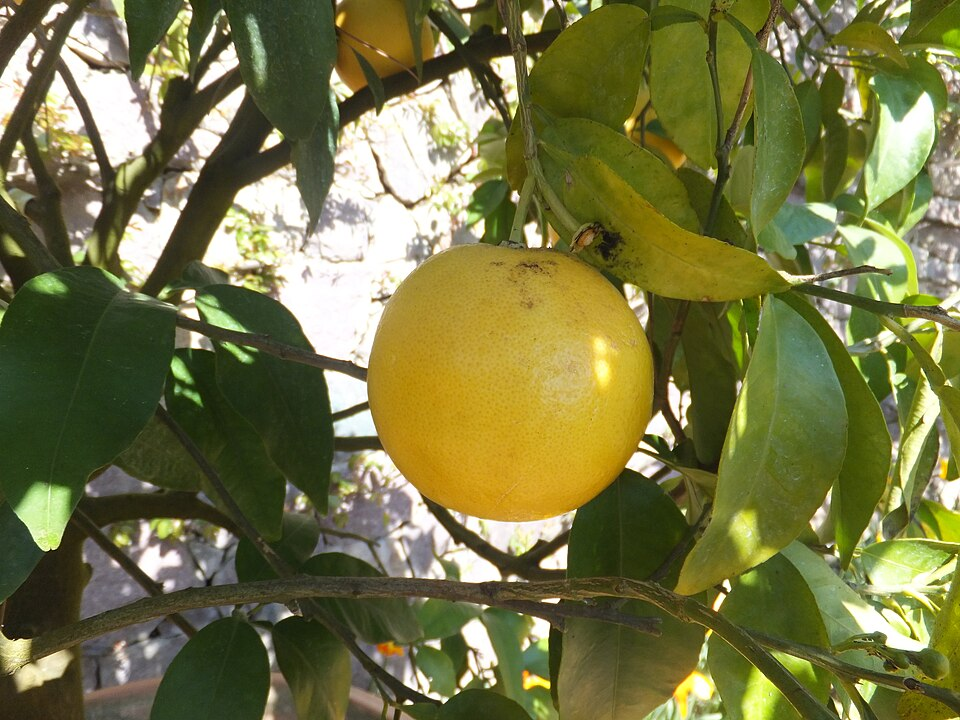
Introduction
The Citrus genus belongs to the Rutaceae family and includes a variety of flowering trees and shrubs known for producing widely consumed citrus fruits. Among the naturally occurring types are citron, mandarin, and pomelo, which form the basis for many other cultivated varieties. A significant number of commercially important fruits—such as orange, lemon, grapefruit, and lime—originate from extensive hybridization processes, resulting in a large diversity of cultivars. These fruits are especially valued for their intense aroma and complex taste profiles, making them some of the most widely cultivated and appreciated fruits worldwide.
Description of Citrus
Citrus plants typically grow as large shrubs or small to medium-sized trees, generally reaching heights between 5 and 15 meters. They are characterized by spiny branches and evergreen leaves arranged alternately, usually with a entire margin. The flowers may appear individually or grouped in small corymbs, measuring about 2–4 cm in diameter. They usually have five white petals and numerous stamens, and are notable for their intense fragrance, produced by essential oil glands.
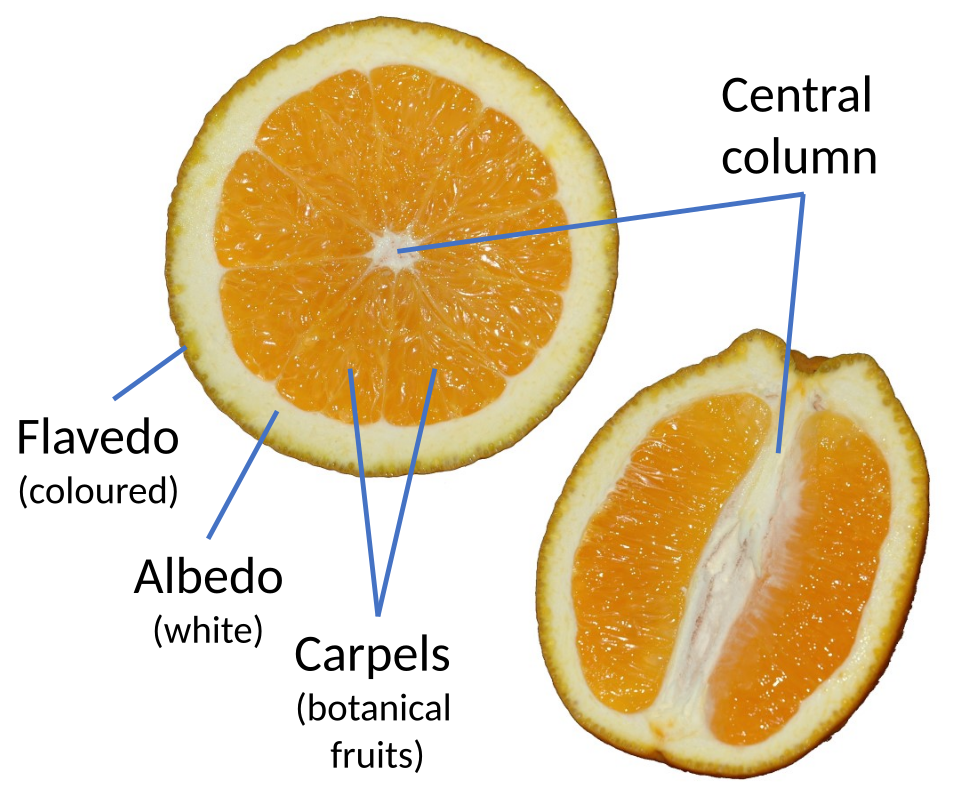
The fruit of Citrus is a specialized type of berry known as a hesperidium, which can vary in shape from round to elongated and in size from 4 to 30 cm. It is covered by a leathery outer layer called the pericarp, divided into three parts: the flavedo (outer, aromatic layer or zest), the albedo (white, spongy middle layer), and the endocarp (inner layer). Inside, the fruit is segmented into carpels, each forming a locule.
Seeds, when present, develop within these segments. Fine filament-like structures extend into the pulp, contributing to the nourishment of the developing fruit. Many cultivated varieties are selected for traits such as easy peeling and seedlessness.
The characteristic aroma of citrus fruits is due to compounds such as flavonoids and limonoids, concentrated mainly in the rind. The pulp is rich in citric acid and other organic acids, including ascorbic acid (vitamin C), which give citrus their distinctive acidic taste. Considerable variation exists in size, shape, color, and flavor, largely influenced by the fruit’s biochemical composition; for example, the bitterness of grapefruit is linked to the presence of the flavonoid naringin.
History of Citrus as food
The earliest spread of citrus plants through human movement dates back to the (3000–1500 BCE) expansion, when species such as Citrus hystrix, Citrus macroptera, and Citrus maxima were carried to Micronesia and Polynesia by seafaring populations traveling by canoe. These transfers were part of a broader process of agricultural diffusion along maritime routes.
In the Mediterranean, the citron (Citrus medica) arrived early from India and Southeast Asia, via two main trade routes: a land route passing through Persia, the Levant, and Mediterranean islands, and a maritime route crossing the Arabian Peninsula and Ptolemaic Egypt toward North Africa. Although the exact date of introduction remains uncertain, the earliest archaeobotanical evidence comes from seeds discovered at Hala Sultan Tekke in Cyprus, dating to around 1200 BCE. Additional findings include pollen from Carthage (4th century BCE) and carbonized seeds from Pompeii (3rd–2nd century BCE). The first recorded description of the citron was provided by Theophrastus around 310 BCE.
Later, Arabs introduced lemons, pomelos, and bitter oranges into the Mediterranean during the 10th century CE. In the 15th and 16th centuries, Genoese and Portuguese traders brought sweet oranges from Asia to Europe. Mandarins were introduced much later, only in the 19th century. In Florida, oranges were established by Spanish colonists. In colder parts of Europe, citrus cultivation developed within orangeries from the 17th century onward, becoming both a status symbol and an important agricultural practice.
Classification of Citrus
This genus includes both species and hybrids derived from these same species.
Species:
- Citron trees (citrons)
- Kumquat trees (lumquats)
- Mandarin trees (mandarins)
- Grapefruit trees (grapefruits)
Hybrids:
- Orange trees (oranges)
- Lemon trees (lemons)
- Pomelo trees (pompelmos)
Photo(s):
1. Syrio, CC BY-SA 4.0 https://creativecommons.org/licenses/by-sa/4.0, via Wikimedia Commons
2. Chiswick Chap, CC BY-SA 4.0 https://creativecommons.org/licenses/by-sa/4.0, via Wikimedia Commons