
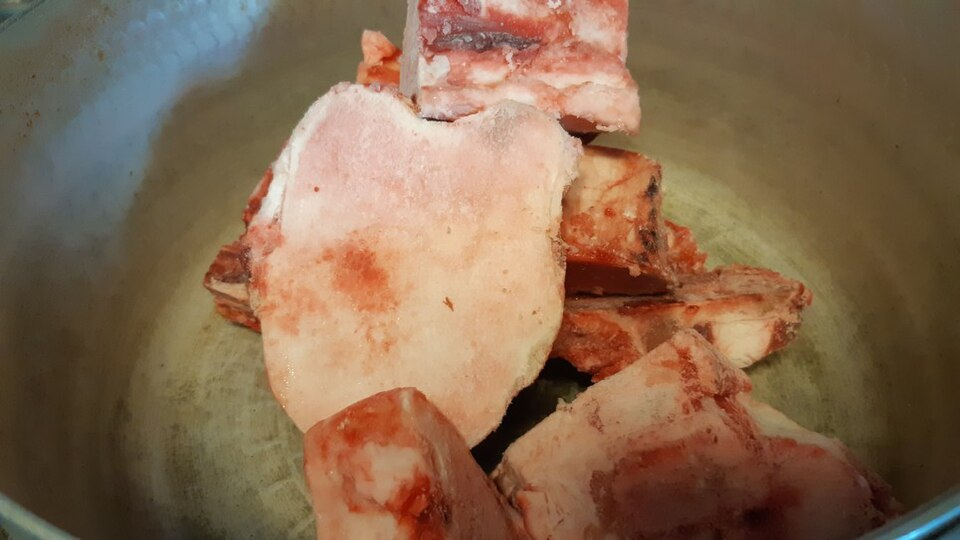
Cattle bones
Food, Animal source foods, Animals (Animalia), Chordates (Chordata), Vertebrates (Vertebrata), Mammals (Mammalia), Therians (Theria), Placentals (Placentalia), Artiodactyls (Artiodactyla), Ruminants (Ruminantia), Bovids (Bovidae), Bovines (Bovinae), Bovini, Bos, Cattle
Species name: Bos Taurus
Consumption area(s): Although precise consumption data are lacking, this product is believed to be consumed globally (except in Africa and some tropical regions), with its use mainly concentrated in less affluent areas or in the preparation of traditional, heritage recipes.
Anatomy of cattle bones
this term refers, without distinction, to all types of bones present in an animal. Naturally, not all bones share the same characteristics or properties, but it was considered impractical to treat each bone separately.
Uses of cattle bones
Cattle bones are a key ingredient in many culinary traditions, used to enhance theflavor of broths, sauces, and stews. Rich in collagen, minerals, and other nutrients, they are ideal for producing full-bodied, aromatic liquids that serve as a foundation for a wide range of dishes. Slow cooking allows the extraction of their essential flavors, making them a valuable resource in the gastronomy of numerous cultures.
One of the most common uses of these bones is in the preparation of broth, a key component of many dishes. Slow simmering in water, often with vegetables and aromatic herbs, produces a rich, flavorful liquid that serves as a base for soups, risottos, sauces, or can be enjoyed on its own. In many traditional cuisines, bone broth is considered essential for adding depth of flavor and enhancing texture, thanks to the naturally occurring gelatin.
Cattle bones are also crucial for making cooking stocks and sauces. The classic brown stock of French cuisine is prepared by roasting the bones before slow-cooking them with vegetables and wine to create an intense, flavorful reduction. This forms the foundation for rich sauces, such as demi-glace, often served with premium meats. Bones are also frequently added to braises and stews, releasing collagen that contributes to a velvety, smooth texture.
Another important component derived from cattle bones is the marrow, used in numerous traditional recipes. This quality makes bones especially valuable in more elaborate culinary contexts, where their use extends beyond simple broth or sauces to sophisticated dishes.
Nutritional facts table
It is practically impossible to create a nutritional table for a product that is not consumed directly. Therefore, reference should be made to the specific nutritional values of the recipes that include this ingredient.
Recipes that use this product as an ingredient:

Photo(s):
1. 해능, CC BY-SA 2.0 KR https://creativecommons.org/licenses/by-sa/2.0/kr/deed.en, via Wikimedia Commons