
Cattle
Species of Bos
Food, Animal source foods, Animals (Animalia), Chordates (Chordata), Vertebrates (Vertebrata), Mammals (Mammalia), Therians (Theria), Placentals (Placentalia), Artiodactyls (Artiodactyla), Ruminants (Ruminantia), Bovids (Bovidae), Bovines (Bovinae), Bovini, Bos
Species name: Bos Taurus
Consumption area(s): Earth, except for Africa and some tropical regions.
Introduction
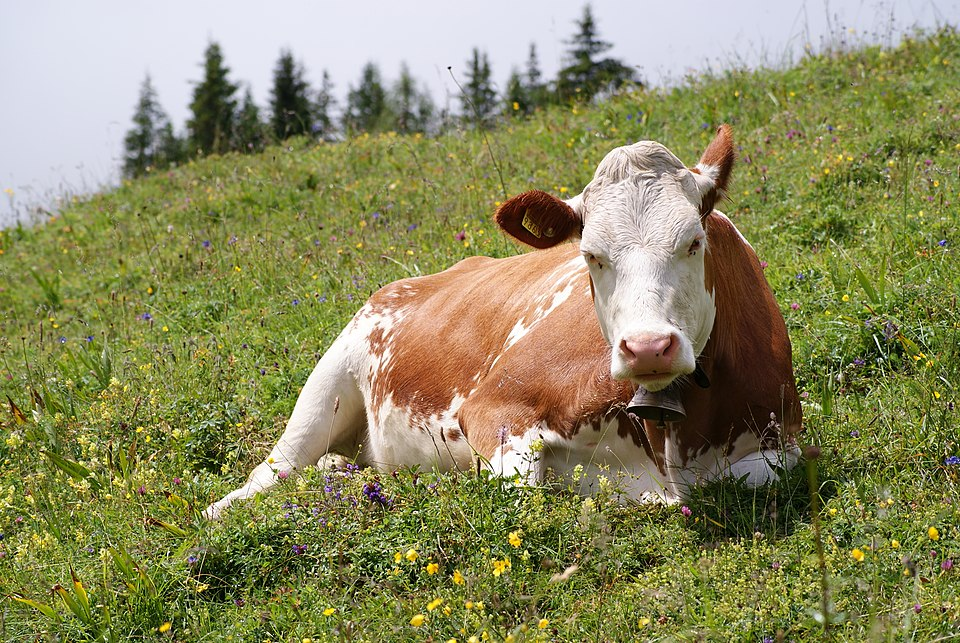
Cattle (Bos taurus) are large domesticated bovines widely managed as livestock. They represent key members of the subfamily Bovinae and are the most common species within the genus Bos. Adult females are called cows, while adult males are bulls. Young females are known as heifers, young males as bullocks, and castrated males are referred to as oxen or steers.
These animals are primarily raised for meat, milk, and leather production. They also serve as draft animals, pulling carts and agricultural equipment. In Hinduism, cattle are regarded as sacred, and their slaughter is prohibited in several Indian states.
Description of cattle
Cattle are large artiodactyl mammals that move on two functional toes, the third and fourth digits. Like other bovids, they may grow horns that are solid, unbranched, and never shed. Their fur colors differ widely among breeds, often appearing black, white, or red-brown, sometimes in spotted or mixed patterns.
Males are generally heavier than females of the same breed. For example, Hereford cows usually weigh 1,320–1,760 lb (600–800 kg), whereas bulls reach 2,200–2,650 lb (1,000–1,200 kg). In the past, cattle were far smaller—around 350 lb (160 kg) before the late 1700s—then gradually became heavier. Size also varies by breed, with the Chianina ranking among the tallest and heaviest, reaching 5 ft 11 in (1.8 m) at the shoulder and up to 2,820 lb (1,280 kg) in mass.
Domestic cattle can live 25–30 years, but farm practices shorten this span. Beef animals are typically slaughtered by 18 months, while dairy cows are removed from production at roughly five years.
Anatomy
Cattle are highly adapted ruminants that rely on a dense network of micro-organisms to handle cellulose-heavy plants. Their digestive system contains four stomach chamber: the rumen, reticulum, omasum, and abomasum. The rumen is the main fermentation chamber and hosts most microbial activity. The reticulum, often called the “honeycomb”, is the smallest part. The omasum absorbs water and nutrients, while the abomasum serves as the true stomach, functioning similarly to the human one.
Digestion involves continuous regurgitation and re-chewing of partially processed feed, forming the familiar cud. Cattle first swallow their food almost unchewed into the rumen, then later retrieve it in small pieces. Each one is ground down by the molars and swallowed again so micro-organisms can finish the breakdown.
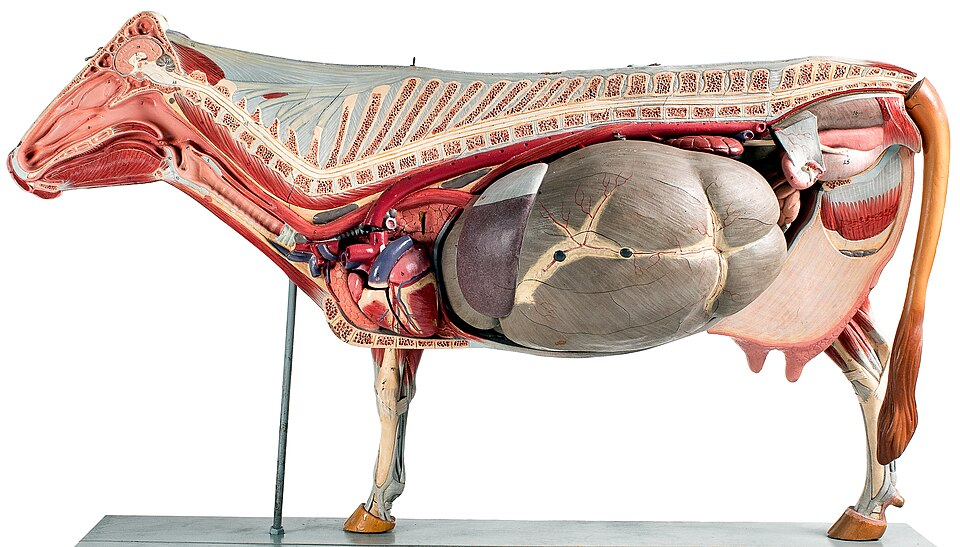
The gestation period of a cow is roughly nine months, and births tend to split close to 52% male and 48% female. The udder holds two pairs of mammary glands. Modern breeding often relies on artificial insemination, with farmers selecting specific bulls. When mating occurs naturally, it lasts only a few seconds and involves a single pelvic thrust.
Before giving birth, cows generally move to quiet, hidden spots. Semi-wild cattle such as the Highland breed usually have their first calf at two to three years, often timing parturition to match periods of better forage. The typical calving interval is around 391 days, and about 5% of calves die within the first year.
Young calves usually suckle about five times daily for nearly 46 minutes total, showing peaks of activity in the morning, late morning, and evening. Under natural conditions they stay with their mothers until 8–11 months. Both heifer and bull calves form similarly strong maternal bonds during the early months.
Behavior
Cattle live in a clear dominance hierarchy. They settle disputes through subtle interactions rather than constant fighting. Mock fights allow them to test strength safely. Licking is mostly done by subordinates toward dominants. Mounting occurs in calves, bulls, and sometimes cows, but it is playful, not a rank signal. Aggression relates more to social distance than to absolute rank. Horns influence spacing: horned cattle keep farther apart, reducing physical conflicts and stabilizing social bonds.
In Highland cattle, hierarchy is very rigid. Few fights occur, and most challenges are non-contact displays, lowering injury risk. Age and sex determine rank: older animals usually dominate younger, and males outrank females. Young bulls reach higher rank than adult cows around two years of age.
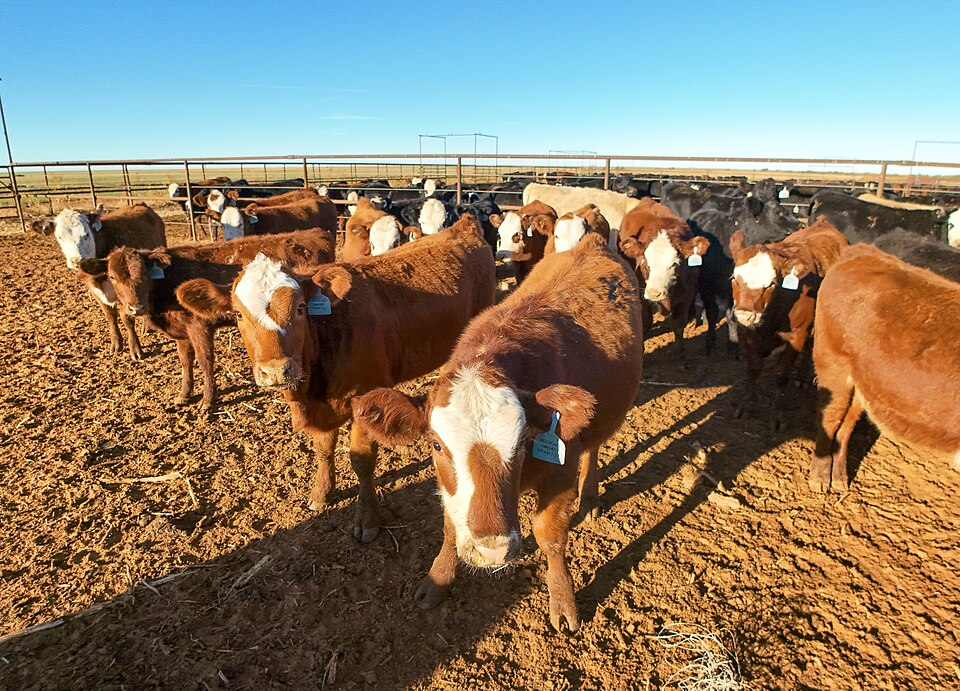
Cattle prefer a mixed diet, about 70% clover and 30% grass. Clover is favored in the morning, grass more in the evening. They adjust bite size and depth depending on plant height and density. Tongue and jaw movements help optimize feeding. In tall, sparse grass, bites are larger than in short, dense areas.
Cattle sleep only about four hours per day. Despite having a stay apparatus, they do not achieve deep sleep while standing. To rest fully, they must lie down.
History of cattle as food
The various breeds of domestic cattle trace their ancestry back to a single wild progenitor: the aurochs. This massive herbivore spread across a broad geographic range from the late Pleistocene to the Neolithic, encompassing northern Europe and northern Asia, the Mediterranean, the Middle East, and India. During the Roman era, it was still present in many parts of central and northern Europe, but by the 17th century, it became extinct, with the last individuals observed in the Jaktorów forest in Poland, where it shared its habitat with the European bison, a species it was often confused with.
The earliest evidence of domestication dates back roughly 9,000 years, with archaeological findings in Greece. However, rock engravings depicting cattle with features different from the aurochs have also been discovered in Africa, suggesting that domestication may have occurred in multiple regions: one in Europe and another in North Africa. Additionally, a distinct aurochs lineage in India gave rise to the zebu, a type of cattle that can interbreed with European breeds, producing fertile offspring indefinitely.
Modern cattle breeds are the product of selective breeding, aimed at enhancing particular traits such as milk production, meat yield, or work strength. Some breeds, like the Piedmontese, emerged through ancient crossbreeding between taurine cattle and zebu, combining traits from both populations.
Meat
Beef
Beef is the meat obtained from cattle, used in a wide variety of dishes. Many cuts are cooked directly as steaks with different degrees of doneness, while smaller trimmings are usually ground for foods like hamburgers. Beef supplies protein, iron, and vitamin B12, yet high intake of red or processed meat is linked to an increased risk of colorectal cancer and cardiovascular disease. Its production also carries a heavy environmental cost, contributing significantly to deforestation and greenhouse-gas emissions.
Different parts of the animal are used in different ways. Large pieces called primal cuts are the starting point from which smaller cuts—such as roasts or ribs—are produced. Other sections are processed into items like corned beef, jerky, or various sausages. Blood may become blood sausage, intestines often serve as natural casings, and bones are boiled for stock.
Because the leg and neck muscles work the most, they produce tougher meat; areas farther from these muscles tend to be more tender. Names for cuts vary between countries, and the same label may refer to different anatomical parts. To improve texture, beef is frequently aged. Wet aging uses vacuum packaging, whereas dry aging exposes the meat to controlled air, allowing enzymes and evaporation to intensify both tenderness and flavor.
If the meat comes from older animals or inherently tougher sections, it may be mechanically tenderized, or treated with enzymes such as papain or bromelain, sometimes through marinades made from fruits that naturally contain these compounds. Injecting salt or phosphates can also alter the muscle structure and enhance juiciness, although phosphates may slightly change the taste.
Beef can be cooked to a range of internal temperatures, from rare to well done, with doneness verified using a thermometer. Methods such as sous-vide heat the meat evenly, while roasting or broiling usually create a gradient of doneness from the center to the edges. Beyond fresh preparations, many traditions produce cured, smoked, or air-dried forms.
Veal
Veal refers to the meat obtained from calves, distinguishing it from the beef produced by older cattle. It can come from calves of any breed or sex, though most veal is sourced from young male calves of dairy breeds, which are typically not kept for reproduction.
Veal is usually more expensive per unit of weight than beef from mature animals. Its production also offers a way to give economic value to dairy bull calves and to make use of whey solids, a byproduct left over from cheese production.
Classification of cattle
First, it should be noted that this page does not refer to the species Bos taurus in general, but specifically to the domestic cattle belonging to the subspecies Bos taurus taurus. It is important to emphasize that, in addition to this, another subspecies also exists:
- Sanga cattle
Beyond this initial classification, it should be emphasized that domestic cattle are further divided into breeds. In this context, only the beef cattle breeds will be presented, while the dairy breeds are covered in the section dedicated to milk production.
- Cabannina cattle
- Chianina cattle
- Cinisara cattle
- Burlina cattle
- Marchigiana cattle
- Maremmana cattle
- Mèlina cattle
- Modicana cattle
- Piedmontese cattle
- Podolica cattle
- Rendena cattle
- Romagnola cattle
Another way to classify cattle is by the type. Because terminology and rules vary across countries, this system focuses on the meat itself, grouping beef into broadly recognizable categories and noting sex or reproductive status only when relevant. It is an approximate and artificial framework, intended to help navigate the diversity of national regulations and provide a practical overview of the main types of beef:
- Calves (very young animal, generally pre-weaning or just weaned)
- Young adults (meat from animals that are no longer calves but not fully mature; this includes steers (castrated males) and heifers (females not yet bred); note that there can be slight differences between the two)
- Cows (adult females that have calved)
- Bulls (adult males that are not castrated)
Note: Additionally, unless otherwise specified, when recipes simply refer to “beef,” the age of the animal is not considered relevant, provided that it does not come from calves.
Finally, it should be noted that domestic cattle, regardless of breed, sex, or reproductive status, can be classified according to the specific cut of meat. Even in this case, the cultural traditions of each country dictate different ways of butchering the animal, resulting in distinct meat cuts. Here, we will present the cuts used in the major countries, with the intention of gradually updating the list over time.
Here is a list of the countries for which the national classification is currently available:
- Argentina 🇦🇷/Uruguay 🇺🇾
- Brazil 🇧🇷
- Colombia 🇨🇴
- Croatia 🇭🇷
- France 🇫🇷/Monaco 🇲🇨
- Germany 🇩🇪
- Italy 🇮🇹/San Marino 🇸🇲/Vatican City 🇻🇦
- Poland 🇵🇱
- Portugal 🇵🇹
- Russia 🇷🇺
- South Korea 🇰🇷
- Turkey 🇹🇷
- United Kingdoms 🇬🇧/Australia 🇦🇺/Ireland 🇮🇪/New Zeland 🇳🇿/South Africa 🇿🇦
- United States of America 🇺🇸/Canada 🇨🇦
In addition, throughout most of the world, each cattle carcass yields a wide range of offal (although not all of it is eaten everywhere). Among the offal components are:
- Bladder
- Bone marrow
- Bones
- Brain
- Cartilages
- Cheeks
- Diaphragm
- Esophagus
- Eyes
- Feet
- Heart
- Head
- Kidney
- Large intestine
- Liver
- Lung
- Pancreas (belly sweetbread)
- Rectum
- Rennet
- Salivary glands
- Small intestine
- Snout
- Spleen
- Tail
- Tail fat/caul fat
- Tendons
- Thymus (throat sweetbread)
- Tongue
- Tripe (abomasum, omasum, reticulum, rumen)
- Udder
- Uterus
It should also be noted that some of these organs (e.g., throat sweetbreads) are consumed only when taken from young animals, and that not every culture eats all of these parts—especially in societies where poverty does not necessitate their use.
Source(s):
https://en.wikipedia.org/wiki/Cattle
https://en.wikipedia.org/wiki/Beef
https://en.wikipedia.org/wiki/Veal
Photo(s):
1. Kim Hansen, CC BY-SA 3.0 https://creativecommons.org/licenses/by-sa/3.0, via Wikimedia Commons
2. Museum of Veterinary Anatomy FMVZ USP / name of the photographer when stated, CC BY-SA 4.0 https://creativecommons.org/licenses/by-sa/4.0, via Wikimedia Commons
3. Quintin Soloviev, CC0, via Wikimedia Commons