
Butter
Food, Animal source foods, Dairy products
Consumption area(s): Earth
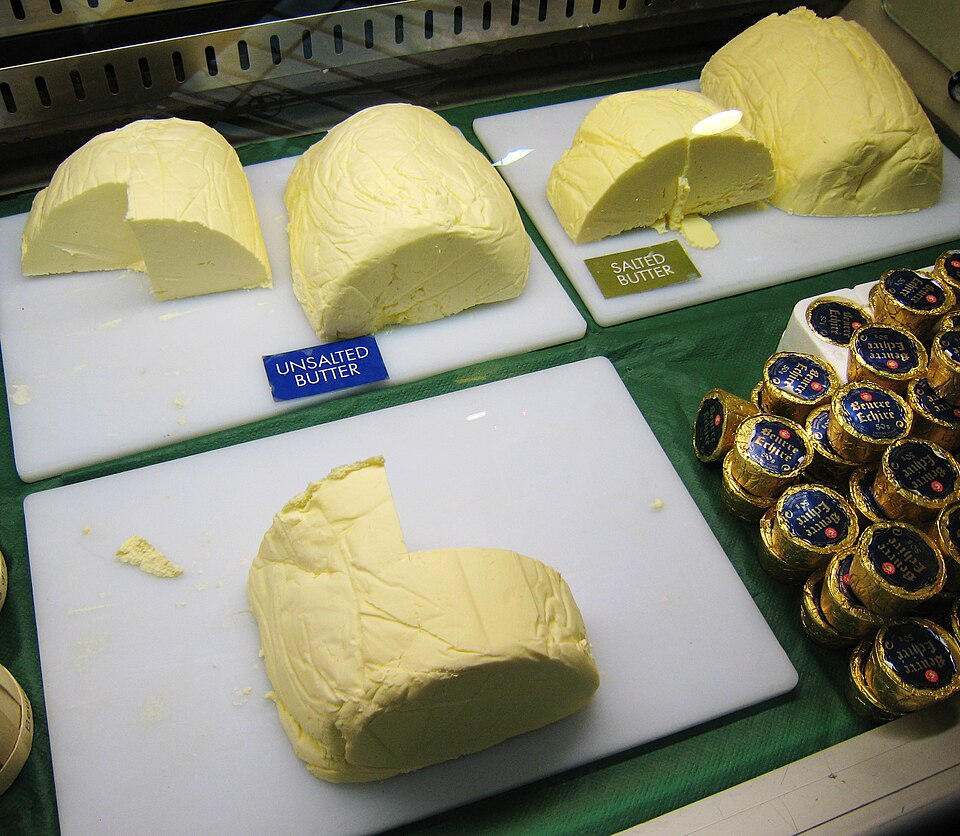
Introduction
Butter is a dairy product obtained through processes involving the processing of animal milk. The result is a semi-solid water-in-oil emulsion that is soft at room temperature (in temperate climates), becomes liquid once temperatures exceed 82–91°F (28–33°C), and solidifies when refrigerated. In Europe and the United States, the general term “butter”, without specifying its origin, typically refers to that made from cow’s milk.
History of butter
Since ancient times, butter from various animals has been used by many cultures as a condiment, a baking fat, an ingredient for sauces, and as an alternative to lard or vegetable oils. It can be salted—a practice originally introduced to improve its preservation during transport—and in some cases fermented, as in the continental European tradition. In any case, since each type of butter has its own distinct history, to ensure each is treated with appropriate depth, you will find the historical profile of each one on its dedicated page.
Classification of butter
Based on the type of milk used, butter can be classified into:
- Buffalo butter
- Cow butter
- Goat butter
- Reindeer butter
- Sheep butter
- Yak butter
In addition to the various types of standard butter listed above, there are also other types of butter that differ in their production methods. These include:
- Anhydrous butter
- Clarified butter (or ghee)
- Salted butter
- Butteroil
Source(s):
https://en.wikipedia.org/wiki/Butter
https://it.wikipedia.org/wiki/Burro
Photo(s):
1. Charles Haynes from Bangalore, India, CC BY-SA 2.0 https://creativecommons.org/licenses/by-sa/2.0, via Wikimedia Commons