
Buggiano
Comune in the province of Pistoia
Earth, Europe, Italy, Tuscany, Province of Pistoia
Introduction
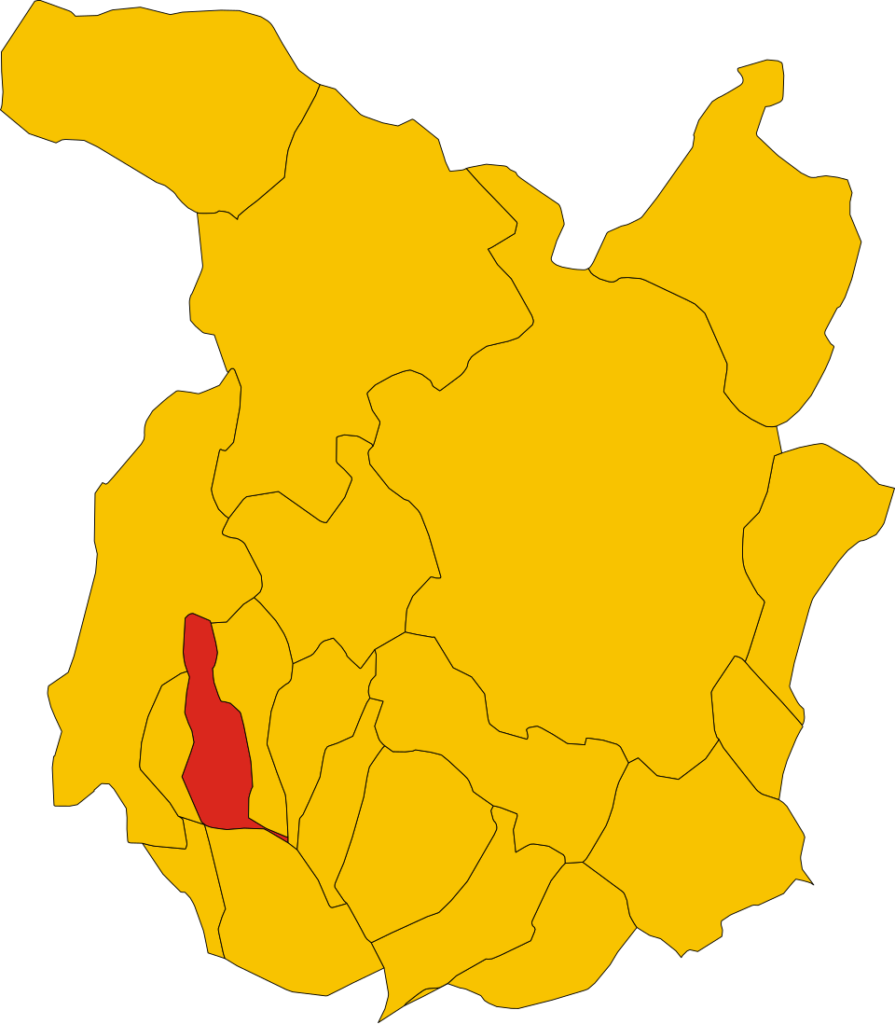
Located in the central Valdinievole area, the comune of Buggiano stretches across a landscape that is partly hilly, positioned between Lucca and Pistoia, and within close proximity to Pescia and Montecatini Terme. Its territory develops in an elongated shape, closely following the path of the Cessana stream, which runs through the entire area before flowing into the Padule di Fucecchio. The municipality includes several hamlets and localities, with Borgo a Buggiano serving as the administrative seat of the town hall, alongside Colle di Buggiano. Other notable hamlets include Buggiano Castello, Stignano as well as areas now incorporated into Borgo such as Pittini and Santa Maria in Selva.
History of Buggiano
The name of the town is believed to derive from the ancient Latin Abudius, likely connected to land ownership, reflecting its early rural origins. Over time, its history became intertwined with several populations, including Ligurians, Etruscans, Romans, and possibly the Goths, who may have rebuilt the castle around the 6th century. The village’s hilltop position was of clear strategic importance, allowing control over the routes linking Lucca and Florence.
The municipal emblem features a walking ox, directly tied to the etymology of the town’s name. Following its annexation to Florence, the Florentine lily was added to the symbol. Another historical emblem depicted a red rearing bull on a blue background, still visible today on the façade of the Sanctuary of the Santissimo Crocifisso. The official banner consists of a white field bordered in red.
Points of interest and culture in Buggiano
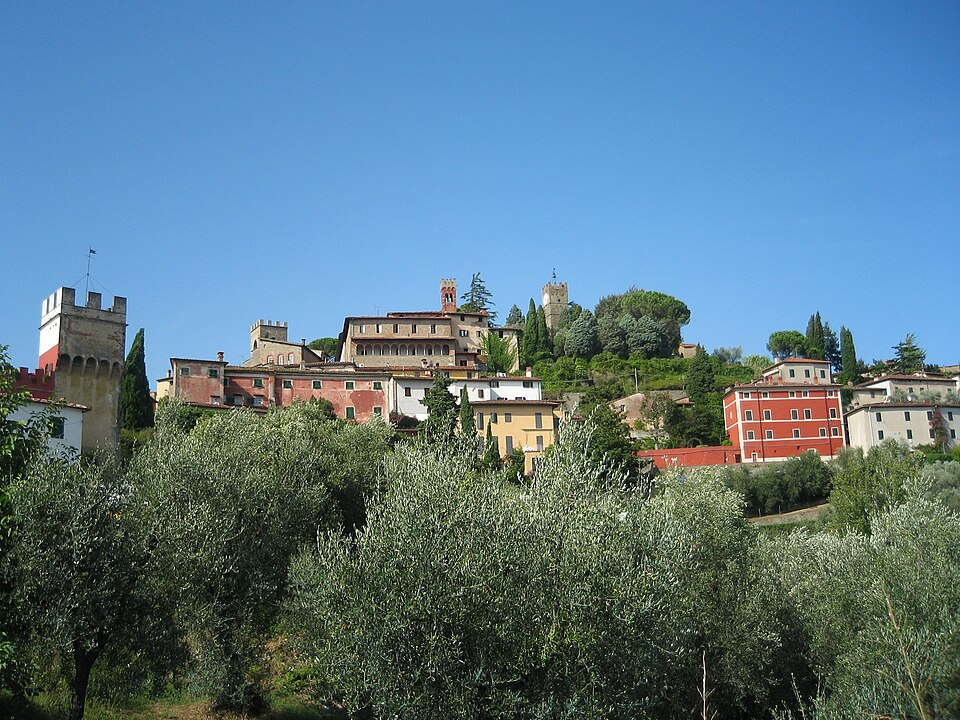
The area hosts numerous religious buildings, including the Pieve of San Lorenzo, the Church of Madonna della Salute and San Nicolao, and the Oratory of the Giglio. Among the notable civil structures are Villa Bellavista, Villa Sermolli, and Palazzo Carozzi-Sannini, which now houses the municipal library.
Established in the 1970s, the public library is currently located within the former convent of Santa Marta, which also accommodates the municipal offices. It plays a key role in cultural and educational activities, organizing events and initiatives for the local community. In the realm of cinema, Buggiano Castello briefly appears in the film Ti amo in tutte le lingue del mondo by Leonardo Pieraccioni, adding a small but notable connection to contemporary Italian film culture.
From a traditional and cultural standpoint, Buggiano preserves several long-standing events and institutions. One of the most historic is the Fiera in Selva, documented since 1367 and held in the area of Santa Maria. Another major initiative is the Coluccio Salutati International Poetry Prize, promoted by the comune and supported under the patronage of the Presidency of the Italian Republic, reflecting the town’s link to literary and humanistic heritage.
Among the most distinctive celebrations is “La Campagna dentro le Mura”, during which the private gardens of Buggiano Castello are opened to the public, transforming the village into a so-called “Borgo degli Agrumi”, thanks to its rich collection of citrus plants and botanical varieties. Another widely attended event is the Sagra del Pane Toscano DOP, hosted in the Colombai park, which also highlights local artisanal beer production and reinforces the area’s gastronomic identity.
Traditional recipes of Pescia
Traditional products of Pescia
Source(s):
https://it.wikipedia.org/wiki/Buggiano
Photo(s):
1. Vonvikken, Public domain, via Wikimedia Commons
2. Betta.1, CC BY-SA 3.0 https://creativecommons.org/licenses/by-sa/3.0, via Wikimedia Commons