
Brassicales (Cruciales)
Order of Malvids (Eurosids II)
Food, Plant source foods, Plants (Plantae), Flowering plats (angiospermae), Mesangiosperms, Eudicots, Core eudicots, Superrosids, Rosids, Malvids (Eurosids II)
Consumption area(s): Earth
Note: For better understanding, please read the article on flowering plants (angiospermae) first. If you come across unfamiliar words, you can click on any highlighted term to open the glossary with definitions of key botanical terms.
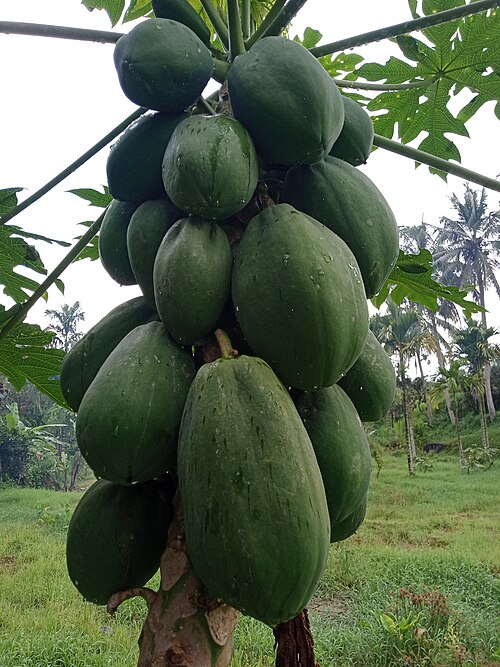
Introduction
Brassicales (Cruciales) represent an order of flowering plants within the malvid group. This group encompasses several familiar and economically important species, such as cabbage, cauliflower, Brussels sprouts, broccoli and kale. Other notable members include turnip, bok choy, rapeseed, radish, horseradish, caper, as well as more exotic plants like papaya.
Description of Brassicales (Cruciales)
Most plants in this order contain glucosinolates along with the enzyme myrosinase. When plant tissues are damaged, myrosinase is released and breaks down the glucosinolates into oils, which acts as adefense against herbivores. A distinctive feature of the Brassicaceae family is the cross-shaped arrangement of the four flower petals. The ovary is usually formed from three fused carpels and is superior. Placentation is typically parietal, and the embryos often display a green coloration.
Classification of Brassicales (Cruciales)
This order is further divided into families. Among them are:
- Brassicaceae (Cruciferae) (broccoli, cauliflower, cabbage, mustard)
- Capparaceae (caper)
- Caricaceae (papaya)
- Moringaceae (moringa)
- Resedaceae (mignonette)
- Tropaeolaceae (nasturtium)
Photo(s):
1. Anak Sago, CC BY-SA 4.0 https://creativecommons.org/licenses/by-sa/4.0, via Wikimedia Commons