
Brassicaceae (Cruciferae)
Family of Brassicales (Cruciales)
Food, Plant source foods, Plants (Plantae), Flowering plats (angiospermae), Mesangiosperms, Eudicots, Core eudicots, Superrosids, Rosids, Malvids (Eurosids II), Brassicales (Cruciales)
Consumption area(s): Earth
Note: For better understanding, please read the article on flowering plants (angiospermae) first. If you come across unfamiliar words, you can click on any highlighted term to open the glossary with definitions of key botanical terms.
Introduction
The Brassicaceae (Cruciferae) form a large family of herbaceous plants within the order Brassicales. They are widely distributed across all continents and climatic zones, including even polar regions. The Mediterranean basin represents the primary center of biodiversity for this family, hosting the highest number of species.
Description of Brassicaceae (Cruciferae)
Brassicaceae species are primarily annual, biennial, or perennial herbaceous plants, though some appear as shrubs, or rarely as vines. While mostly lives on the ground, a few, like water awlwort, live submerged in freshwater. Roots may form a taproot or a sometimes caudex, which can be branched, and a few species have rhizomes or rare runners.
Leaves are stipule-free, often alternate, occasionally opposite, and may form basal rosettes. Leaf blades are generally simple and rarely trifoliolate or pinnately compound. Hairs are unicellular, appearing in diverse forms from simple to forked, star-, tree-, or T-shaped, and never bear glands. Stems are mostly herbaceous but occasionally woody, and may carry leaves, or be leafless.
Inflorescences vary, forming racemes, panicles, or corymbs, and some flowers arise solitarily from rosette axils. Flowers are usually bisexual and radially symmetrical, except in a few genera where they are zygomorphic. Each flower has four sepals, which form a calyx. Petals are typically four, alternating with sepals, sometimes absent. Most species have six stamens in an arrangement with four longer innera and two shorter outer), though some species deviate from this. Filaments are slender and free, anthers have two pollen sacs, and pollen is tricolpate. Nectaries are present at the base of the lateral stamens.
The ovary is superior and bicarpellate, initially a single cavity, often divided by a false septum into two valves with ovules along the margins. Fruits are capsules that dehisce via two valves, forming either a silique or silicle. A persistent style often connects to the stigma. Seeds are usually yellow or brown, arranged in one or two rows per cavity and always lack endosperm.
Classification of Brassicaceae (Cruciferae)
This family is divided into genera. Among them are:
- Alyssum (alyssum)
- Armoracia (horseradish)
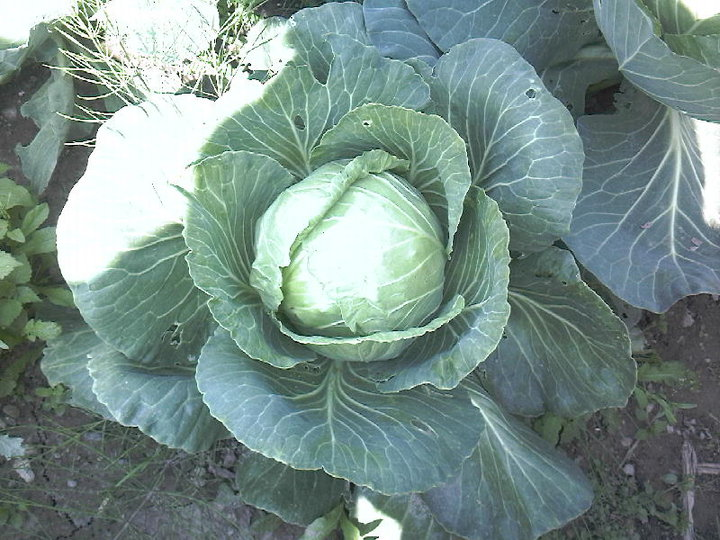
- Brassica (broccoli, cauliflower, cabbage, brown mustard, black mustard)
- Capsella (shepherd’s purse)
- Cardamine (cress)
- Crambe (crambe)
- Lepidium (arugula)
- Sinapis (white mustard, wild mustard)
Photo(s):
1. Emőke Dénes, CC BY-SA 4.0 https://creativecommons.org/licenses/by-sa/4.0, via Wikimedia Commons