
Bovini
Subfamily of bovines
Food, Animal source foods, Animals (Animalia), Chordates (Chordata), Vertebrates (Vertebrata), Mammals (Mammalia), Therians (Theria), Placentals (Placentalia), Artiodactyls (Artiodactyla), Ruminants (Ruminantia), Bovids (Bovidae), Bovines (Bovinae)
Consumption area(s): Earth
Introduction
The Bovini tribe comprises medium to enormous bovines originally inhabiting Europe, Asia, North America, and Africa. This diverse group includes the mysterious saola, with its antelope-like appearance, the African and Asiatic buffaloes, and a distinct lineage that encompasses bison along with the wild cattle of the genus Bos. As the largest representatives of the subfamily Bovinae, they also stand as the heaviest members of the entire Bovidae family. Among them, the gaur reaches exceptional dimensions, sometimes weighing as much as 3,300 pounds (1,500 kilograms ).
Throughout history, the connection between bovins and humans has been both profound and multifaceted. Out of the seven recognized species, five have undergone successful domestication, with the domestic cattle emerging as the most widespread and influential descendant. Having been tamed soon after the last Ice Age, the global population of cattle now surpasses 1.4 billion individuals. Over millennia, these domesticated bovines have been selectively bred to enhance meat, milk, and leather production, while also serving as draft animals in agriculture.
Description of Bovini
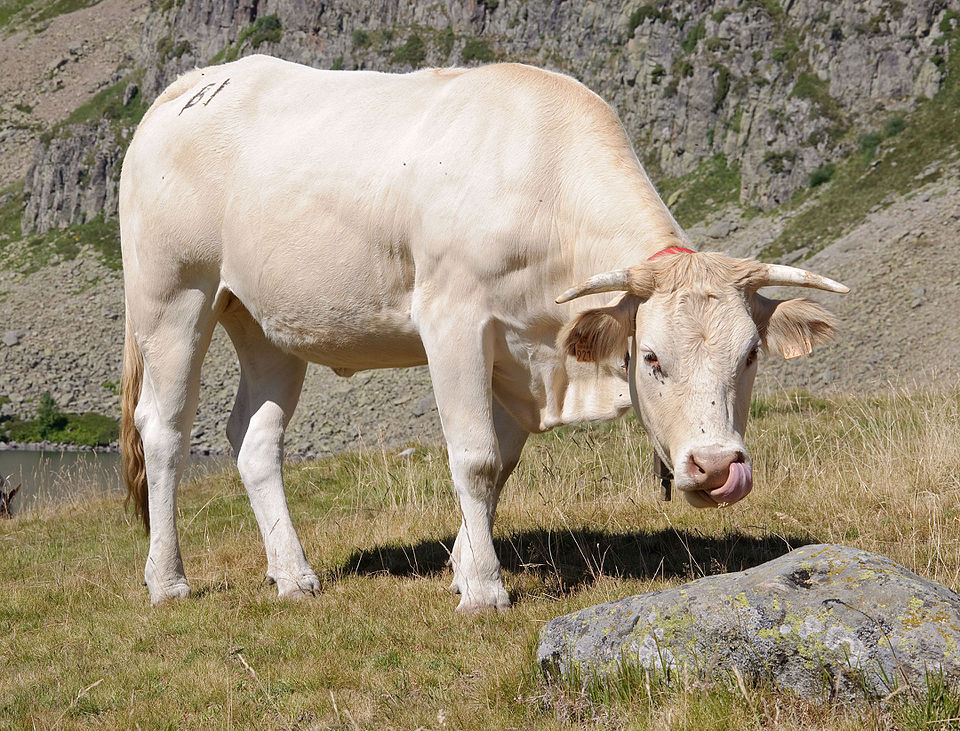
Bovini are generally large, muscular bovids with compact bodies and short, sturdy legs. Species like the wild yak, wild water buffalo, American bison, and European bison can weigh between 1,500 and 2,600 pounds (700–1,200 kilograms), often exceeding 6.2 feet (1.9 meters) at the shoulder. The gaur stands as the heaviest, reaching up to 3,300 pounds (1,500 kilograms) and about 7.2 feet (2.2 meters) tall. Some domestic breeds, such as the Chianina, can even rival or surpass these wild forms in height and mass.
At the opposite end, small island buffaloes like the tamaraw and anoa from Southeast Asia weigh only 440–660 pounds (200–300 kilograms), showing how diverse the group can be. Not all bovins look like typical cattle; the saola, for example, has a distinctly antelope-like shape that once confused biologists. Despite their differences, all bovins share a key feature: smooth horns in both sexes, unlike the ringed horns seen in most other bovids.
Strong sexual dimorphism is evident—males are notably larger, with massive humps and thick necks. Both sexes usually show similar coloration, although males tend to be darker. Fur colors range from black or brown to lighter tones with white markings.
Wild members of the group inhabit North America, Europe, Asia, and sub-Saharan Africa, while domesticated cattle have spread worldwide through human expansion. Apart from the plains bison and mountain-dwelling yak, most species prefer forested habitats with open clearings that offer tall grasses and abundant water. Their rigid upper lips make them inefficient grazers of short grass, so they rely on rougher vegetation and often wallow in mud or water to cool off.
Despite their size, wild cattle still face predation from crocodiles, big cats, hyenas, dholes, and wolves, though mostly the young and weak are targeted. These animals are highly social, forming herds that can number in the hundreds, usually composed of females their offsprings. Older males often live alone, joining mixed herds only during the breeding season, when a hierarchy based on size and strength emerges.
All species are polyandrous, and males engage in intense head-to-head combat during the breeding season to secure mates and territory. After mating, gestation lasts around nine to ten months, resulting in a single offspring. Females mature sexually by four years, while males take about seven, reflecting their slower physical development.
Classification of Bovini
Bovinei are classified according to their genus. Among them we find:
- Bison
- Bos (cattle, gaur, yak)
- Bubalus (anoas, wild warer buffalo)
- Pseudoryx (saolas)
- Syncerus (african buffalo)