
Beets
Species of Beta
Food, Plant source foods, Plants (Plantae), Flowering plats (angiospermae), Mesangiosperms, Eudicots, Core eudicots, Superasterids, Caryophyllales, Amaranthaceae, Beta
Species name: Beta vulgaris
Consumption area(s): Earth
Note: For better understanding, please read the article on flowering plants (angiospermae) first. If you come across unfamiliar words, you can click on any highlighted term to open the glossary with definitions of key botanical terms.

Introduction
Beet is a flowering plant species placed within the subfamily Betoideae of the broader family Amaranthaceae. It is generally a perennial herb that can reach about 120 cm in height, forming a robust and upright growth habit. All cultivated forms ultimately derive from the wild sea beet, known as Beta vulgaris subsp. maritima, while most agricultural varieties are grouped under Beta vulgaris subsp. vulgaris.
This species has given rise to several important cultivar groups with distinct uses. These include the sugar beet, cultivated primarily for sugar extraction, the beetroot (garden beet) grown as a root vegetable, the leafy forms known as chard (or spinach beet/silverbeet) used as leafy greens, and mangelwurzel, which is mainly cultivated as a fodder crop for livestock.
Description of the plant
Beet is a herbaceous plant that typically behaves as a biennial, though it can occasionally persist as a perennial, reaching heights of up to 120 cm and rarely even 200 cm. Most cultivated varieties complete their life cycle as biennials.
The reproductive organs are arranged in dense, spike-like inflorescences that are often interrupted at the base. The very small flowers are grouped in clusters of one to three (occasionally up to eight) within the axils of short bracts, although in the upper portion of the inflorescence bracts may be absent. Each hermaphroditic flower, with a greenish or reddish tint, and is composed of five fused tepals, along with five stamens and a semi-inferior ovary bearing two to three stigmas. In many cases, the perianths of adjacent flowers become partially fused, forming more complex floral units. Pollination occurs mainly through wind dispersal, although insect pollination can also contribute.
During fruit development, the clustered flowers merge into hard, compact structures. The individual fruit (utricle) is enclosed by an inward-curving perianth and embedded within a swollen, hardened floral base. The seed is typically lens-shaped, about 2–3 mm in size, with a smooth reddish-brown coat. Internally, it contains a ring-shaped embryo surrounded by abundant nutritive perisperm, which supports early seedling development.
Description of the edible parts (leaves, stems and/or root)
Its root system varies strongly between forms: in cultivated plants it becomes fleshy, swollen, and colored in shades of dark red, white, or yellow, whereas in the wild subspecies it tends to remain brown, hard, and only weakly enlarged. The stems may grow upright in cultivated types, while wild populations often show a more prostrate or procumbent habit and they can be branched in the upper regions.
The foliage at the base consists of leaves with long petioles, which in some cultivated forms can also be thickened and pigmented (red, white, or yellow). The leaf blades range from oblanceolate to cordate, are usually dark green to deep red, slightly fleshy, and marked by a strong central vein, with margins that are either entire or gently wavy. Basal leaves may reach 5–20 cm in wild plants but are often considerably larger in cultivation, while the upper leaves are reduced in size and tend to be rhombic to narrowly lanceolate.
History of Beet as food
Beet appears already in the ancient Greek world, where Theophrastus mentions it under the name teutlon. In Roman culture, authors such as Pliny the Elder and Columella describe its use, highlighting that it served both as a food source and a therapeutic plant. By the 15th century, its cultivation had become widespread, particularly within monastic communities. At first, attention was focused mainly on the leaves, while only later did the root—especially the red variety—gain importance as a food product.
The expansion of beet farming is closely connected to the discovery that it could yield sugar. In the 17th century, the French agronomist Olivier de Serres observed that cooked beet released a syrup-like juice resembling sugar, although this insight did not immediately lead to further developments.
A decisive step came in 1747, when the Prussian chemist Andreas Sigismund Marggraf demonstrated that the sweet crystals extracted from beet juice were chemically identical to those obtained from sugarcane. However, he did not pursue industrial application. This was later achieved by his student, Franz Karl Achard, who initiated commercial sugar production and established the first factory in 1801 in Kunern, in Lower Silesia.
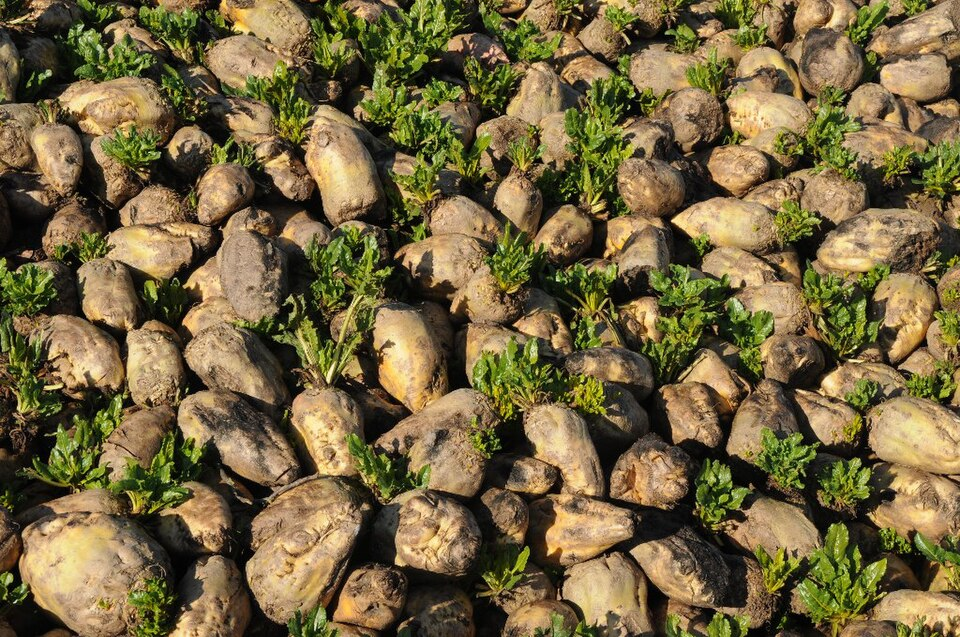
At the beginning of the 19th century, cane sugar still dominated the market. The situation changed during the Napoleonic Wars, when the 1806 blockade restricted sugar imports. This accelerated research on sugar beet, and by 1811, French scientists presented beet-derived sugar loaves to Napoleon Bonaparte, who subsequently promoted its cultivation on a large scale. With the support of the entrepreneur Benjamin Delessert, who refined Achard’s method and founded the first French processing plant, the industry expanded rapidly, leading to the establishment of hundreds of factories across Europe within a few years.
Today, Europe produces around 120 million tonnes of beet annually, yielding approximately 16 million tonnes of white sugar. Countries such as France and Germany are leading producers, and nearly all European Union members—except Luxembourg—generate enough beet sugar to cover about 90% of their internal demand.
Production methods for beet
Beet is primarily cultivated in temperate regions, where environmental conditions support its biennial life cycle. During the first year, the plant stores nutrient reserves in the root, mainly in the form of sugars, while in the second year it develops a flowering stem. In agricultural practice, however, the crop is typically harvested at the end of the first year, since this is when the sugar concentration in the root reaches its peak.
Cultivation schedules vary depending on climatic conditions. In northern areas, sowing usually takes place in spring, with harvesting beginning toward the end of summer. In southern regions, where higher temperatures intensify respiratory processes and can reduce both root yield and sugar content, farmers adopt an autumn–spring cycle, allowing harvest during the summer months to optimize productivity.
This species performs best in medium-textured soils that are neutral or slightly alkaline and well drained. Nevertheless, it is considered highly adaptable, as it can also thrive in clay-rich soils, provided that proper water management ensures adequate drainage.
The characteristic earthy flavor found in some beet varieties is due to geosmin, a compound whose origin is still debated. It remains unclear whether it is synthesized directly by the plant or by soil microorganisms associated with it. However, modern breeding programs have succeeded in developing varieties with reduced geosmin levels, resulting in a milder and more widely accepted taste.
Uses of beet
The leaves of chard are widely consumed as a vegetable, and in some cases even the young leaves of beet plants are prepared in a similar way. When the plants are still tender, both leaves and stems are typically lightly steamed and eaten as greens, whereas more mature parts are often sautéed, developing a flavor reminiscent of taro leaves.
The roots, usually characterized by their deep red color, can be prepared through various methods such as baking, boiling, or steaming. They are commonly served either warm as a side dish or cold in salads. A significant portion of industrial production is processed into pre-cooked and preserved beets or transformed into pickled products. In Eastern Europe, beet-based soups—most notably borscht—are a staple of traditional cuisine. Less common varieties, such as yellow beets, are generally cultivated on a small scale for personal consumption.
Classification of beet
This species is further divided into the following subspecies:
- Beta vulgaris subsp. maritima (sea beet)
- Beta vulgaris subsp. vulgaris (beetroot, chard, sugar beet)
Photo(s):
1. mercedesfromtheeighties, CC BY-SA 2.0 https://creativecommons.org/licenses/by-sa/2.0, via Wikimedia Commons
2. Sugar beet by Philip Halling, CC BY-SA 2.0 https://creativecommons.org/licenses/by-sa/2.0, via Wikimedia Commons