
Aurantioideae
Subfamily of Rutaceae
Food, Plant source foods, Plants (Plantae), Flowering plats (angiospermae), Mesangiosperms, Eudicots, Core eudicots, Superrosids, Rosids, Malvids (Eurosids II), Sapindales, Rutaceae
Consumption area(s): Earth
Note: For better understanding, please read the article on flowering plants (angiospermae) first. If you come across unfamiliar words, you can click on any highlighted term to open the glossary with definitions of key botanical terms.
Introduction
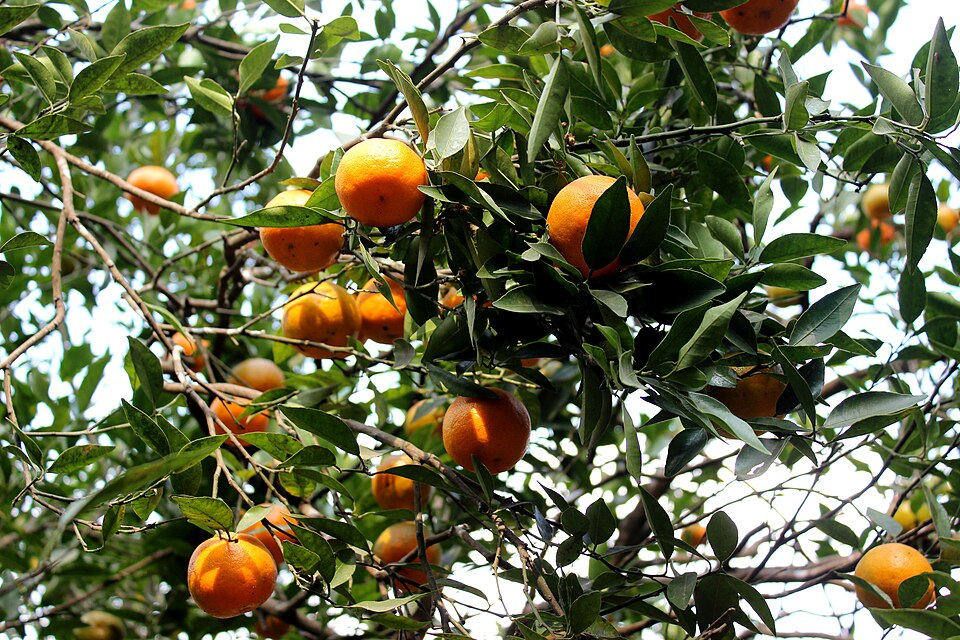
The Aurantioideae are a subfamily of Rutaceae that primarily includes trees and shrubs, distinguished by their white, fragrant flowers. Species within this group are widely distributed and are well known for their ability to produce aromatic essences.
Description of Aurantioideae
In most cases, the leaves are evergreen, although exceptions exist, such as Citrus trifoliata and certain species in the genera Aegle, Clausena, and Murraya, which show different adaptations. The fruits of these plants are hesperidia, meaning berries with juicy pulp divided into compartments and covered by a thick, resilient rind, which can range in color from green-yellow to red.
Both the foliage and the fruits are rich in aromatic glands, capable of releasing essential oils and characteristic fragrances, giving many of these species high value in both culinary and industrial applications.
Classification of Aurantioideae
This subfamily is further divided according to genera. Among them are:
- Aegle (wood apples)
- Afraegle (African lemons)
- Atalantia (wild kumquats)
- Balsamocitrus (balsamic lemons)
- Citropsis (African oranges)
- Citrus (oranges, lemons, mandarins, grapefruits, citrons)
- Clausena (wampi)
- Limonia (wood-apples)
- Micromelum (wild limes)
- Murraya (false curry)
- Naringi (wild oranges)
- Swinglea (spiny oranges)
- Trifasia (Malaysian limes)
Photo(s):
1. Auli Raha (অলি রাহা), CC BY-SA 4.0 https://creativecommons.org/licenses/by-sa/4.0, via Wikimedia Commons