
Phasianidae
Family of Galliforms (Galliformes)
Food, Animal source foods, Animals (Animalia), Chordates (Chordata), Vertebrates (Vertebrata), Birds (Aves), Neognaths (Neognathae), Galliforms (Galliformes)
Consumption area(s): Earth
Introduction
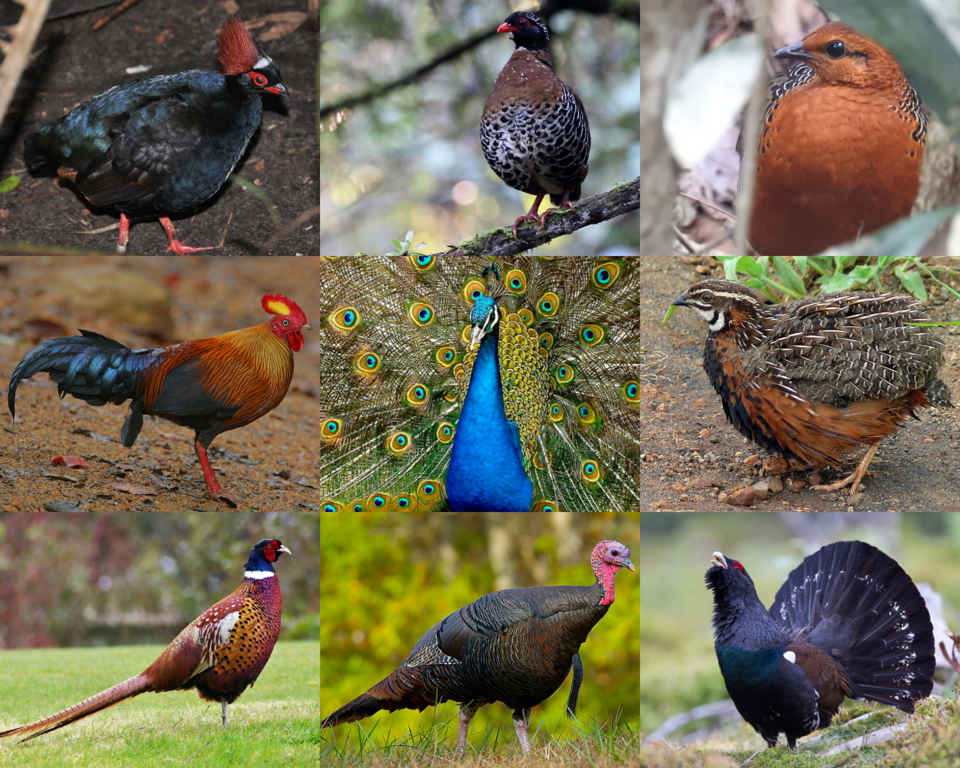
The Phasianidae constitute a lineage of robust, predominantly terrestrial birds that spend much of their time on the ground. This group encompasses a wide range of familiar species such as pheasants, grouse, partridges, junglefowl, domestic chickens, turkeys, Old World quails, and peafowl. Many members of this family are widely recognized as important gamebirds, frequently hunted or managed for sport and food.
In terms of diversity, the family currently comprises about 185 species, organized into roughly 54 genera. Historically, some other galliform groups were sometimes incorporated into Phasianidae, including the New World quails and the guineafowl. Contemporary taxonomy generally treats these birds as belonging to independent families. Conversely, certain birds that were once regarded as separate families—namely the grouse and the turkeys—are now understood to be deeply embedded within the lineage of Phasianidae, and are therefore currently classified within this family.
Description of Phasianidae
Members of the Phasianidae are primarily ground-dwelling birds with substantial variation in body size. The smallest representatives, such as the king quail, may weigh only about 1.5 oz (43 g), whereas the much larger Indian peafowl can reach around 13 lb (6 kg). If turkeys are considered part of this family, the wild turkey represents an extreme case, with males capable of exceeding 37 lb (17 kg). Body length also varies markedly: from roughly 4.9 in (12.5 cm) in the smallest quails to nearly 120 in (300 cm) in the green peafowl. In many species, pronounced sexual dimorphism occurs, especially among the larger birds, with males typically bigger and than females.
Physically, these birds tend to have a stocky build, broad but relatively short wings, and strong legs adapted for terrestrial movement. A leg spur is common in many species—particularly junglefowl, pheasants, turkeys, and peafowl—although in groups such as quails, partridges, and grouse the spur may be reduced or absent. Certain groups, including peacock-pheasants and spurfowl, may even possess two spurs per leg. The bill is typically short and sturdy, an adaptation that suits species that dig into soil while foraging, such as the Mearns quail. Males in larger species frequently display vivid plumage and conspicuous ornamental structures like crests, combs, or wattles.
Dietary habits within the family are highly omnivorous and opportunistic. Food resources may include seeds, leaves, shoots, flowers, fruits, and underground plant parts such as bulbs, tubers, and roots, but some species also consume invertebrates and small vertebrate prey such as reptiles or small mammals. Many species tend to favor either plant material or animal prey, yet the chicks of most phasianids rely heavily on insects and other small invertebrates during early development.
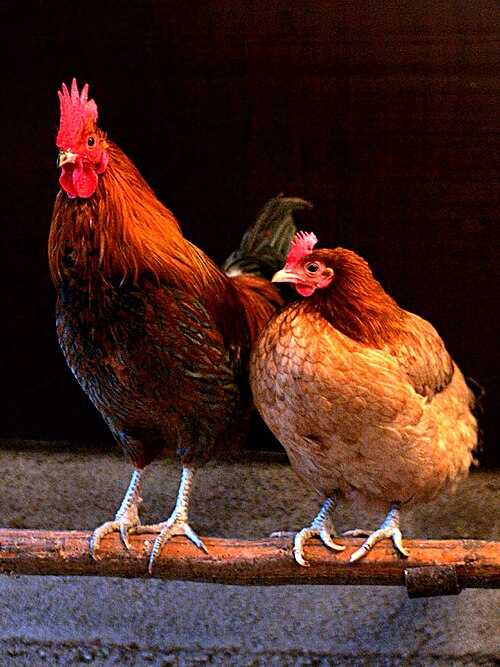
Reproductive behaviour shows notable diversity. Unlike the majority of birds, a considerable number of species within this family are not strictly monogamous. Some groups, including certain African francolins and partridges, may form monogamous pairs, but polygamous systems are widespread among pheasants, junglefowl, and several quails.
Nesting generally takes place directly on the ground, often in simple depressions or shallow scrapes lined with plant material. An exception occurs in tragopans, which may nest in trees or elevated shrubs. Clutch size varies widely: although up to 20 eggs may occasionally be produced, a more typical clutch contains about 7–12 eggs, with tropical species often laying fewer. Incubation typically lasts between 14 and 30 days, depending on the species, and in most cases the female alone incubates theeggs, though in some species—such as the willow ptarmigan and bobwhite quail—the male contributes toparental care.
Several phasianids have major economic and cultural importance for humans. The red junglefowl of Southeast Asia is recognized as the wild ancestor of the domestic chicken, the most significant agricultural bird species worldwide. Similarly, the wild turkey gave rise to the domestic turkey. Numerous species of pheasants, partridges, quails, and francolins have been intentionally introduced in various regions as game birds for hunting. At the same time, a number of species within the family are currently threatened, largely due to human activities such as habitat alteration and hunting pressure.
Classification of Phasianidae
This family if divided in genera. Among them are:
- Alectoris (red-legged partridges)
- Afropavo (congo peafowls)
- Ammoperdix (see-see partridges)
- Arborophila (hill partridges)
- Bambusicola (chinese bamboo partridges)
- Caloperdix (ferruginous partridges)
- Campocolinus (coqui francolins)
- Catreus (cheer pheasants)
- Centrocercus (greater sage-grouse)
- Chrysolophus (golden pheasants, lady amherst’s pheasants)
- Coturnix (common quails, japanese quails)
- Crossoptilon (white eared pheasants)
- Dendragapus (dusky grouses, sooty grouses)
- Falcipennis (siberian grouses)
- Galloperdix (red spurfowls, painted spurfowls)
- Gallus (red junglefowls, domestic chickens)
- Haematortyx (crimson-headed partridges)
- Ithaginis (blood pheasants)
- Lerwa (snow partridges)
- Lophophorus (himalayan monals, chinese monals)
- Lophura (silver pheasants, kalij pheasants)
- Lyrurus (black grouses)
- Melanoperdix (black partridges)
- Meleagris (wild turkeys)
- Margaroperdix (madagascar partridges)
- Ortygornis (grey francolins, swamp francolins)
- Peliperdix (latham’s francolins)
- Perdix (grey partridges, rock partridges)
- Perdicula (jungle bush-quails)
- Pavo (indian peafowls, green peafowls)
- Polyplectron (grey peacock-pheasants, bronze-tailed peacock-pheasants)
- Pternistis (red-billed spurfowls, natal francolins)
- Pucrasia (koklass pheasants)
- Rhizothera (long-billed partridges)
- Rollulus (crested partridges)
- Rheinardia (vietnamese crested arguses)
- Scleroptila (red-winged francolins, grey-winged francolins)
- Synoicus (brown quails, blue quails)
- Tetraogallus (himalayan snowcocks)
- Tetraophasis (verreaux’s monal-partridges)
- Tetrao (western capercaillies)
- Tragopan (satyr tragopans, temminck’s tragopans)
- Tropicoperdix (chestnut-necklaced partridges)
- Tympanuchus (greater prairie-chickens, sharp-tailed grouses)
- Xenoperdix (rubeho forest partridges)
Source(s):
https://en.wikipedia.org/wiki/Galliformes
Photo(s):
1. Dimus, Public domain, via Wikimedia Commons
2. Andrei Niemimäki from Turku, Finland, CC BY-SA 2.0 https://creativecommons.org/licenses/by-sa/2.0, via Wikimedia Commons