
Cucurbita pepo
Species of Cucurbita
Food, Plant source foods, Plants (Plantae), Flowering plats (angiospermae), Mesangiosperms, Eudicots, Core eudicots, Superrosids, Rosids, Fabids (Eurosids I), Cucurbitales, Cucurbitaceae, Cucurbita
Species name: Cucurbita pepo
Consumption area(s):Earth
Note: For better understanding, please read the article on flowering plants (angiospermae) first. If you come across unfamiliar words, you can click on any highlighted term to open the glossary with definitions of key botanical terms.
Introduction
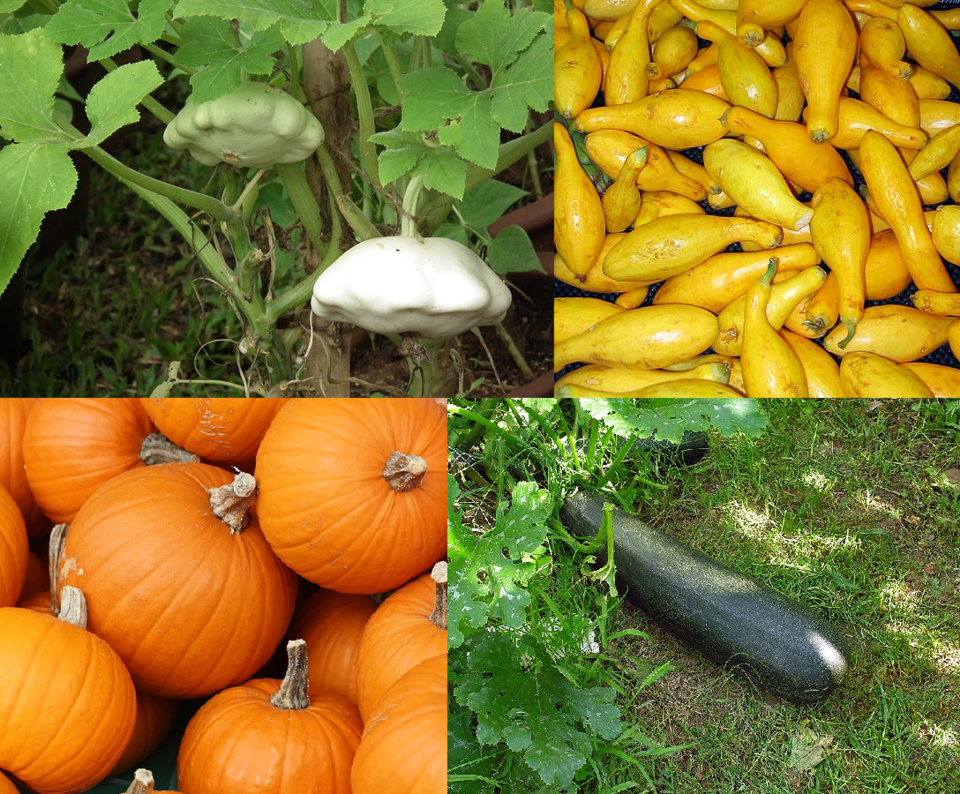
Cucurbita pepo is a widely recognized species of dicotyledonous angiosperms in the Cucurbitaceae family, valued mainly for its edible fruits. Depending on the specific cultivar, these fruits are commonly referred to as zucchini/courgettes or pumpkins, and are typically harvested while still immature. This species encompasses a diverse range of plants, including small, elongated zucchini as well as larger, variably shaped pumpkins, displaying significant variation in size and form. Its cultivation is widespread due to the versatility and culinary appeal of its fruits.
Description of the plant
Cucurbita pepo is an annual plant with a herbaceous stem that is flexible, often climbing, and generally slender. It was introduced to Europe around the 1500s following the discovery of the Americas. Its stems are fleshy, sturdy, and slightly silky, producing numerous tendrils to support climbing.
The leaves are simple, attached via a thick, fleshy, silky petiole that can reach up to 10 cm. They are generally triangular, spanning 20–30 cm in width, with an irregular five-lobed shape, a softly hairy surface, toothed bases, and pointed tips.
Description of the edible parts (flower, fruit and seeds)
Flowers are large and typically solitary, emerging from a silky pedicel ranging from 2 to 20 cm in length. The corolla is orange and five-lobed, growing up to 10 cm long. In male flowers, the calyx is bell-shaped, divided into five linear segments measuring 1–2.5 cm, and contains three stamens with filaments about 1.5 cm long. Female flowers have a reduced calyx and an single-chambered ovary.
The fruit varies widely in shape and color, depending on the variety, while the seeds are white, smooth, and flattened, completing the plant’s reproductive cycle.
Production methods for Cucurbita pepo
Cucurbita pepo is recognized as one of the earliest domesticated plant species, possibly the oldest cultivated crop known. It thrives best in mild climates with full sun exposure and good air circulation.
Seeds are sown directly outdoors from April to June, once both day and night temperatures consistently exceed 68 °F (20 °C). Usually, two or three seeds are planted per hole, vertically, with the narrow end pointing downward; a deep, long container is sufficient for a single plant. Beginners are often advised to start with ready-grown seedlings.
The soil should be well-tilled, deep, medium-textured, well-drained, and rich in organic matter. For organic cultivation with good yields and quality fruits, about 880–1,100 lbs (400–500 kg) of mature manure per 1,076 ft² (100 m²) should be applied and incorporated to a depth of 6 in (40 cm).
With well-prepared soil and adequate plant spacing, a plant can yield up to 40–45 fruits, though typical production ranges from 20–25 fruits per plant. Fruits are harvested when still small, about 8–10 weeks after sowing, as fully mature fruits develop seeds that reduce their edibility.
Classification of Cucurbita pepo
This species is in divided into cultivar. Among these we find:
- Acorns
- Cocozelles
- Common pumpkins
- Crooknecks
- Scallops
- Straightnecks
- Vegetable marrows
- Zucchini (or courgettes)
Photo(s):
1. Various, CC BY-SA 1.0 https://creativecommons.org/licenses/by-sa/1.0, via Wikimedia Commons