
Allium ampeloprasum
Species of Allium
Food, Plant source foods, Plants (Plantae), Flowering plats (angiospermae), Mesangiosperms, Monocots, Asparagales, Amaryllidaceae, Allium
Consumption area(s): Earth
Note: For better understanding, please read the article on flowering plants (angiospermae) first. If you come across unfamiliar words, you can click on any highlighted term to open the glossary with definitions of key botanical terms.
Introduction
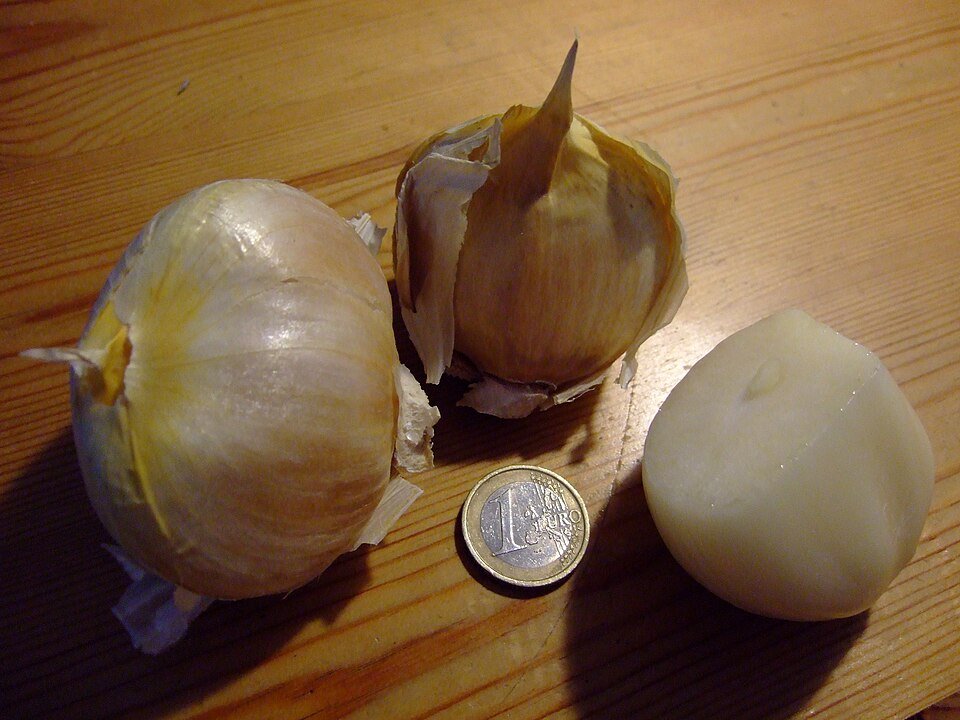
The species Allium ampeloprasum is classified within the Allium genus, which comprises onions and their botanical relatives. From this single species, five distinct cultivated vegetables have been selectively developed: the leek, elephant garlic, pearl onion, kurrat, and the Persian leek.
Description of Allium ampeloprasum
In its wild form, this plant develops bulbs reaching approximately 3 cm (about 1¼ inches) in diameter. The flowering stems (scapes) are cylindrical in shape and may grow as tall as 180 cm (around 71 inches). At their apex, they support an umbel that can contain up to 500 individual flowers.
The flowers are urn-shaped, measuring up to 6 mm (roughly ¼ inch) across. Their tepals range in color from white to pink or red, while the anthers may appear yellow or purple. The pollen itself is characteristically yellow.
The original distribution of this species extends from southerm Europe across southwestern Asia and into North Africa. It occurs in every nation bordering the Black Sea, Adriatic Sea, and Mediterranean Sea, stretching geographically from Portugal through Egypt to Romania. Beyond this core area, it is also indigenous to countries such as Ethiopia, Uzbekistan, Iran, and Iraq. In Russia and Ukraine, the plant is generally classified as invasive, with the notable exception of Crimea, where it is regarded as native.
Outside its primary range, the species has become naturalized in numerous territories. These include parts of Europe such as the United Kingdom, Ireland, the Czech Republic, the Baltic States, and Belarus, as well as Atlantic archipelagos like the Azores, Madeira, and the Canary Islands. Its presence also extends into western and central Asia, including Armenia, Azerbaijan, and Afghanistan, and further east to China.
In addition, it is established in Australia (with the exception of Queensland and Tasmania), Mexico, several Caribbean islands — including the Dominican Republic, Puerto Rico, and Haiti — as well as parts of the United States, the Galápagos Islands, and Argentina.
Classification od Allium ampeloprasum
This species is subdivided according to its cultivar. Among these we find:
- Elephant garlic
- Kurrat
- Leeks
- Pearl onions
Source(s):
https://en.wikipedia.org/wiki/Allium_ampeloprasum
Photo(s):
1. Own work by user Uncaught on the German Wikipedia, Public domain, via Wikimedia Commons