
Petroselinum
Genus of Apiaceae
Food, Plant source foods, Plants (Plantae), Flowering plats (angiospermae), Mesangiosperms, Eudicots, Core eudicots, Superastierds, Asterids, Campanulids (Euasterids II), Apiales, Apiaceae
Consumption area(s): Earth
Note: For better understanding, please read the article on flowering plants (angiospermae) first. If you come across unfamiliar words, you can click on any highlighted term to open the glossary with definitions of key botanical terms.
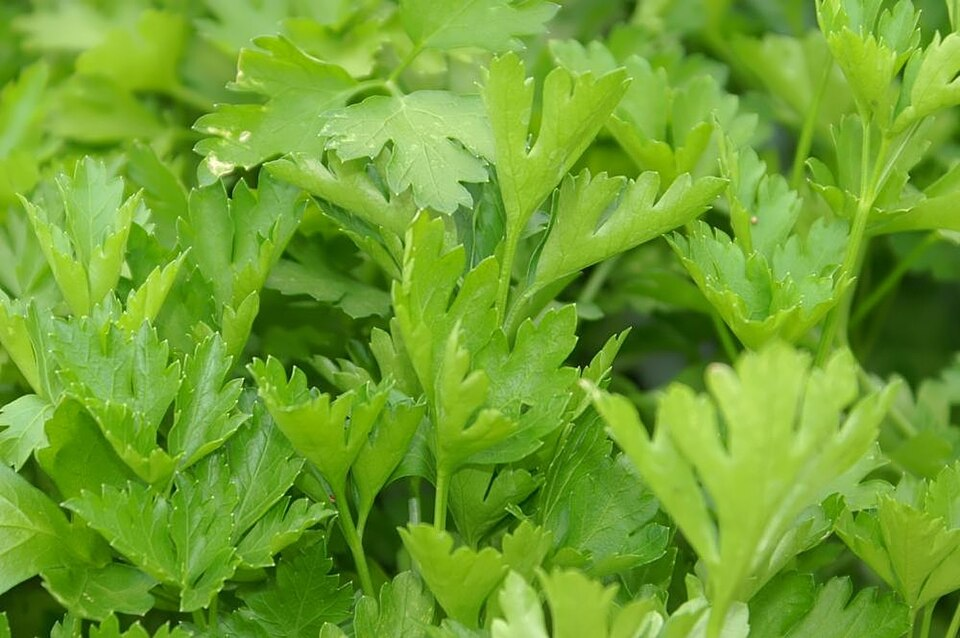
Introduction
Petroselinum is a small plant genus within the Apiaceae family, consisting of two species commonly known as parsley. These plants originate from western and southern Europe as well as northern regions of Africa, where they naturally developed before becoming widely cultivated.
Description of Petroselinum
Species belonging to this genus are vivid green, smooth and typically biennial herbaceous plants, although in rare cases they may complete their life cycle as annuals. During the first year of growth, the plant produces a basal rosette of pinnate to tripinnate leaves and develops a taproot, which functions as a nutrient reserve allowing the plant to survive the winter period.
In the second year, the stored energy supports the formation of an upright flowering stem that can reach approximately one metre in height. At this stage, the foliage becomes less dense, and the plant produces umbel-shaped inflorescences composed of small flowers that range in colour from white to pale pink or yellow-green.
Classification of Petroselinum
This genus is in turn subdivided into the following species:
- Parsley
- Corn parsley
Source(s):
https://en.wikipedia.org/wiki/Petroselinum
Photo(s):
1. Photo by David J. Stang, CC BY-SA 4.0 https://creativecommons.org/licenses/by-sa/4.0, via Wikimedia Commons