
Ocimum
Genus of Nepetoideae
Food, Plant source foods, Plants (Plantae), Flowering plats (angiospermae), Mesangiosperms, Eudicots, Core eudicots, Superastierds, Asterids, Lamiids (Euasterids I), Lamiales, Lamiaceae, Nepetoideae
Consumption area(s): Earth
Note: For better understanding, please read the article on flowering plants (angiospermae) first. If you come across unfamiliar words, you can click on any highlighted term to open the glossary with definitions of key botanical terms.
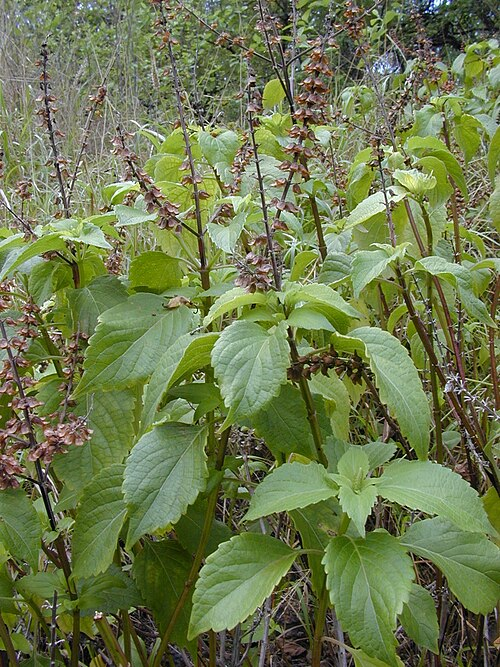
The genus Ocimum consists of roughly 35 aromatic plant species, including both herbs and shrubs, which may be either annual or perennial. They are members of the Lamiaceae family, and are indigenous to the tropical and warm zones of the Old World.
Among these species, basil (Ocimum basilicum) stands out as a key culinary herb. It is particularly prominent in Italian gastronomy, where specific cultivars such as Genovese basil play an essential role in preparing pesto alla Genovese.
In contrast, Ocimum tenuiflorum, commonly called Tulsi or sacred basil, is mostly valued for ritualistic and medicinal purposes in India, rather than for cooking. In certain traditions of Vaishnavism, it is revered as sacred to Vishnu, and its leaves are often brewed into a tea believed to alleviate cold-related ailments.
Interestingly, the so-called American basil (Ocimum americanum) is actually native to tropical Africa, contradicting what its name might suggest.
In Southeast Asian cuisine, particularly in Thailand, a specific basil variety, mostly O. basilicum var. thyrsiflora, is prized for its strong, anise-like aroma. It is widely used in green curry, stir-fried dishes, such as the traditional fried chicken, and other regional recipes. In these culinary traditions, Ocimum tenuiflorum is also occasionally incorporated for its distinctive flavor.
Classification of Ocimum
This genus is further divided into several species. Among the most notable are:
- Amazonian basil
- American basil
- Common basil
- Holy basil / Tulsi
- Lemon basil
- Thai basil
Photo(s):
1. Forest & Kim Starr, CC BY 3.0 https://creativecommons.org/licenses/by/3.0, via Wikimedia Commons