
Artiodactyls (Artiodactyla)
Order of placentals
Food, Animal source foods, Animals (Animalia), Chordates (Chordata), Vertebrates (Vertebrata), Mammals (Mammalia), Therians (Theria), Placentals (Placentalia)
Consumption area(s): Earth
Introduction
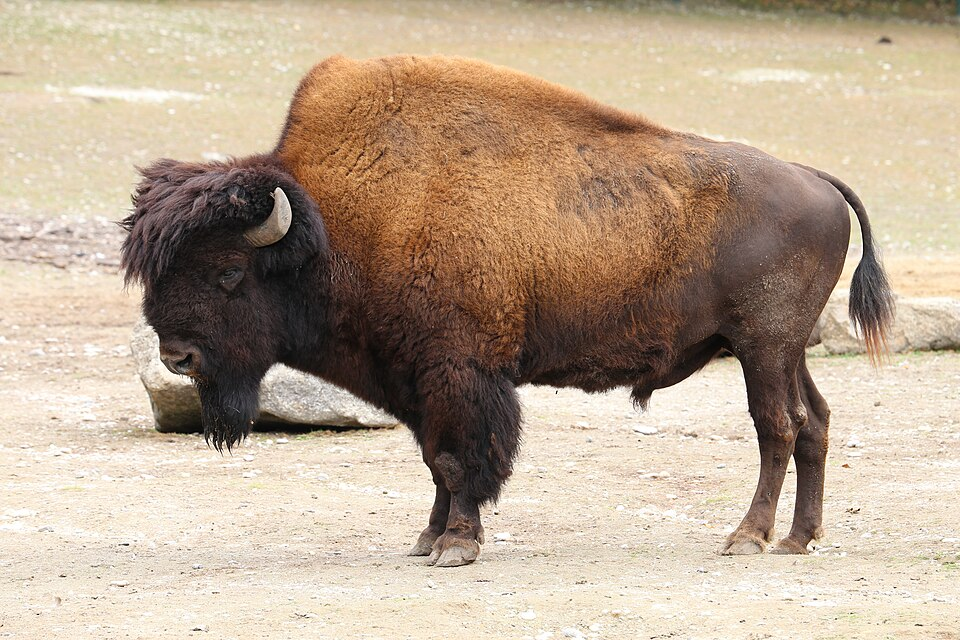
Artiodactyls (Even-toe ungulates) are placental mammals characterized by bearing weight evenly on two of their five toes, usually the third and fourth, often hooved. The other toes may be reduced, absent, or angled backward. Many artiodactyls, except Suina, digest plant material in specialized stomach chambers rather than in the intestines.
Molecular studies show that cetaceans—whales, dolphins, porpoises—are closely related to hippopotamuses, leading some scientists to call the combined group Cetartiodactyla, while others include them in Artiodactyla (which is the approach used in this context). The order contains about 270 species, such as pigs, peccaries, hippos, antelopes, deer, giraffes, camels, llamas, alpacas, sheep, goats, and cattle. Most are herbivores, though Suina eat both plants and animals, and cetaceans are fully carnivorous.
Description of artiodactyls (Artiodactyla)
Artiodactyls are mostly quadrupedal mammals, exhibiting two main body forms. Suids and hippopotamuses tend to have a robust build, short limbs, and a large head, while camels and ruminants are generally slender with long legs. Size varies widely: the tiny mouse deer measures around 45 cm (18 in) and weighs about 1.5 kg (3.3 lb), whereas the hippopotamus can reach 5 m (16 ft) and 4.5 metric tons, and the giraffe can attain 5.5 m (18 ft) in height with a body length of 4.7 m (15 ft).
All species show some degree of sexual dimorphism, with males larger and heavier than females. In most deer, only males grow antlers, while bovine horns are often reduced or absent in females. Male Indian antelopes display a darker fur than females.
Almost every artiodactyl has fur, except the nearly hairless hippopotamus. Fur density, color, and length depend on environmental conditions: species in colder climates may shed their fur seasonally, and many have camouflaged coloring in yellow, gray, brown, or black shades to blend with their habitat.
Limbs
Even-toed ungulates are named for having an even number of toes, typically two or four, although some peccaries show a reduction to three on the hind limbs. The central axis of the leg passes between the third and fourth toes. The first toe is absent in all living species, while the second and fifth toes vary in structure among different species. In camels, for example, the two present toes end in nails rather than curved claws, though both are made of keratin.
The limb bones in artiodactyls are often elongated, supporting a slender leg structure. Muscles are highly localized, aiding in speed and efficiency. The clavicle is absent, while the scapula is highly mobile, swinging to increase stride length during running. The leg joints are structured to prevent rotation, enhancing stability at high speeds. Many smaller species also have a flexible body, which further boosts stride length and running efficiency.
Head
Many artyodactyls have relatively large, elongated skulls. The frontal bone is often expanded toward the rear, pushing the parietal bone to the side, particularly in ruminants, giving the head a distinctive narrow shape.
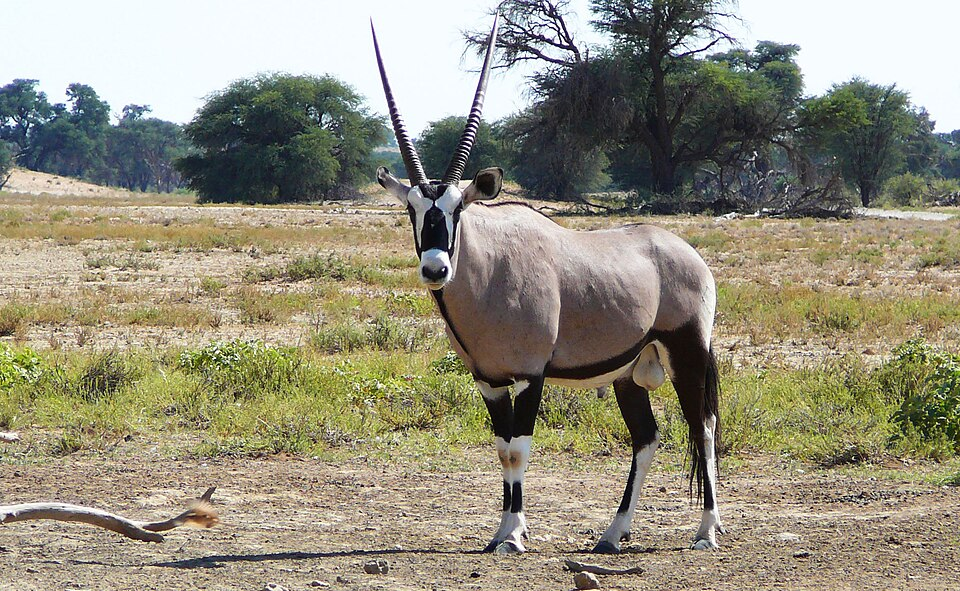
Cranial appendages are present in four families of Pecora and take four main forms: true horns, antlers, ossicones, and pronghorns. True horns, found only in bovids, have a bony core covered with a permanent keratin sheath. Antlers, typical of Cervidae, develop on the frontal bone and are shed and regrown annually.
Ossicones, seen in giraffes, are permanent bone structures fused to the skull. Pronghorns resemble horns but are deciduous. These structures generally serve for display, combat, and defense, are mostly sexually dimorphic, and are usually present only in males, with the exception of reindeer, where both sexes grow antlers annually.
Teeth vary between groups. Suina and hippopotamuses have many teeth (up to 44), suited for omnivorous mastication. Camels and ruminants have fewer teeth with a diastema between incisors and molars for processing plant matter. In ruminants, upper incisors are often absent, while canines may be enlarged in males for combat.
Digestive system
Ruminants (Ruminantia) digest their food through rumination, regurgitating and re-chewing the cud. Their mouths often feature extra salivary glands to handle tough plant material. Their stomachs are divided into three or four chambers—rumen, reticulum, omasum, and abomasum—where food is mixed with saliva and separated into solid and liquid layers. The solids form the cud, which is regurgitated, re-chewed, and re-swallowed, while some microbes break down plant cellulose. This allows ruminants to digest plants indigestible to other species and reduces the time they spend feeding in the open.
Tylopoda (camels, llamas, alpacas) have three-chambered stomachs, while most other ruminants have four chambers. A heavy digestive system favors strong, fast limbs to escape predators. Most Suina have a simple two-chambered stomach for an omnivorous diet, though species like the babirusa are herbivorous and have extra teeth for chewing.
Hippopotamuses have three-chambered stomachs but do not ruminate, consuming up to 150 lb (68 kg) of plant matter nightly and traveling up to 20 mi (32 km) to feed. Their digestion relies on microbes to break down plant cellulose, while their closest relatives, cetaceans, are obligate carnivores. Unlike other artiodactyls, pigs have a simple stomach.
Reproductive system
In artiodactyls, the penis has an S-shaped curvature at rest, lying in a skin pocket. The corpora cavernosa are minimally developed, so erection mainly straightens the curvature without increasing thickness. Cetaceans share a similar penile structure. The testicles are located in the scrotum, outside the abdominal cavity. Female ovaries often descend near the pelvic inlet, and the uterus is bicornuate, allowing the gestation of multiple offspring simultaneously..
Classification of artiodactyls (Artiodactyla)
Cetartiodactyls are classified according to their suborder. Among these, we find:
- Ruminants (Ruminantia) (antelopes, cattle, deer, goats, )
- Tylopoda (camels)
- Suiformes (Suina) (pigs, wild boars)
- Wippomorpha (dolphins, hippopotamuses, whales)
Source(s):
https://en.wikipedia.org/wiki/Artiodactyl
Photo(s):
1. Rufus46, CC BY-SA 3.0 https://creativecommons.org/licenses/by-sa/3.0, via Wikimedia Commons1.
2. Gossipguy, CC BY-SA 3.0 https://creativecommons.org/licenses/by-sa/3.0, via Wikimedia Commons