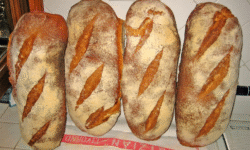
Verna soft wheat flour
Food, Plant source foods, Flours, Soft wheat flour
Consumption area(s): Emilia-Romagna, Lazio, Sardinia, Tuscany, Umbria
Synthetic Quality Index (SQI): FP
Strength index (W): 160-220
P/L ratio: 0.65-0.70
Introduction
The Verna soft wheat flour comes from an ancient variety of soft wheat native to Tuscany, especially the Valdichiana and Val d’Orcia regions. The name “Verna” originates from Mount Verna in the Casentino area, where it was once cultivated by local friars.
Description of Verna soft wheat flour
This variety was rediscovered in the 1950s thanks to the work of Professor Marino Gasparini, director of the Institute of Agronomy at the University of Florence. The Verna wheat is the result of a cross between the Est Mottin 72 and Mont Calme 245 varieties, created with the goal of adapting cultivation to mountainous areas and providing farmers with an alternative to the more productive yet less resilient varieties suited for harsh soils.
The flour obtained from Verna wheat is notable for its low gluten content — about 0.9%, compared to the 14% found in traditional flours. This makes it particularly suitable for people with non-celiac gluten sensitivity, offering a more digestible option without compromising quality.
Beyond its nutritional properties, Verna flour is prized for its rustic, intense flavor, making it ideal for bread, fresh pasta, cakes, and cookies. The traditional stone milling process, often used to preserve the grain’s nutrients, helps maintain its essential oils and natural components, resulting in a product rich in antioxidants, proteins, minerals, and B vitamins.
Nutritional facts table
As no specific data are available, reference in this context is made to the nutritional values of common soft wheat flour.